Navigation
• Research Concept• Character and Spectator• Screen• Artificiality• Bibliography• Image Sources
Concept
Meta-reference and the fourth wall are closely related concepts, yet they possess distinct differences. While many are familiar with the latter, questions may arise regarding the former. Meta-reference is a technique where an artwork refers to itself as an artificial construct [1]. This method can occur without a direct breach of the fourth wall—meaning characters do not address the viewer directly—but they might contemplate the genre’s conventions or the medium in which they exist. The fourth wall, conversely, functions as a boundary between the fictional world and reality. Breaking the fourth wall is arguably the most common—and one of the most ancient—forms of meta-reference. Meta-reference exists in various media: literature, theater, cinema, animation, and so on.
Two primary reasons can be cited for selecting this topic for visual investigation. First, I have previously addressed the concept of the fourth wall, but in this work, I aim to delve deeper into metareference and analyze examples from domestic animation to create a cohesive picture. Second, despite the vast scope of the field of study, there is still limited research on this topic. This visual study is intended as a means of disseminating interest in the proposed subject.
For this project, materials were selected based on several criteria. The most important were adherence to specific timeframes and place of origin. In this study, all examples were created in the 20th century within the Soviet Union. Furthermore, all included works are animation. There are no strict limitations regarding the type of animation, as the theme is focused specifically on the content of the works and how different artists approached this technique.
The organization is structured by thematic groups. Each category will feature several works unified by a common concept. To conduct a thorough analysis, it is necessary to delineate the methods of realizing metareference. This approach will allow for a clearer identification of each group’s specific characteristics and lead to a precise conclusion.
Textual sources were also selected. The visual research utilized articles and books written by students and alumni from various humanities and creative disciplines. The criteria considered during the text selection process were the quality of the writing and the number of citations.
«What is the significance of using metareference, and what methods exist for its manifestation in 20th-century Russian animation?» — this question became central to this visual study.
The reception can carry a wide range of emotional tones: in some instances, it is far more comical, while in others, it touches upon existential themes.
Character and Audience
To begin, we should examine more straightforward examples of metareference and gradually move toward less obvious ones. The leading figure—be it the main character or the narrator—can interact with the audience and comment on what is happening on screen. For instance, in Alexander Tatarsky’s «Plastic Crow, ” the feeling of work in process is created—both through communication and through visual techniques.
«Playdough Crow, ” Alexander Tatarsky, 1981
In each of the three stories, a narrator tells an invisible audience who are not shy about giving feedback or interrupting the plot. The audience offers their answers, which sometimes abruptly changes the story and, consequently, the visual elements. Essentially, the characters remain dependent on the narrator and the responding children, which is reminiscent of early 20th-century Western animation [2]. Traditional audio narration did not exist then, but it was during that time that the characters were under the complete control of their creators. A distinguishing feature of that period was the depiction of the author’s hands.
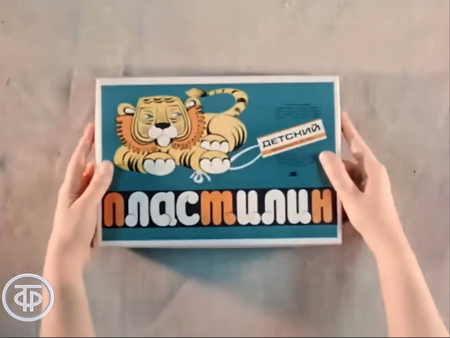
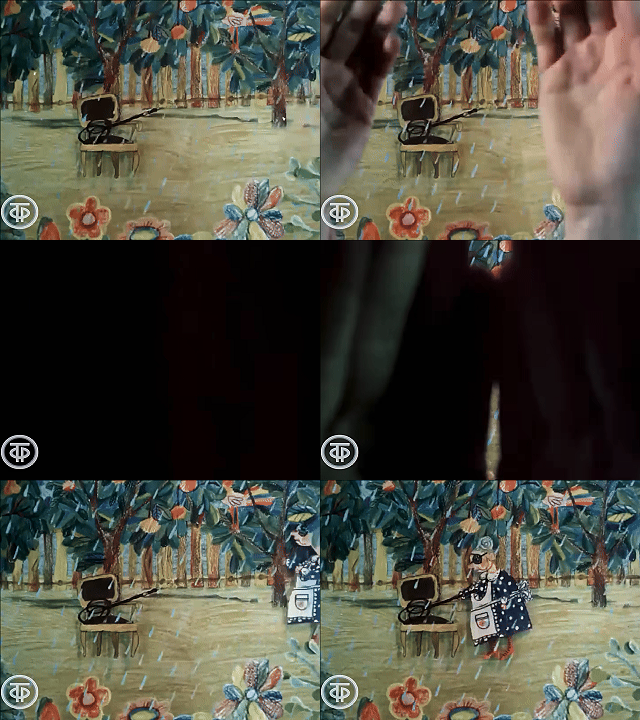
«Plastic Crow, ” Alexander Tatarsky, 1981
In «The Plasticine Raven,» the same hands that manipulate things on the screen frequently appear. Yet, what distinguishes Tatarsky’s work from his Western predecessors is the passivity of the characters. They look at the viewer and may undergo metamorphosis, but the heroes do not resist this fate; rather, they adapt to it. Their emotions are either absent or extremely theatrical—they lack conscious reaction.
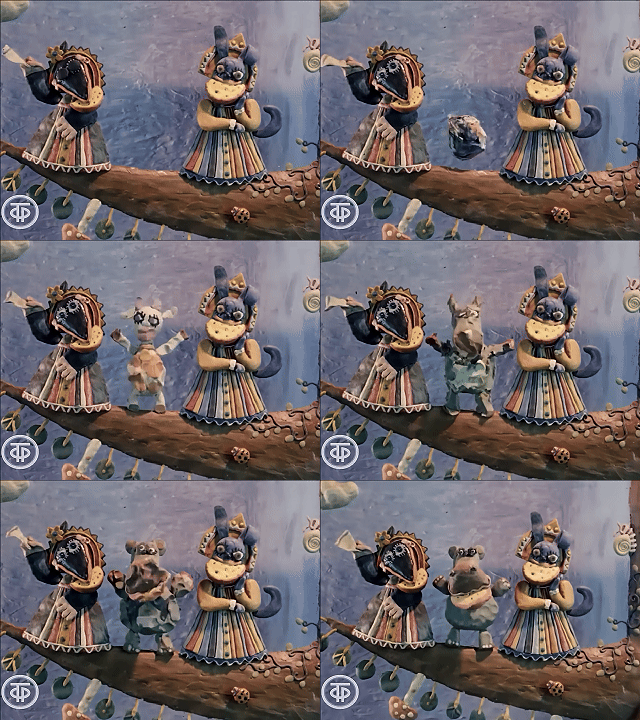
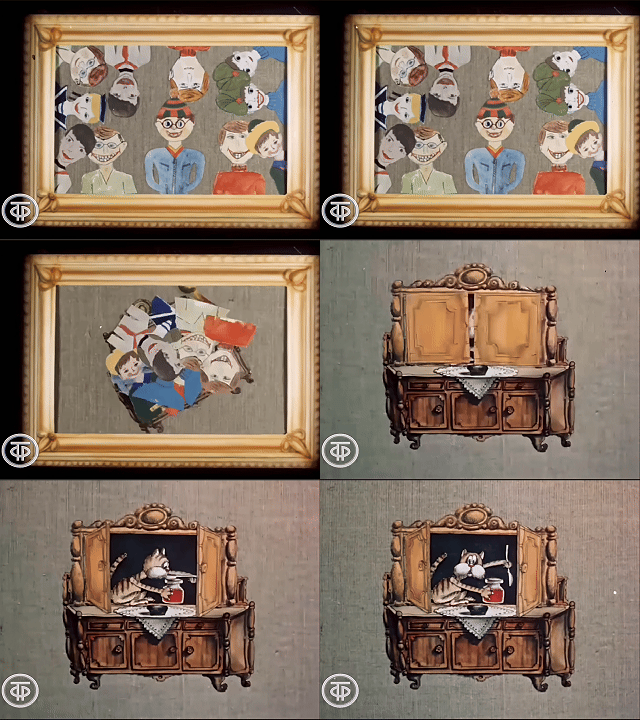
«Clay Crow, ” Alexander Tatarsky, 1981
It is important to note that, despite attempts to restrict screenings of this film, it gained success with audiences [3]. It was loved for its original presentation—a narrative style that has attracted people across previous generations as well.
«Plastic Crow,» Alexander Tatarsky, 1981
In another work by Alexander Tatarsky, specifically «Last Year’s Snow, ” the main character takes on a more active role. He does not listen to the narrator and finds himself in comical situations.
«The Snow Fell Last Year,» Alexander Tatarsky, 1983.
The narrator does not have the ability to change anything on the screen; rather, he functions to some extent as an observer. Other characters do not pay attention to him, except for the unnamed main character with whom he can converse. Furthermore, the narrator serves in this story as the voice of morality.
«The Snow Fell Last Year,» Alexander Tatarsky, 1983
In turn, the protagonist can visualize his imagination, which occupies a significant portion of the narrative. However, the man—due to his laziness and greed—never achieves what he desires. The world punishes these qualities.
«Last Year’s Snow, ” Alexander Tatarsky, 1983
A similar concept exists in contemporary media. In David Riden’s game «The Stanley Parable, ” the narrator and an ordinary man serve as the main characters. The player controls Stanley, who can either follow the narrator’s instructions or defy them. This game has no happy endings where the protagonist can escape the office. The central drama lies in the fact that they are trapped with each other—neither Stanley nor the narrator has complete freedom of action. Therefore, people remain interested in such narratives, although the form of storytelling changes.
This method of meta-referencing manifests in diverse ways. In both works, there is a visible interplay between the viewer and the character. In one example, the narrator and the audience possessed a much greater opportunity to control the fate of the protagonists; in the other, the narrator and the character enter into equal roles, and sometimes the latter holds significantly greater authority.
Screen
In Vladimir Suteev’s «Pete and Little Red Riding Hood, ” the main character is transported from reality into a fairy tale world. Throughout the film, the hero breaks the established canon of the original story, exhibiting the resourcefulness and sense of justice characteristic of pioneers.
«Petya and Little Red Riding Hood, ” Evgeny Raikovsky and Boris Stepantsev, 1958