Media Concept
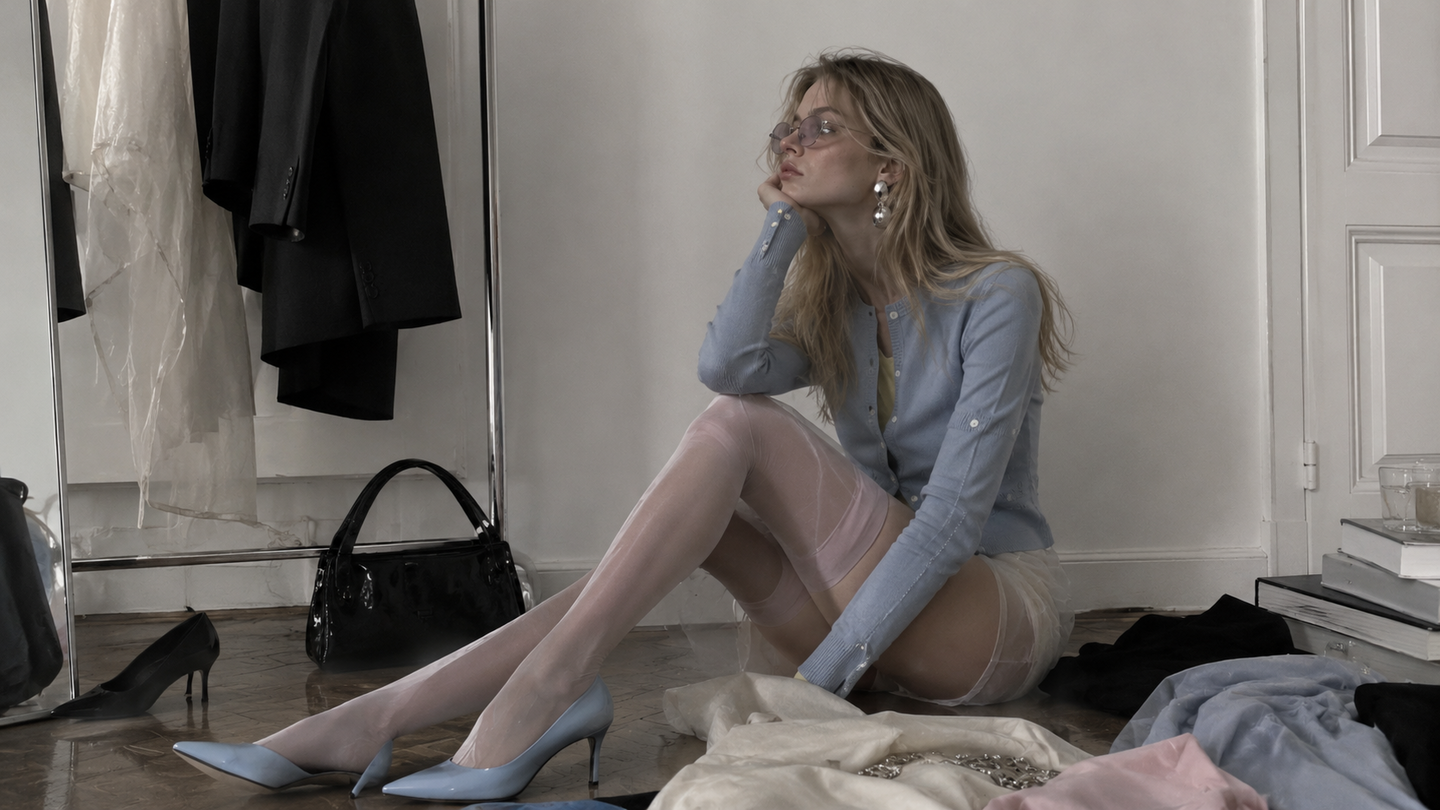
Media about self-styling that explores how clothing helps a person create the desired impression in a specific situation. Instead of the usual «what’s fashionable right now? , ” the media suggests starting from a different point: how do I want to look, and what must my clothing do to make that happen?
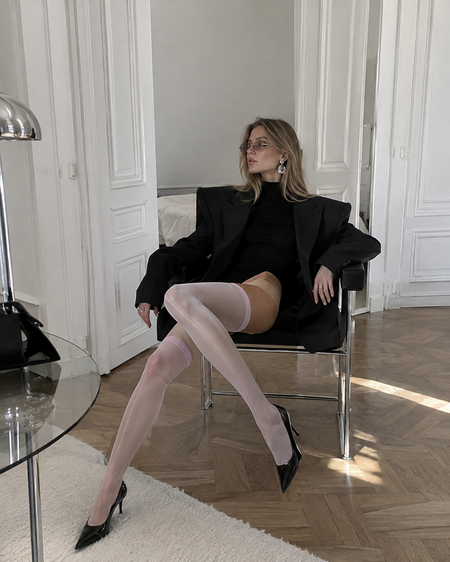
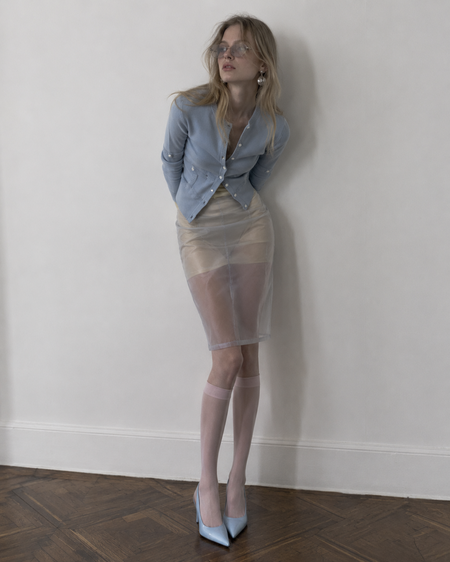
Each material examines a specific challenge: how to appear authoritative, how to create distance, how to attract attention, how to appear vulnerable, how to emphasize status, how to signal belonging to a certain environment, or conversely, how to step outside of it.To find solutions, the media draws inspiration from high fashion and the visual language of brands. Imagery from collections becomes not a ready-made example for imitation, but material for investigation: what silhouettes, proportions, materials, colors, and details help create a specific impression.For instance, the question, «How to look unattainable?» transforms into an investigation of closed silhouettes, exaggerated volume, the space between the body and the clothing, and specific design choices by Balenciaga, Margiela, or Saint Laurent.AI is used as a research tool: it helps gather and compare large volumes of visual material, identify recurring patterns, systematize them, and suggest combinations. The human remains the author of the solution—they verify sources, consider the context of the brand and the situation, and formulate the final interpretation.
Who is this for?
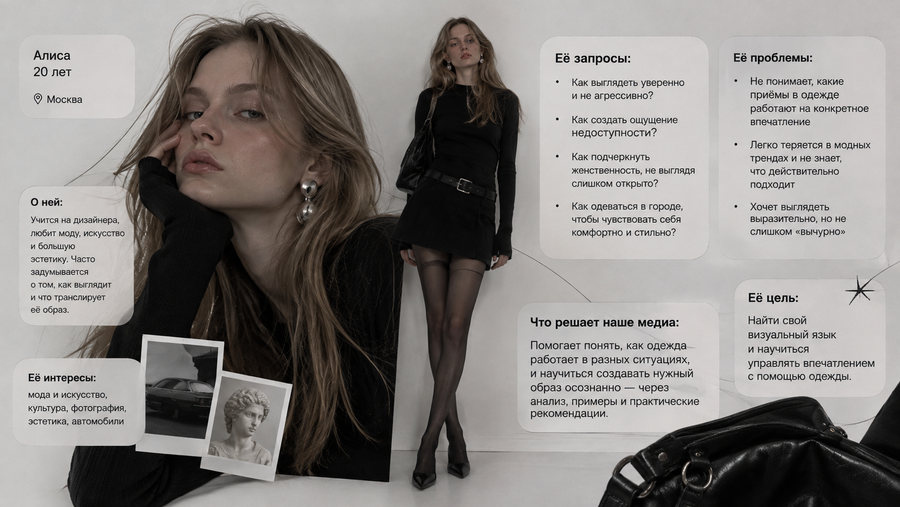
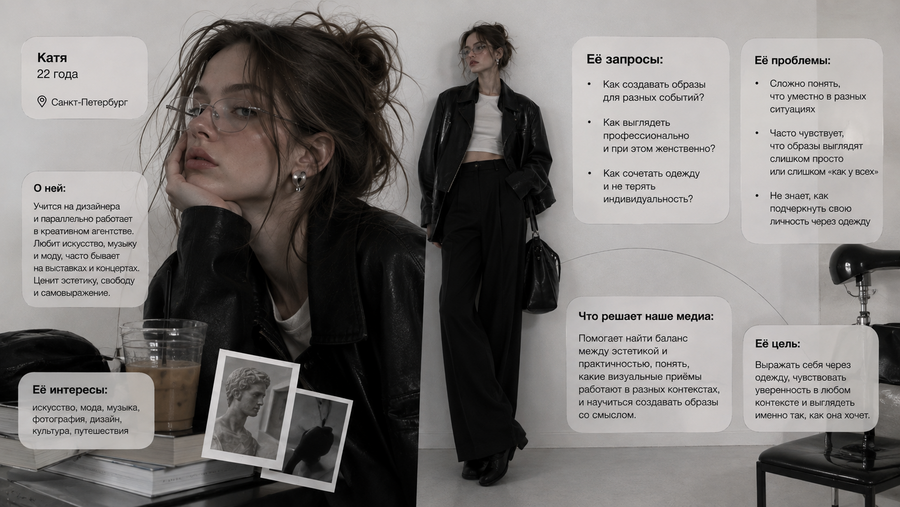
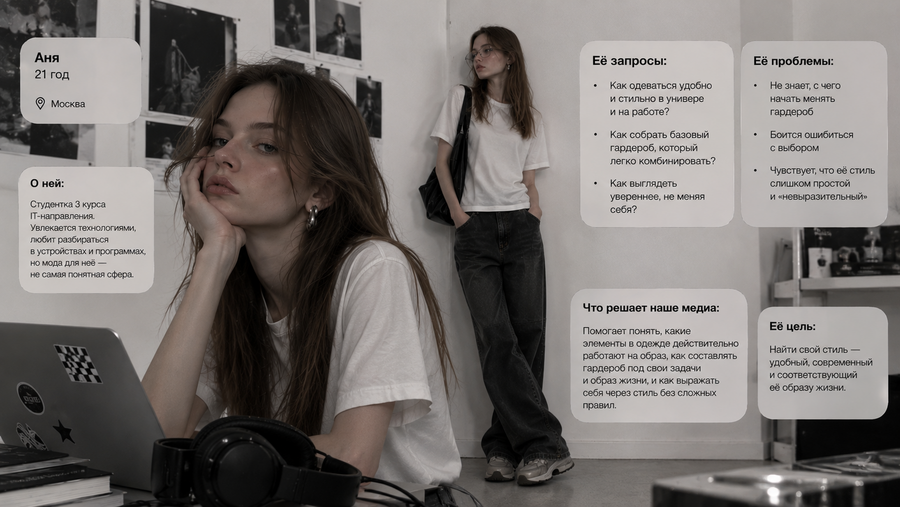
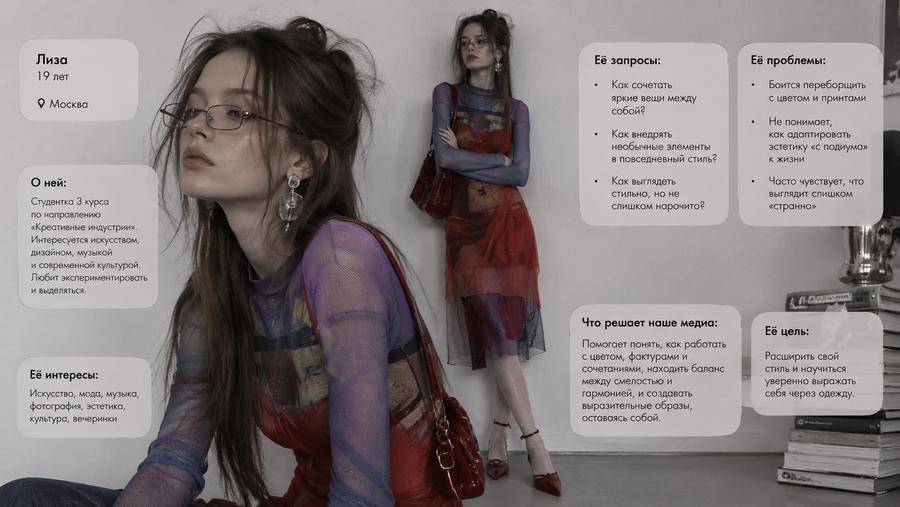
DATA SOURCES FOR MEDIA
1. High Fashion Archives
Collections and shows from major brands, editorial photos, fashion house archives, and fashion media coverage.
These resources are used to analyze silhouettes, construction, materials, styling, and the visual codes of various brands.
Example brands:
Balenciaga, Prada, Margiela, Saint Laurent, Mugler, Alaïa, Schiaparelli, Comme des Garçons, Rick Owens.
2. Visual References
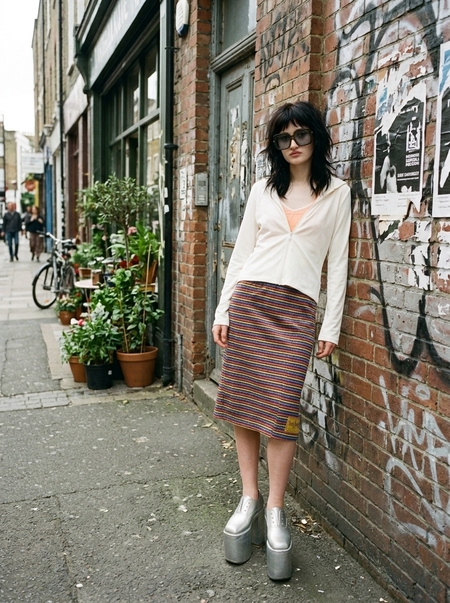
Photographs from fashion shows, campaigns, red carpets, street style, and editorial shoots.
They allow for a comparison of how the same visual technique functions across different contexts.
3. Audience Data
Real user requests are the primary source for new topics:
surveys;
comments;
follower questions;
saves and reactions;
topic suggestions;
photos of personal looks;
results from independent experiments.
For example, a request such as:
«I need to look serious, but not boring»
could become the basis for a new study.
4. Editorial Features
The media team independently creates:
image breakdowns; styling experiments; photography; comparative selections; tests of various combinations; results of applying recommendations.
In this way, the media not only gathers existing information but also tests it in practice.
DATA SCHEMA: HUMAN AND MACHINE PROCESSING
The core principle: The machine seeks patterns. Humanity defines their meaning.
STAGE 1. BriefingThe Human Frames the scenario and the desired impression. For example: «I want to look authoritative, but not aggressive.»
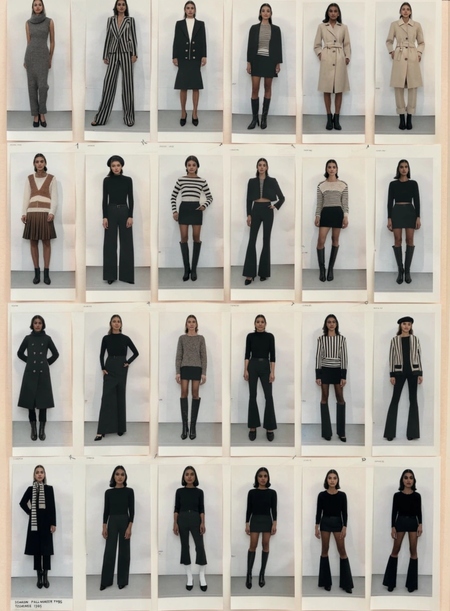
STAGE 2. Material Collection Machine Gathers relevant visual materials from the prepared dataset: Brand identities; Collections; Photographs; Stylistic references.Stores them in a unified database.
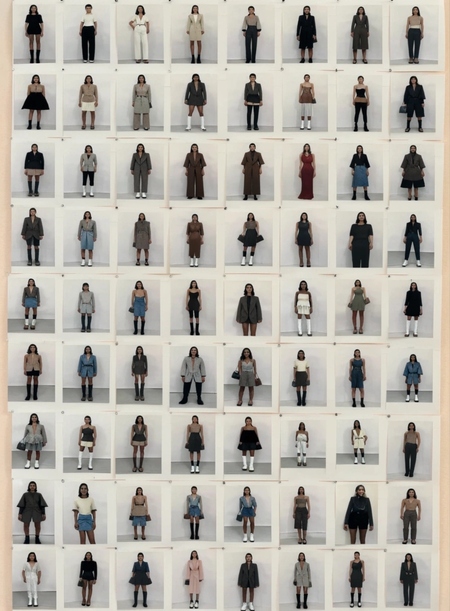
PHASE 3. Structuring MachineTags materials according to the following parameters: silhouette / volume / color / material / degree of openness / proportions / details / stylization / brand / year / context.Groups visually similar solutions.
STAGE 4. Identifying Patterns Machine + HumanAI identifies recurring characteristics. For example: in the selected group of images, oversized shoulders, a vertical silhouette, dense materials, and a closed neckline frequently appear.The human verifies whether these characteristics are genuinely related to the chosen situation or are merely a random coincidence.
STAGE 5. Interpretation The HumanThe editor and designer explain: why this technique works; how it relates to fashion history; how different brands utilize it; what differentiates their approaches; in what context this technique fails.The AI does not form the final conclusion autonomously.
STAGE 6. AdaptationHuman + AI The principles derived are translated from the language of high fashion into practical styling. The specific look of a brand is not copied; rather, its underlying principle is extracted.For example: Mugler → structured silhouette Margiela → distance through concealment Saint Laurent → power through masculine tailoringAfter this, the principle is adapted to items the user already owns.
STAGE 7. PublicationThe Human ElementThe editor compiles the final material: situation → research → visual patterns → brands → practical conclusion.AI assists with the initial structure, text, and systematization, but the final material undergoes human editing.
PHASE 8. Feedback The machine Gathers publication statistics: views; saves; shares; comments; reactions; clicks.↓The person Determines which scenarios genuinely interest the audience and shapes subsequent themes
The cycle closes like this:QUERY → DATA → ANALYSIS → INTERPRETATION → STYLING → RESPONSE → NEW QUERY
GUIDELINES FOR AUTOMATED SERVICES
Visual Material Search and Curation
Tools: Digital brand archives, fashion archives, Pinterest, Google Lens, and image search.Objective: To locate visual materials for researching a specific situation, desired impression, or stylistic technique. Guidelines: Utilize verifiable sources and archives. Save links to original materials. Document the brand, designer, collection, season, and date if this information is available. Separate original brand materials from user-generated images. Do not use found visual similarities as proof of a designer’s intent. Verify the context of an image before using it in a publication.Outcome: A curated collection of visual materials, complete with sources and structured data for further analysis.