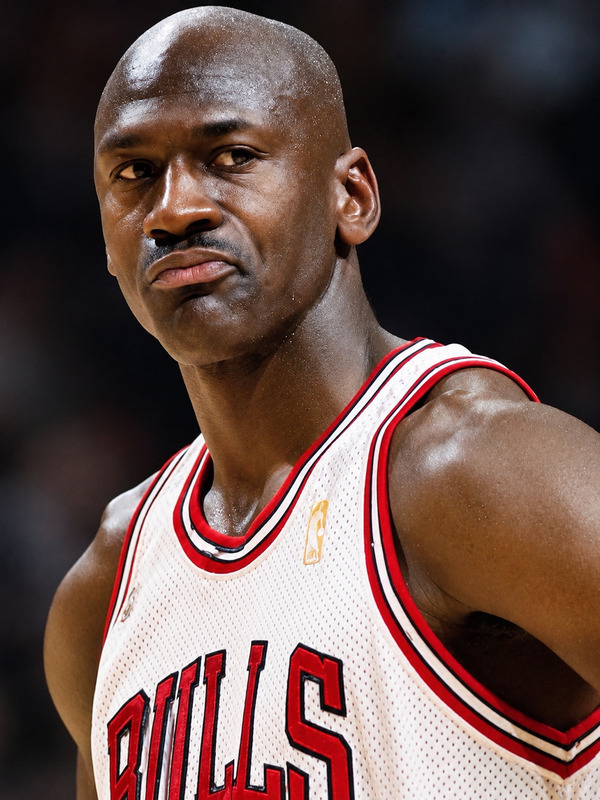
Michael Jordan long ago transcended being merely a name from basketball history. His silhouette is instantly recognizable by the logo, Air Jordan sneakers continue to be released decades after his NBA debut, and moments from his career remain a part of popular culture. But all of this didn’t happen solely because of his six championships with the Chicago Bulls.
Throughout his career, Jordan became the face of a new era in the NBA, helped American basketball reach a global audience, redefined the relationship between athletes and major brands, unexpectedly shifted to baseball at the peak of his career, and then returned to win three more championships. We explore 10 stories of how the great basketball player transformed into one of the defining sports icons of the 20th century.
The winning throw that started a great story
The first moment that made Michael Jordan famous across the country happened before the NBA.
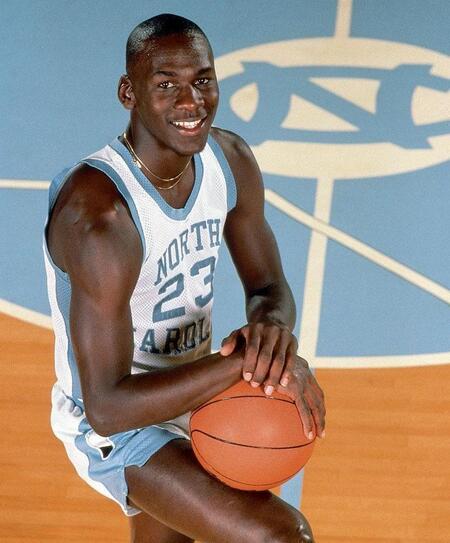
In 1982, a 19-year-old freshman at the University of North Carolina made it to the NCAA student championship final against Georgetown. The lineup from that match looks almost symbolic today: alongside Jordan was James Worthy, who would become a first-round draft pick, and the opponent’s star was Patrick Ewing, who was also destined to become one of the biggest NBA stars.In the final moments, Georgetown was leading 62–61, and UNC had one last chance to attack. The ball ended up in Jordan’s hands, who made a precise shot to put his team ahead—62–63. The opponent got one more chance to respond but missed on the last possession, meaning Michael’s shot secured the championship for UNC.What is interesting is that at that time, Jordan was not yet perceived as the future figure around whom an entire NBA era would be built. North Carolina already had more seasoned and famous players, and Michael was just completing his first college season. Yet, this specific episode became one of the first moments where he was under immense pressure and decided the fate of a major game with a single shot.Two years later, he would enter the NBA draft, but even there, Jordan would not be the first pick. In 1984, Houston would select Hakeem Olajuwon, Portland would select Sam Bowie, and it wasn’t until the third pick that the turn would come to Chicago. It is particularly fascinating in retrospect that one of the most recognizable athletes in history began his professional career not as the first pick of his generation.
2. A rookie arrived in the NBA, prompting fans to start buying tickets.
Before Jordan, the Chicago Bulls were not in the position they would become associated with in the 1990s. During the 1983–84 season, the team finished with a record of 27 wins and 55 losses—one of the worst in their history.
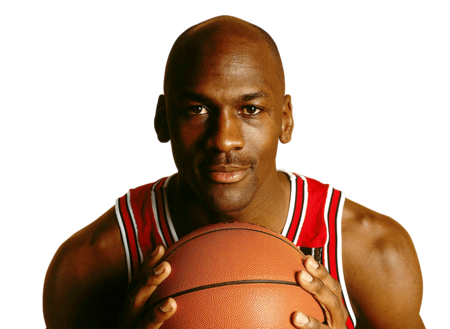
Jordan was drafted by the Bulls with the third pick.
The expectations surrounding that pick were far different from what they seem today. In historical materials, former Bulls players recall that Jordan’s arrival was initially not perceived within the team as an event that would instantly change the organization’s destiny. The club regularly saw other highly touted draft picks, and Michael initially appeared to be just another talented newcomer.
It quickly became apparent just how much he was underestimated. Already in his first season, Jordan averaged 28.2 points per game, made the All-Star Game, and was named Rookie of the Year. The Chicago Bulls improved their record to 38 wins and returned to the playoffs for the first time in several years. Even more interesting, however, was how quickly a dedicated public interest arose specifically around Jordan. He provided the public with the kind of basketball that looked spectacular on television: crossovers, dunks, hang-time maneuvers, and incredible athleticism.
Ultimately, the athletic impact of Jordan’s arrival was matched by a commercial one. The Bulls acquired not just a scorer, but an athlete worth attending the arena to see. This is an important part of Michael’s subsequent story: he first became a spectacle that fans wanted to watch, and only several years later did he turn the Chicago Bulls into a championship team.
3. Nike backed a newcomer and secured a brand that has survived his career.
Jordan’s story outside the court began almost concurrently with his NBA career. In 1984, Nike decided to create a dedicated footwear line around the newcomer.
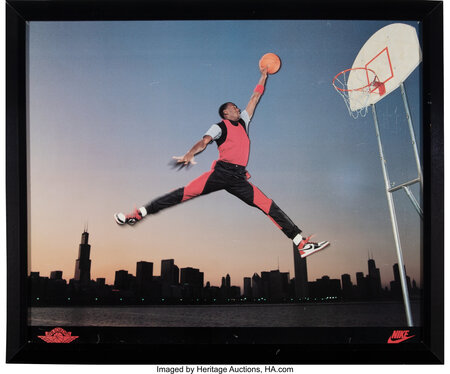
Today, the idea of celebrity-branded sneakers seems perfectly natural, but in the mid-1980s, a similar case was less obvious, and the concept of selling shoes named after a specific athlete seemed dubious altogether.
The first Air Jordan models were released in 1985, and almost immediately, a narrative sprung up around them—a story that itself became part of sports mythology. For decades, this story was retold almost identically: the NBA prohibited Jordan from wearing black and red Air Jordan 1s, each appearance incurred a five-thousand-dollar fine, and Nike gladly paid because it gained incredible publicity.
The reality, however, is more complex. Nike now explicitly states that the league’s initial complaints pertained to the black and red Nike Air Ships that Jordan wore even before the full release of the Air Jordan 1. Documents exist regarding the NBA’s objections to the shoe’s colorway, but the popular version about constant fines specifically for the AJ1 has become significantly more dramatic than the actual events over time.
This nuance ultimately mattered less for marketing. Nike transformed the conflict with the rules into part of the product’s identity: the league might not want to see such shoes on the court, but it cannot forbid consumers from wearing them. The sneakers were no longer just selling technology or the athlete’s name—they were selling the chance to own a piece of the Jordan image.
This is why the significance of the Air Jordan extends far beyond a typical endorsement contract. Basketball footwear gradually evolved into a staple of streetwear and pop culture, and a distinct visual world formed around Jordan. Nike directly links the first Air Jordans to the subsequent development of sneaker culture and the influence of basketball on fashion and youth culture.
4. To become a champion, Jordan had to lose to the same team for three consecutive years.
By the late 1980s, Jordan’s talent was no longer in question. In the 1987–88 season, he simultaneously won MVP and NBA Defensive Player of the Year, and the year before that, he averaged a fantastic 37.1 points. The problem was different: the individual awards were piling up, but the championship remained elusive.
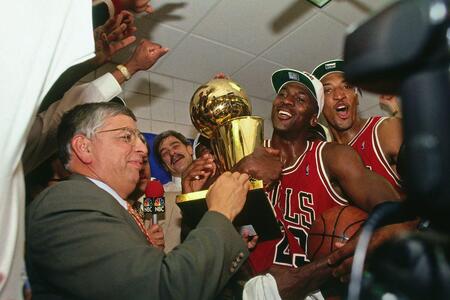
The Detroit Pistons were the main obstacle. Coach Chuck Daly’s team earned the nickname «Bad Boys» for their highly physical style of basketball, and specifically against Michael, the coaching staff developed an approach that entered history as the Jordan Rules. This wasn’t just one secret play; it was an entire system: Jordan was constantly doubled or tripled, they tried to prevent him from driving freely to the basket, and they forced him to fight for every single possession. The NBA notes that persistent double and triple coverage was one of the cornerstones of this strategy.
And it worked. In 1988, Detroit knocked the Bulls out in the second round, and then they stopped them in the Eastern Conference Finals for two straight years. After three consecutive losses to the Pistons, there was indeed talk about whether a player so focused on scoring could ever lead a team to a championship.
The answer came in 1991. Chicago met Detroit again in the Eastern Finals and demolished their opponent 4–0 this time. The conclusion of that series also became part of history: in the final seconds of the fourth game, most of the Pistons players left the court, passing the Bulls' bench without shaking their opponents' hands.
After this, Chicago defeated Magic Johnson’s Lakers in the Finals and won their first championship. Two more followed—in 1992 and 1993. In just a few years, Jordan went from being a superstar criticized for a lack of team success to the leader of the Bulls' first championship dynasty.
5. At the Olympiad, competitors sometimes wanted to take pictures with the stars more than they wanted to beat them.
In the summer of 1992, Jordan became part of a team that changed the perception of international basketball. After rule changes allowed Americans to bring active NBA professionals to the Olympics, a squad headed to Barcelona that was almost immediately dubbed the Dream Team.
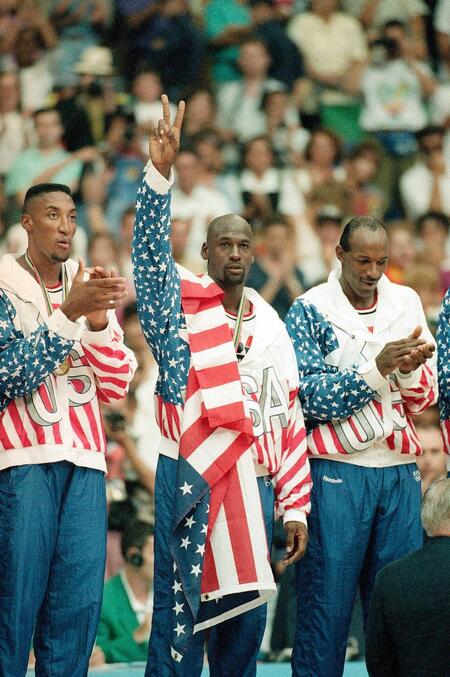
In one locker room were Jordan, Magic Johnson, Larry Bird, Charles Barkley, Scottie Pippen, Karl Malone, John Stockton, Patrick Ewing, David Robinson, Clyde Drexler, and Chris Mullin. The only student was Christian Leittner. In terms of results, the tournament quickly turned into a demonstration of class disparity: the USA won all eight games with an average margin of about 44 points.
But the most interesting action happened around the court. Players from other national teams keenly understood that they were facing people they had previously only seen on television. There is a story about an opponent who, during a game against Magic Johnson, gestured to a teammate on the bench, asking him to take a picture. Chuck Daly compared the level of excitement surrounding the Dream Team to having Elvis Presley and The Beatles touring simultaneously.
For Jordan, the Olympics were particularly important in terms of audience scale. In the United States, he was already a two-time NBA champion, a multiple MVP, and the face of Air Jordan. In Barcelona, however, he was seen by a massive international audience that might never have followed the «Chicago» games.
This is why the Dream Team was remembered not just for its overwhelming victories. It became the most powerful advertisement for American basketball and helped accelerate the global growth of interest in the NBA.
6. «Be Like Mike»: the advertising began selling not the product, but the desire to be like Jordan
By the early 1990s, Jordan was so famous that advertisers no longer needed to explain to the viewer why he was in the frame. One of the best examples was the Gatorade «Be Like Mike» campaign, which launched in August 1991—shortly after Michael’s first championship.
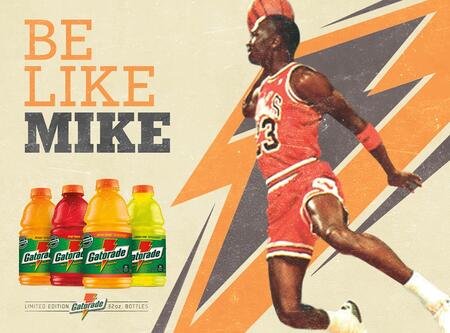
The history of advertising itself is quite fascinating. Its creator, Berni Pittcell, initially wanted to use the song «I Wanna Be Like You» from Disney’s The Jungle Book. Since they couldn’t secure the rights, the team composed an original track with a simple chorus about wanting to be like Michael. In the end, this forced substitution became one of the most recognizable sports jingles of its time.
In the commercial, Jordan plays with kids and adults, smiles, tosses the ball, and performs the movements that millions of viewers were already trying to imitate in their neighborhoods. The ad was not built primarily around the characteristics of the drink itself. The central idea was different: Michael was so popular that the consumer only needed the chance to feel even a little bit like him.
This represents a crucial stage in Jordan’s transformation from an athlete into a cultural icon. His recognizability was already being constructed from multiple symbols: the number 23, the red Bulls uniform, the tongue-out gesture during walk-throughs, and Air Jordan.
7. The world’s best basketball player at the peak of his career went to a minor league baseball team
After winning his third consecutive championship, something happened that almost no one expected. In the fall of 1993, 30-year-old Jordan announced his retirement from professional basketball, effectively at the peak of his career. Shortly before this, his family suffered a tragedy: his father, James Jordan, was killed in the summer. The player himself had also spoken about losing his former desire to continue his basketball career.
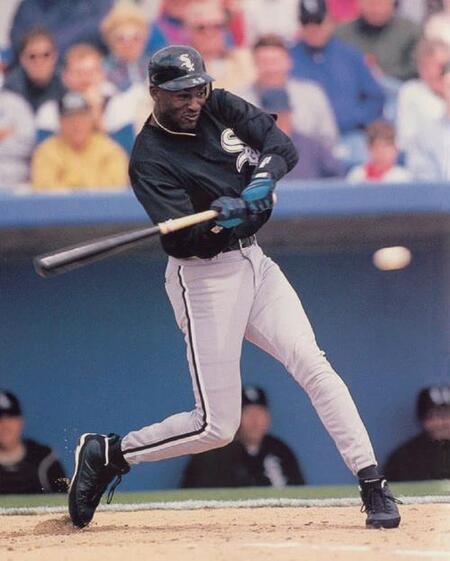
The next step was even more surprising. In February 1994, Jordan signed a baseball contract with the Chicago White Sox. He explained the decision partly because of his father’s dream that his son would become a professional baseball player.
Crucially, this wasn’t a short, promotional appearance across a few games. After his spring training, the world’s most famous basketball player went to the Birmingham Barons, a second-tier division team in the baseball league system. Jordan truly lived a full season in the minor professional league: he trained, traveled with the team, and competed against people who had built their careers in baseball for years.
MLB kept detailed statistics from that season. Jordan played 127 games, recorded 88 hits, hit three home runs, and amassed 30 runs and stolen bases. These numbers did not make him a candidate for a quick promotion to MLB, but for an athlete who was practically relearning the game at a professional level after a long break, the experiment itself was incredible.
Meanwhile, Jordan immediately changed the life of the minor league team. The Barons attracted immense interest from journalists and the public, because spectators came not so much to watch a promising baseball player, but the greatest basketball star of his generation voluntarily starting a new athletic career almost from the bottom.
A year later, the experiment ended. And then Michael did what almost the entire basketball world expected of him again.
8. To return to the NBA, he only needed two words.
On March 18, 1995, after months of rumors, journalists received Jordan’s statement. It contained no lengthy explanation for his return. The main message was encapsulated in the famous «I’m back, ” and the very next day, Michael stepped onto the NBA court against the Indiana Pacers for the first time in 17 months.
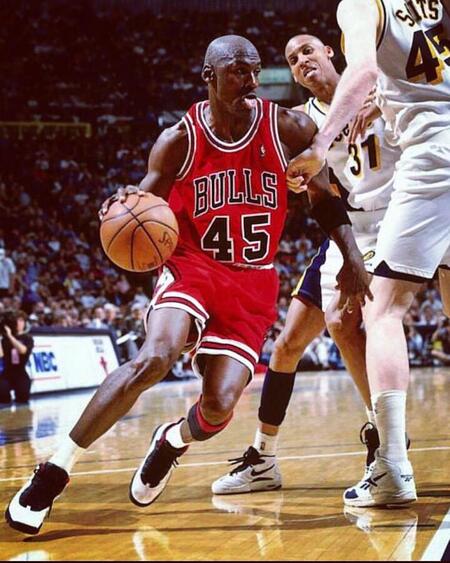
Even the jersey number reflected the unusual nature of the situation. The famous number 23, «The Bulls,» had already been retired, so Jordan returned wearing number 45, which he also wore in baseball. The first game was tough: Michael played 43 minutes, scored 19 points, grabbed six rebounds, and made six assists, but Chicago lost 96–103 in overtime.
However, the scope of interest was colossal. According to the NBA, the national broadcast was watched by about 35 million viewers. The league calls it the most-viewed NBA game. The mere fact of Jordan’s return turned a standard regular-season match into a national event.
Then, he quickly showed that he had returned for more than just the fans' attention. On March 29 in Madison Square Garden, Jordan scored 55 points against the New York Knicks. Moreover, the deciding play in the closing moments was not his own shot: when the defense focused on Michael, he found Bill Wennington with a pass, who scored the winning basket.
The first season did not end with a championship, though: the Bulls lost to the Orlando in the playoffs. In 17 regular-season games after his return, Jordan averaged 26.9 points. He managed to almost instantly become one of the league’s best players, but returning to the top required a full summer of preparation.
In the afternoon, Jordan filmed Space Jam, and he finished the next season with 72 wins and a championship.
The summer of 1995 could have presented a serious hurdle for Jordan’s return. He needed to prepare his body again for a full NBA season, but concurrently, he was occupied with filming Space Jam. Therefore, the film’s production had to essentially be adjusted to fit the regimen of a professional basketball player.
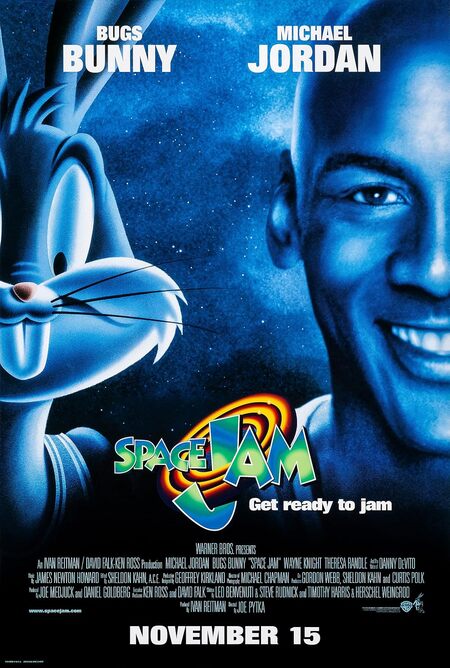
On the Warner Bros. lot, a specialized training facility named Jordan Dome was built for Jordan. After filming wrapped, Michael could train there, and in the evenings, games with active NBA players were held on the grounds. It resulted in an almost perfect setup for him: Hollywood got the planet’s biggest sports star, and Jordan could use his filming summer as part of his season preparation.
The results of this preparation were noticeable very quickly. In the 1995–96 season, the Chicago Bulls won 72 out of 82 games, setting the NBA record at the time. Jordan played all 82 games, averaging 30.4 points, and earned his fourth regular-season MVP award. The Bulls then made it to the finals, defeated the Seattle SuperSonics, and regained their championship title.
The ending was particularly emotional. The deciding sixth game of the finals took place on Father’s Day—less than three years after the death of James Jordan. After the buzzer, Michael was on the locker room floor with the game ball, unable to hold back his tears.
And in November of the same year, Space Jam was released. As a result, two sides of Jordan’s image existed almost simultaneously: on the court, he was once again an MVP and NBA champion, and off the court, he appeared in a major Hollywood film alongside Bugs Bunny and other characters.
It is this combination that is especially important for understanding his popularity. Jordan did not have to choose between being the best basketball player and being a pop culture celebrity. In the mid-1990s, he managed to be both simultaneously.
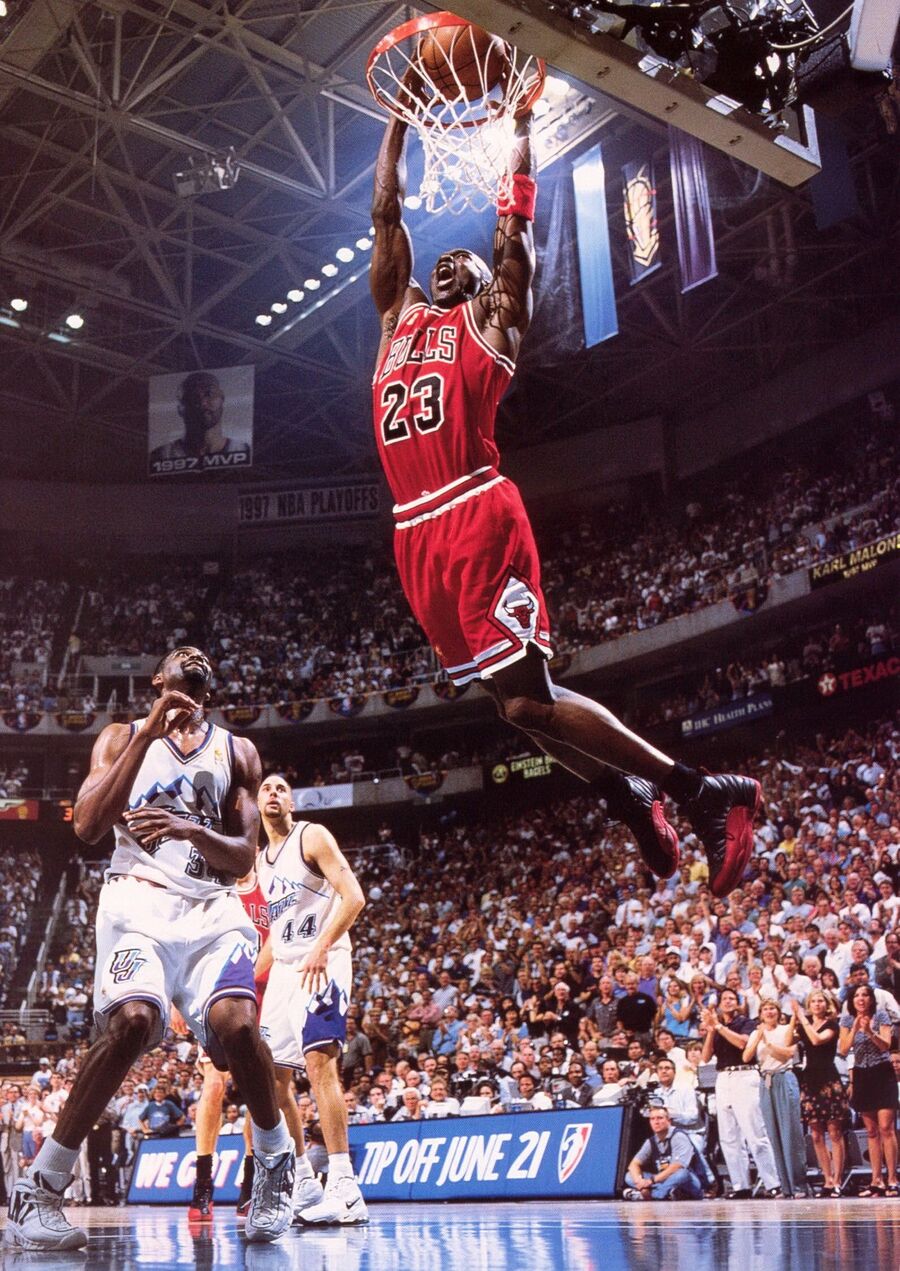
10. Chicago’s final throw was the perfect conclusion to the entire era.