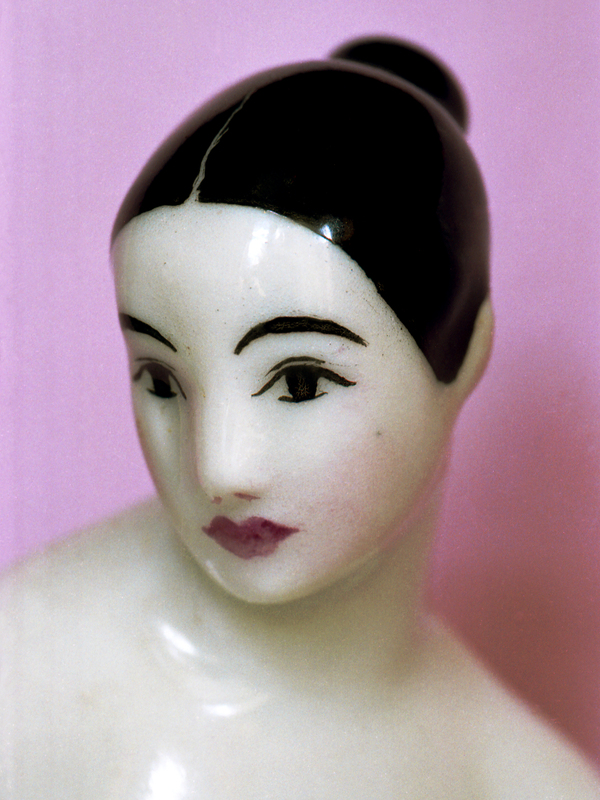
«Beauty for All» continues the first «porcelain» series by Valery Orlovak and Alexandra Mitlyanskaya, «Catering»; the theme declared there is now elevated from the level of «civilization» to the level of «culture.» Porcelain figurines in the 1950s were a sign of «domestic culture»; adorning surfaces of dressers and cabinets, they simultaneously served as a reminder of important things—of vigilance (a border guard with a dog), of international brotherhood (children of different nations), and of «origins» and «roots» (proverbial compositions).
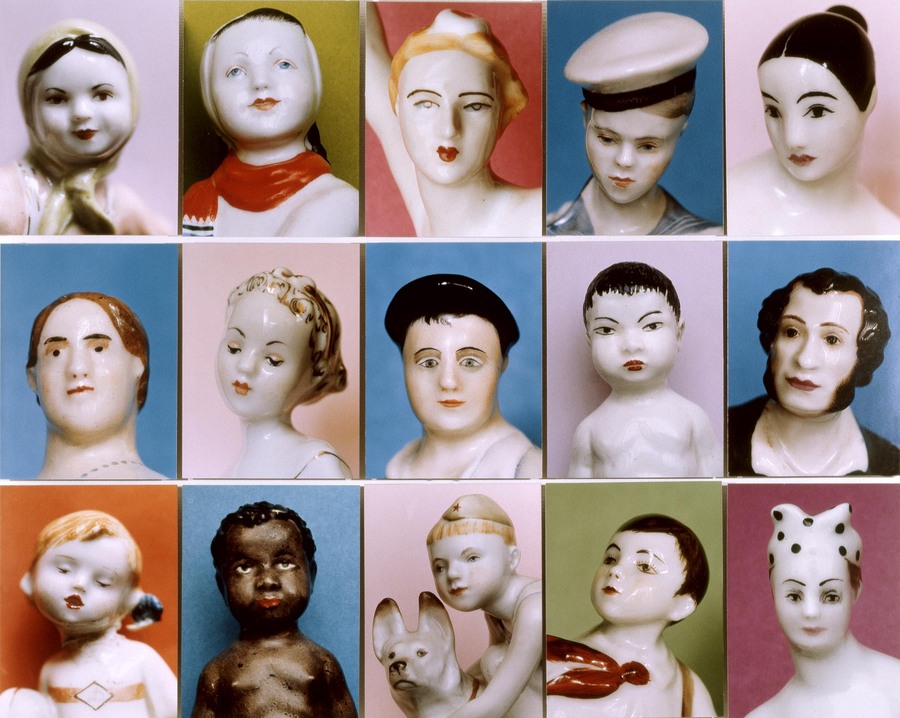
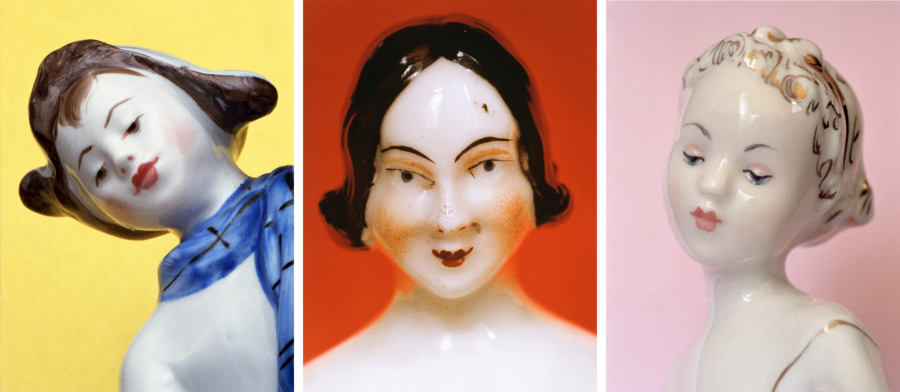
Crafted by anonymous artisans or renowned masters, they represented a collective ideal of «beauty for all”—meant for total consumption, and the density of the social, domestic, and ideological environment bound them into an unbreakable structure. With the loss of this environment and context, they became mere objects, no longer protected against potential manipulation.
Galina Yelchevskaya
«Beauty for Everyone.» Crokin Gallery, 2002
In «General Culture,» we primarily used Soviet propaganda porcelain from the 1920s and 1930s—from the 20th century—sourcing and selecting pieces by reviewing dishes found in museum and private collections, as well as antique shops. It was then that we encountered small-scale sculptures from the 1930s to 1950s.
These porcelain figures caught our attention not because of their aesthetic or plastic perfection, but rather the opposite; there was something striking, something compelling about them that left us unmoved. They evoked a wonderful atmosphere of another—perhaps artificial, yet simple and sincere—life, in which nakedness still felt like shame, the soldier was filled with courage, and the pioneer was ready for labor and defense.
We didn’t even notice the transition from the thirties' utilitarian porcelain, with its openly declared public and secretly—intimate—experience, to a world that was either dolls or something that seemed parodic. These figures, clustered together, were reminiscent of the subjects in «Little Dutch» paintings.
But upon looking closer at the head of any of them, it took on a monumental character with its individual yet generalized features, generating images of the Soviet elite from «WALL OF HONOR» or Warhol’s «Mao» and «Monroe.»
Valery Orlov
«Beauty for all.» Krokin Gallery, 2002
«Beauty for Everyone.» Crokin Gallery, 2002
«Beauty for All.» Krokin Gallery, 2002
«Beauty for All.» Crokin Gallery, 2002
«Beauty for All.» Krokin Gallery, 2002