КОГДА ТЕБЯ ОБГОНЯЕТ BMW С ЛИСЬИМ ХВОСТОМ
ЭТО НЕ ГЛЮК, А НОВОЕ КИТАЙСКОЕ РАЗВЛЕЧЕНИЕ
The bizarre Chinese «furry cars» have finally reached our shores. This trend didn’t begin yesterday; it started forming back in 2024, when car owners began adorning their vehicles with static plush elements—animal ears, paws, and faces—transforming them into cats, dogs, capybaras, and pandas. The romance of stationary plush quickly grew stale, and by spring of 2026, it was replaced by mechanical tails made of faux fur, which attach to the trunk and are controlled by remote or react to body vibration—beginning to wag during acceleration and stopping when the car stills. Advanced versions are far from novice: they feature voice control, speed regulation, and built-in motion sensors.
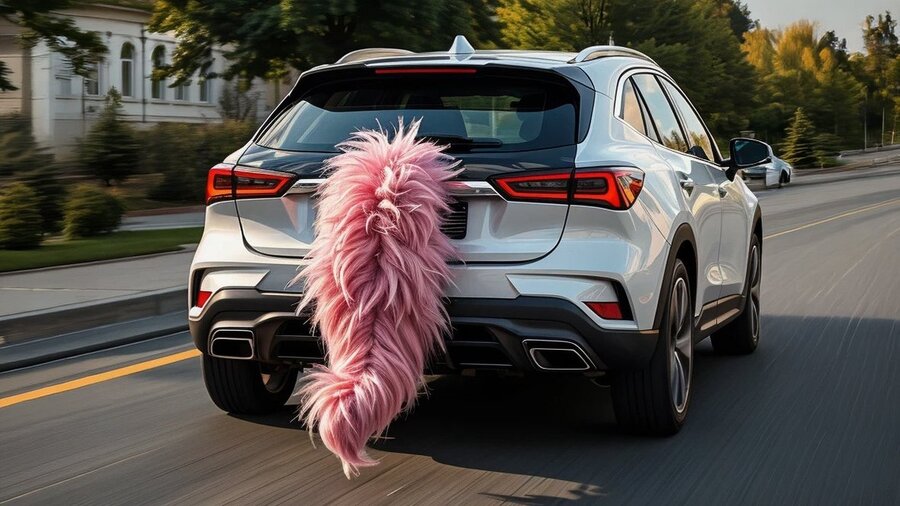
The explosive hype trend was fueled by short videos on Douyin, Weibo, and other Chinese social media platforms, where videos featuring «furry cars» rack up millions of views. Their spread is concentrated in major cities in eastern China, areas saturated with young, affluent, and imaginative individuals. And yes, the «tails» aren’t just attached to budget items—they are even fitted to BMWs, Mercedes, and other premium vehicles.
People are reacting with a level head: a simple, visually appealing idea surfaces on social media, quickly goes viral, and manufacturers soon transform it into a mass-market product. However, lawyers are already furrowing their brows—a poorly secured tail could detach while driving and pose a road hazard, and the accessory itself might be deemed an illegal vehicle modification.

So, if you decide to put a tow hitch on your car, at least check to make sure it’s securely attached. Otherwise, you might be tailgating—and end up without a hitch and with a citation.