Definition
Kinetic art is an artistic phenomenon in which movement becomes an essential part of the artwork. Unlike traditional painting or sculpture, it is based on change, rhythm, instability and the viewer’s experience of time. Movement may be real, produced by motors, air currents, gravity or human interaction, or optical, created through patterns that seem to move before the viewer’s eyes.
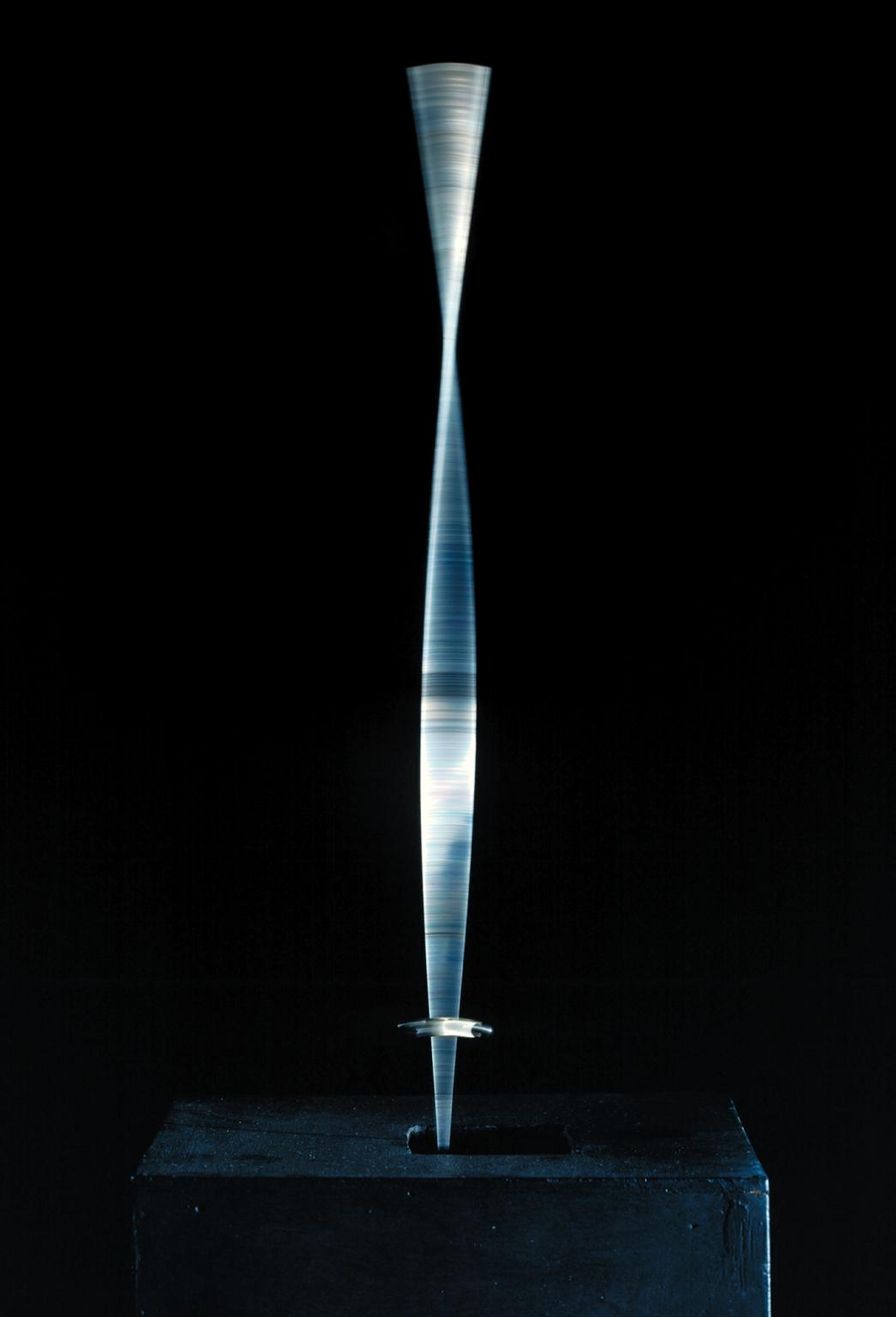
Kinetic Construction (Standing Wave) 1919–20, replica 1985, Naum Gabo
Origins and Influences
Kinetic art developed from several modernist movements of the early twentieth century. Futurism contributed its fascination with speed, machines and urban life. Constructivism introduced an interest in real space, industrial materials and construction rather than imitation. Dada influenced the ironic use of machines and anti-traditional objects, while the Bauhaus strengthened the connection between art, technology, design and perception.
Key Works
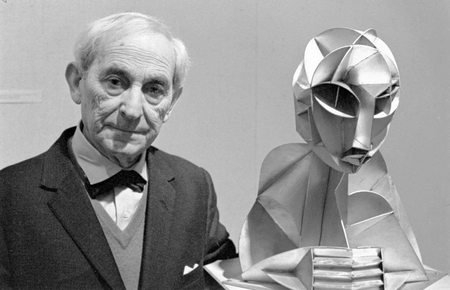
Naum Gabo’s Kinetic Construction (Standing Wave) is one of the earliest examples of real movement in modern sculpture: a vibrating metal rod creates a visible moving form.
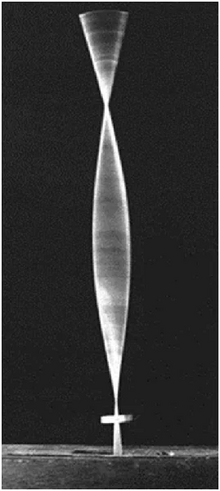
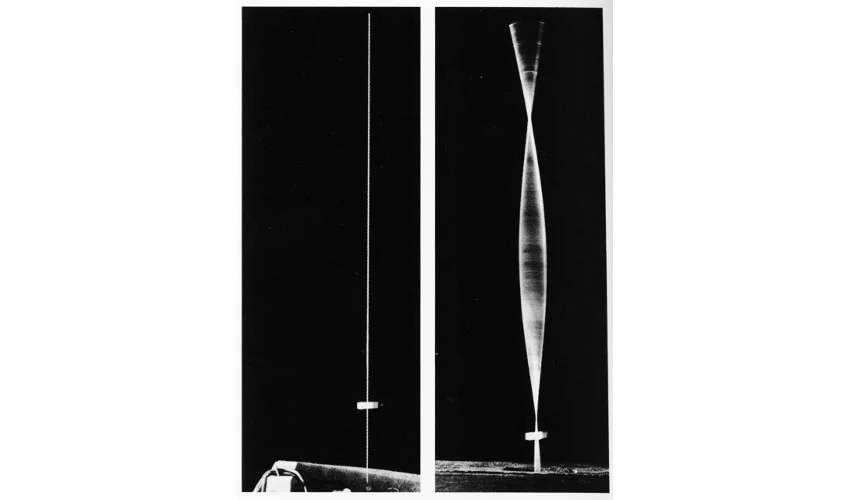
Kinetic Sculpture, Standing Wave
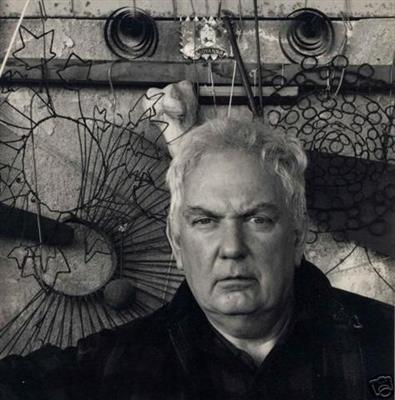
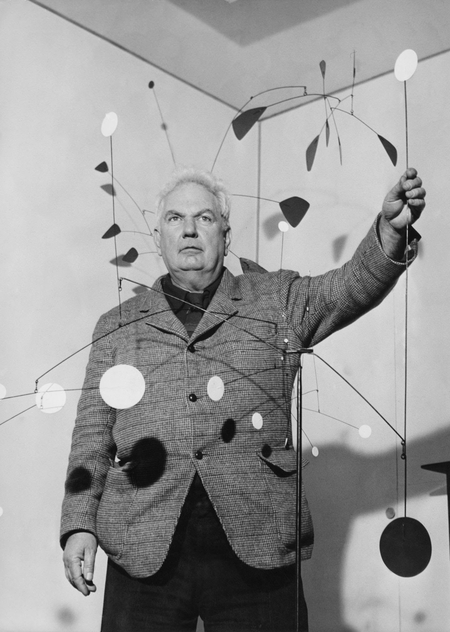
Alexander Calder’s Lobster Trap and Fish Tail uses balanced metal elements that move in response to air currents, producing a constantly changing composition.
Alexander Calder, Lobster Trap and Fish Tail, 1939
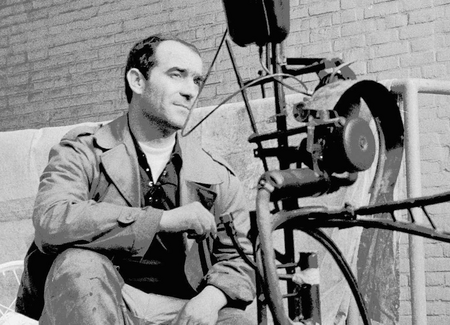
Jean Tinguely’s Homage to New York presents a more chaotic version of kinetic art: the machine-sculpture was designed to destroy itself during a public performance.
Jean Tinguely, Homage to New York, 1960
Main Practitioners
The leading practitioners include Naum Gabo, Alexander Calder, Jean Tinguely and Victor Vasarely. Gabo connected movement with Constructivist ideas of space and time. Calder made sculpture light, mobile and almost organic. Tinguely used mechanical movement to question technology, progress and artistic permanence. Vasarely explored optical movement through geometric patterns and visual illusion.
Theoretical Foundations
The theoretical basis of kinetic art can be linked to Naum Gabo and Anton Pevsner’s The Realistic Manifesto, which argued for an art based on real space and time rather than imitation. Gabo’s later text The Constructive Idea in Art also presented construction, material and modern form as central artistic principles. László Moholy-Nagy is another important theorist because his Bauhaus experiments and writings explored light, technology and visual perception.
Legacy and Influence
Kinetic art influenced Op Art, installation art, interactive art, media art and digital environments. Its main legacy is the idea that an artwork does not have to be static or complete in itself: it can unfold in time, depend on movement and include the viewer’s perception as part of its form.
Victor Vasarely, VEGA III, 1957–59
Gabo, Naum. «The Constructive Idea in Art.» 1937. Art in Theory 1900–1990: An Anthology of Changing Ideas, edited by Charles Harrison and Paul Wood, Blackwell, 1992, pp. 365–367.
Gabo, Naum, and Anton Pevsner. «The Realistic Manifesto.» 1920. Art in Theory 1900–1990: An Anthology of Changing Ideas, edited by Charles Harrison and Paul Wood, Blackwell, 1992, pp. 297–298.
Harrison, Charles, and Paul Wood, editors. Art in Theory 1900–1990: An Anthology of Changing Ideas. Blackwell, 1992.
Moholy-Nagy, László. Vision in Motion. Paul Theobald, 1947.
Popper, Frank. Origins and Development of Kinetic Art. New York Graphic Society, 1968.
Tate. «Kinetic Art.» Tate Art Terms.