//concept
An art institution is an entire system that defines the rules for creation, selection, interpretation, and recognition of art. It shapes perceptions of artistic value, sets the boundaries of what is acceptable, and influences which authors and works become part of art history. For a long time, this system remained a space dominated by male authors, perspectives, and modes of interpretation.
As the feminist movement developed, artists began to re-examine not only the established position of women in art but also the very mechanisms of the art system’s functioning. Their critique manifested in various forms: from engaging with the female body and reinterpreting familiar visual imagery to establishing independent galleries, artistic collectives, and alternative exhibition spaces. Gradually, feminist ideas became integrated into museum and international curatorial projects, which proposed new ways of representing women and rethinking the history of art.
The question arises: how are feminist artistic and curatorial practices transforming the art institution—from shifting visual language to creating alternative exhibition spaces and new museum principles?
The material was selected based on the principle of alignment with the research themes. The first chapter examines the reasons for the exclusion of women from the artistic system and the mechanisms of canon formation. The second chapter analyzes the artistic practices of Barbara Kruger, Valie Export, Cindy Sherman, and other female artists who re-interpret visual language and the position of the viewer. The third chapter is dedicated to alternative artistic spaces and collectives, such as A.I.R. Gallery, Womanhouse, and The Woman’s Building. The concluding chapter explores the museum and international exhibitions of WACK! (still researching), and the curatorial practices of Andrea Fraser.
The hypothesis is as follows: feminist critique restructures the art system not only by including women in the existing canon but also by changing the very principles of art organization and representation.
Why were there no women in the art institution?
Linda Nohlin, in her essay «Why Were There No Great Female Artists?», proposes moving away from searching for reasons why women supposedly failed to gain recognition within art institutions, and instead investigating the conditions under which art was created. She argues that the very question of female art initially overlooks social and institutional constraints. Artistic success depends not only on talent but also on access to education, professional communities, and opportunities for recognition.
The problem isn’t with the abilities of women, but with the structure of the artistic system.
D.F. Bogoslovsky, A.A. Buchkuri, B.M. Kustodiev, F.A. Malyavin, A.A. Murashko, A.I. Titov, M.E. Kheylik, Y.A. Chakhov // Still Life Studies in I.E. Repin’s Workshop, 1899–1903
One of the main obstacles for women was limited access to professional art education. Academies and workshops provided men with the opportunities necessary for development, while women faced bans and restrictions. The prohibition against studying the nude figure, which was considered a vital part of academic training, is particularly illustrative. As a result, women could not gain the same experience and compete with men on equal footing.
Inequality persisted even after education: women had fewer opportunities to participate in competitions, secure commissions, gain patronage, or receive professional recognition. Nokhlin shows that an artistic career depended on access to the system of academies, workshops, and social networks. Public expectations and limitations related to their roles in family and society also impacted the position of female artists.
Guerrilla Girls // Is this how women should be nude to enter the Metropolitan Museum? // 1989, paper, screenprint // private collection
The artistic canon is not created spontaneously; rather, it is shaped by art historians, critics, and institutions. Because women were often denied the opportunity to exhibit and gain recognition, their works were less frequently included in art history. This created a vicious cycle: the absence of female artists in the canon was perceived as proof of their lack of genius. In essence, the system itself determined whose names and works would be preserved in history.
/2/ How did female artists change art and the role of the viewer?
The presentation of each individual space particularly captured the audience’s attention: embroidered name napkins and ceramic plates featuring abstract imagery. Using this symbolism, Chicago addressed the theme of the historical exclusion of women, transforming female corporeality into an artistic metaphor for their return to history.
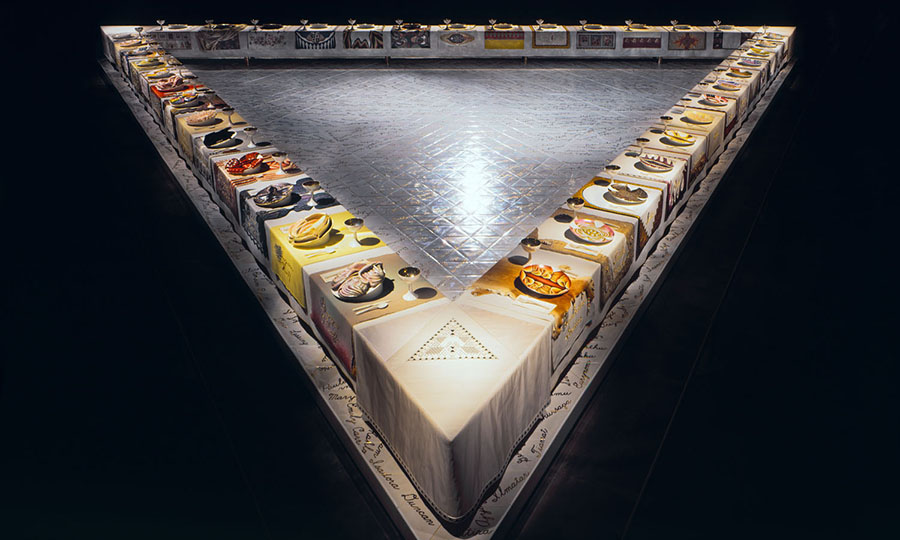
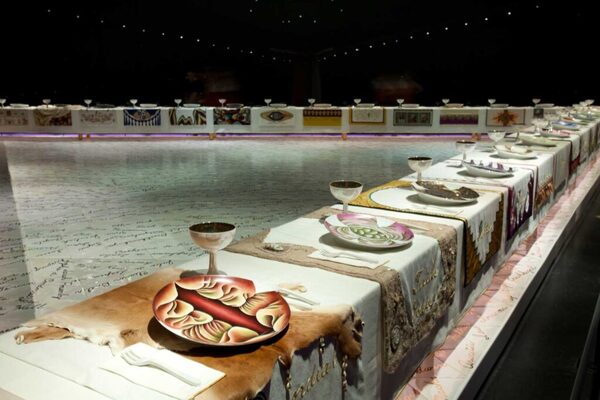
Judy Chicago // Dinner Party, 1974–1979
The installation «The Invited Dinner» by American artist Judy Chicago generated widespread public discourse. Created between 1974 and 1979 with the participation of volunteers, the work explored the history of women in Western civilization. The composition featured a triangular table, divided into three sides, each corresponding to a specific historical period. There were 39 seats around the table, dedicated to distinguished women of the past. The foundation of the installation was the so-called «floor of heritage"—a ceramic-tiled floor engraved with the names of 999 historically significant women.
When the traditional art system limited the opportunities for women to be represented in art, feminist artists began to question the very methods of that representation. They turned to a critique of a culture in which women traditionally functioned as objects of observation, while the viewer occupied the position of an external observer. By utilizing photography, performance, text, and installation, these artists reinterpreted the female image and the customary relationship between the viewer and the viewed.
Women… need to understand that the feelings they experience are not merely personal or «female» issues, but political problems of the entire system built on oppression.
/3/ how did women create their alternative artistic system?
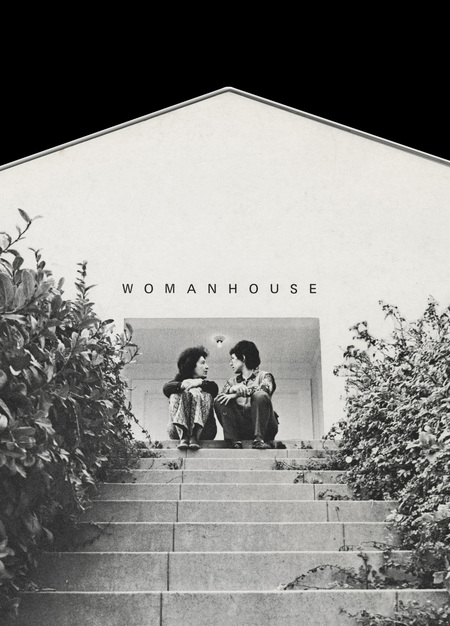
Institutional critique in art gradually compelled female artists to alter both the conditions of its creation and its display. Confronted with the limitations of traditional museums and galleries, women’s collectives began organizing their own exhibition spaces, workshops, and cultural centers. They independently defined the principles for selecting works, organizing shows, and fostering interaction among participants.
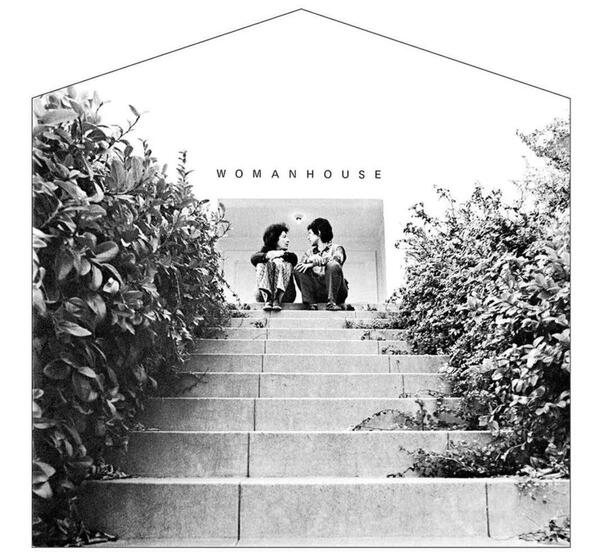
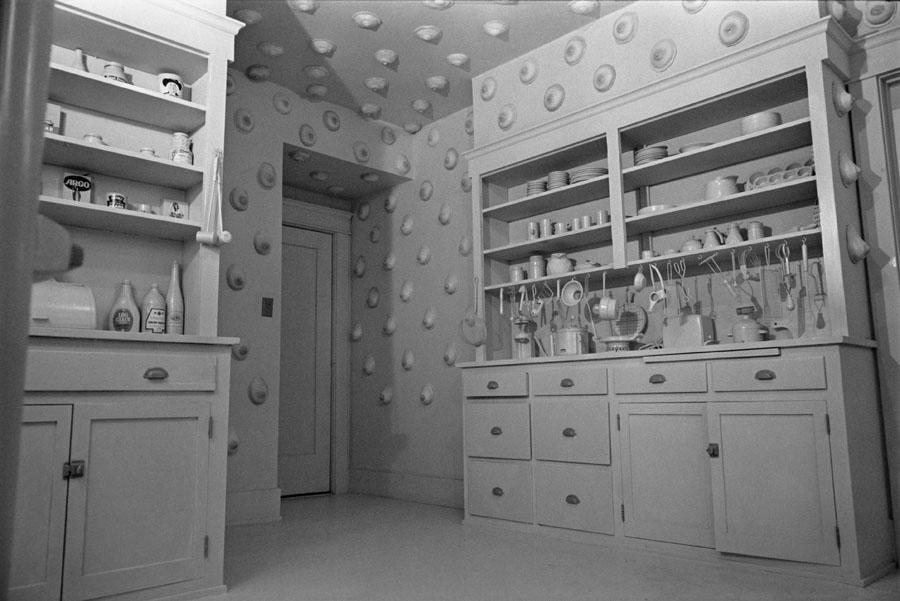
Judy Chicago and Miriam Schapiro // The Women’s House, 1972
/4/ How are women changing museums from within?
Gradually, women’s artistic practices began to become integrated into major museum and international exhibition projects. This allowed for a reevaluation of the established artistic canon, the inclusion of previously marginalized artists, and the proposal of new curatorial approaches.
Nokhlin, L. Why Weren’t There Great Female Artists? — Moscow: Ad Margine Press, 2024. — pp. 9–95.