Concept
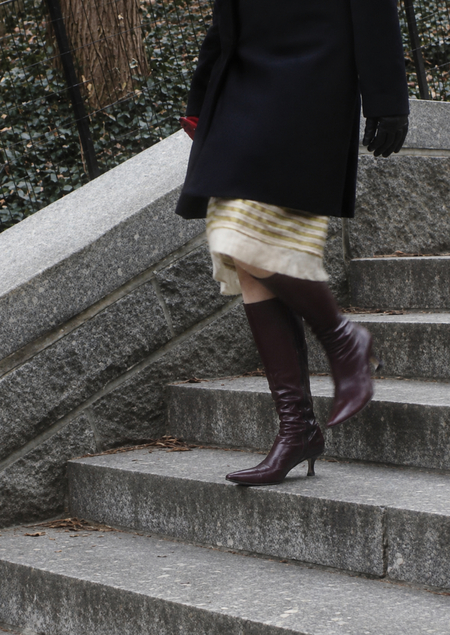
A walk is considered one of the most ordinary actions in our lives. Almost every day, we use walking as a tool to achieve a certain goal: getting to the right place, running daily errands, or simply taking a leisurely stroll. However, some artists view walking not merely as a means of locomotion, but as an artistic practice through which they can look at the city in a new way. Through this experience of movement, these authors explored unfamiliar territories, shaped their perception of specific spaces, interacted with other people, learned about their feelings and views from certain locations, and influenced the appearance of their surroundings through their own actions.
Walking is interesting not only as a physical movement but also as a way of perceiving the surrounding world. Rebecca Solnit’s book, «Wanderlust: A History of Walking, ” examines how strolling connects to thought, embodied experience, and human interaction with space. These ideas help us understand why artists turn to movement as an independent method of inquiry. I am interested in how a routine action can become an artistic statement and what precisely a walk allows one to discover in the environment.
So, the core question of the visual research becomes: how do artists transform a walk into a work of art, and how do they reinterpret the surrounding space through movement?
The working hypothesis posits that a walk transforms into an artistic practice when the artist intentionally alters habitual ways of movement and spatial interaction. The selection of a route, observation of the surroundings, tracking other people, and physical engagement with the landscape allow one not only to create a work but also to draw attention to the unique characteristics of a place that usually go unnoticed. In this process, photography, text, maps, and other forms of documentation help preserve the ephemeral experience of the walk and communicate it to the viewer.
What methods do artists use to transform the temporary experience of a walk into a visual work, and how does the chosen method of capture influence the perception of space?
Hypothesis
A walk becomes a work of art not just because of the action itself, but because of how it is visually presented. Maps, photographs, drawings, and video documentation allow artists to preserve various characteristics of movement: the route, the duration, the physical trace, subjective perception, and interaction with the environment.
Objective
To explore how different methods of documenting a walk help artists transform everyday movement into artistic practice and communicate the nuances of human interaction with space.
Material Selection Principle
For this research, I suggest selecting works based on three criteria:
1. A walk or a route is a significant part of the artistic concept. 2. The work possesses a visual form that can be analyzed. 3. The method of capturing movement influences the meaning of the work.
Therefore, we will not be considering all works related to travel, roads, or urban landscapes. We are specifically interested in pieces where movement becomes an artistic methodology.
Mapping a route—Walking as a way to see the city differently
This chapter explores how artists depart from conventional logic of movement, using a walk as a means to investigate the urban environment.The focus is on how the perception of the city shifts when the route is dictated not by the need to reach a specific destination, but by feelings, chance encounters, or the unique qualities of the surrounding space.
[!] Guy Debord — The Naked City, 1957 A psychogeographical map of Paris that presents the city not as a unified street system, but as a collection of spaces linked by subjective perception. — Guide psychogéographique de Paris, 1957. Another example of transforming the familiar urban map. It can be compared with The Naked City to explore ways of visually representing the psychogeographical experience.[!] Hamish Fulton — Seven 7 Day Walks, 1993 A series of graphic works based on seven walks through the Cairngorms mountain range in Scotland, undertaken between 1985–1991. Fulton uses photographs, text, and walking notes to convey his personal experience interacting with the landscape. — Seven Days Walking and Seven Nights Camping in a Wood Scotland, 1993 The work is based on a 1985 walk and allows for the exploration of the interplay between textual description, time, and visual imagery.[!] Richard Ventworth — Making Do and Getting By, from the 1970s A long-running photographic project by the British artist Richard Ventworth, in which he documents unusual situations and objects discovered during everyday walks. His photographs feature random assemblages of objects, improvised uses of urban surfaces, and traces of human presence. For example, items temporarily used out of their intended purpose, or minor alterations to the urban environment resulting from residents' actions.
Chapter Conclusion: The artistic walk allows one to rethink conventional notions of the city and pay attention to spaces that typically remain outside daily routines. For Brown, the route emerges through the explanation provided by another person, while for Calle, it stems from following that person. Both artists cede a degree of control over their own movement to other individuals, but they approach this differently. It is also worth examining the divergence in visual outcomes—Brown’s conventional diagrams versus Calle’s photographic diary. Chapter Conclusion: The artistic route can be shaped not only by the artist themselves but also by the actions of others. In this scenario, the walk becomes a means of investigating subjective perception of space and social interactions.
Leave a mark
This chapter examines works where the result of a walk becomes a physical alteration of the environment.The central question is—how does a temporary human action transform into a visible artistic object?
[!] Richard Long — A Line Made by Walking, 1967 The artist repeatedly walked across a patch of grass until a discernible line emerged. The track itself was ephemeral, and its photograph became the means of preserving the work. — A Line of Sticks in Somerset, 1974, or A Line in Japan, 1979. The piece allows for further exploration of the line as an artistic device and facilitates a comparison of different modes of interaction with natural materials.[!] Francis Alÿs — The Green Line, 2004 The artist walked through Jerusalem with a can of green paint, leaving a line in his wake. Unlike Long, the trace here is connected not only to the physical presence of the human but also to a historical boundary.[!] Dennis Oppenheim — Annual Rings, 1968 In 1968, American artist Dennis Oppenheim created the work Annual Rings on the frozen St. John River, which runs along the border between the US and Canada. The artist carved concentric circles into the snow and ice, resembling the growth rings of a tree. The work existed directly in the natural environment and was temporary. Its outcome was preserved through photographic documentation.
The Physical Traces of Long and Alice.Both artists create line through movement; however, in one case, this occurs within a natural landscape, and in the other, within a politically significant urban space.It is also important to consider the role of photography and video, as the traces themselves may disappear.Chapter conclusion: movement can directly transform space, and the meaning of the resulting trace depends on the location, material, and context of the artistic action.
Walking Another’s Route: A Stroll as a Spectator’s Experience
In previous chapters, artists took walks independently, and the viewers became familiar with their results. In this chapter, a different approach is examined: the viewer themselves becomes a participant in the artistic action. The artist creates conditions under which a person begins to perceive the surrounding space differently.
[!] Stanley Brown — This Way Brown, 1960s The artist asked passersby to explain directions, collecting hand-drawn route maps. The result was a series of images demonstrating the vastly different ways people perceive the same space.[!] Sophie Calle — Suite Vénitienne, 1980 The artist traveled to Venice following a person she had met by chance in Paris. She tracked his movements, photographed the city, and kept journals. Here, the route is defined not by architecture or a predetermined destination, but by the movement of another person. The work combines photographs and diary entries.[!] Vito Acconci — Following Piece, 1969
Conclusion — What is left after the walk?
333
111