Как бывшая насосная станция стала новой арт-площадкой Москвы
In the late 19th century, Moscow faced an unexpected problem. The old Mytishchinsky water supply, which relied on gravity flow, could no longer keep up with the rapidly growing city.
Under Nikolai Alexeyev, who was serving as the head of the city—effectively the mayor of Moscow—they constructed a new pumping station with steam engines near the Alekseevsky village. This station lifted water into the Krestovsky water towers, from which it was distributed throughout Moscow. For its time, it was one of the capital’s most advanced engineering complexes.
The project was entrusted to architect Maxim Heppener, whom Muscovites recognize from the Sokolnicheskaya Fire Alarm Tower. Instead of standard production buildings, the ensemble consists of red brick with arched windows and decorative masonry. On the facade, a commemorative plaque was even installed bearing the name of Alexander III, as if it were a palace or a museum rather than a pumping station. Although, the emperor himself probably never saw it.
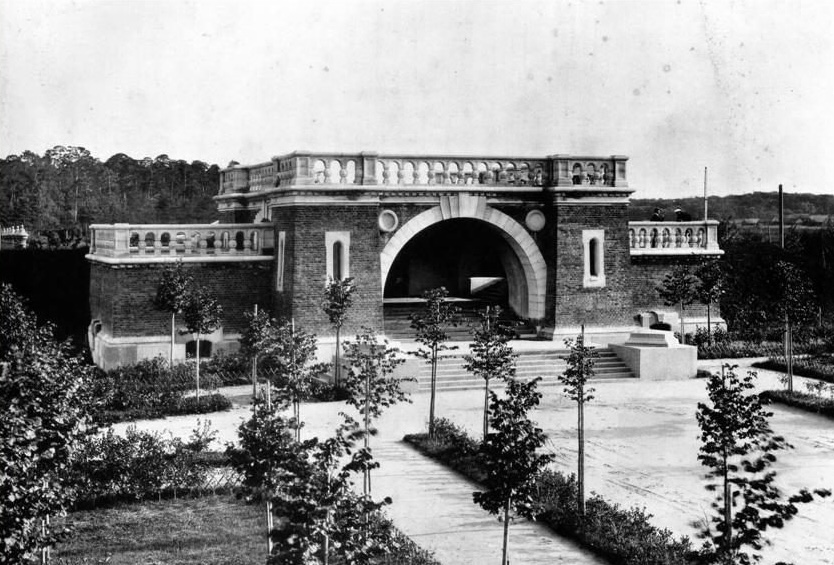
Alexeevskaya Water Pumping Station, Reserve Tank, 1910–1913. Artist: pastvu.com
At the end of the 20th century, the station permanently stopped pumping water. The «Vodopribor» factory continued to operate on its grounds for some time, but after production ceased, the buildings were left vacant. For several years, they slowly decayed, mirroring the fate of many Moscow industrial structures. However, they were not demolished. Instead, the complex was carefully restored, preserving the red-brick facades, historic vaulted ceilings, terrazzo flooring, and recreating the Wallace fountain—a rare drinking fountain in Moscow designed by the French sculptor Charles Auguste Lebur.
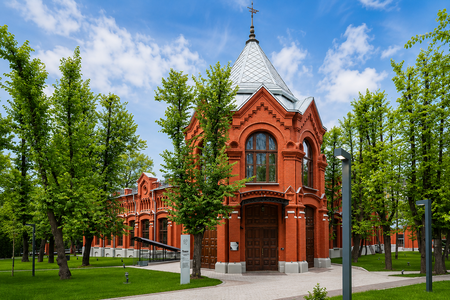
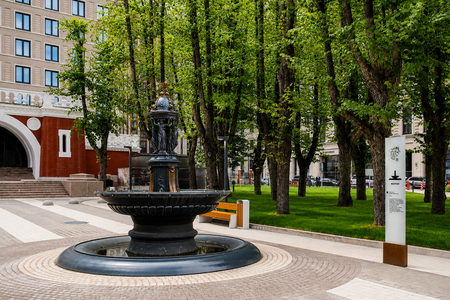
Photo: Etalon Press Service
Naturally, Moscow has already accustomed us to the sight of former industrial zones being transformed into cultural hubs. Venues like «Vinzavod,» «GES-2,» and «Kristall» have demonstrated that factory buildings can be given a new life. The Alekseevskaya water pumping station followed the same trajectory. After its restoration, the ARTBOX ETALON and ARTSPACE ETALON galleries opened here. Despite this transformation, the historical space has retained its intimate character. There are no crowds—instead, there is old brick, silence, a courtyard lined with ancient trees, and two galleries connected by a minute’s walk. It’s strange that not many people know about this place yet.
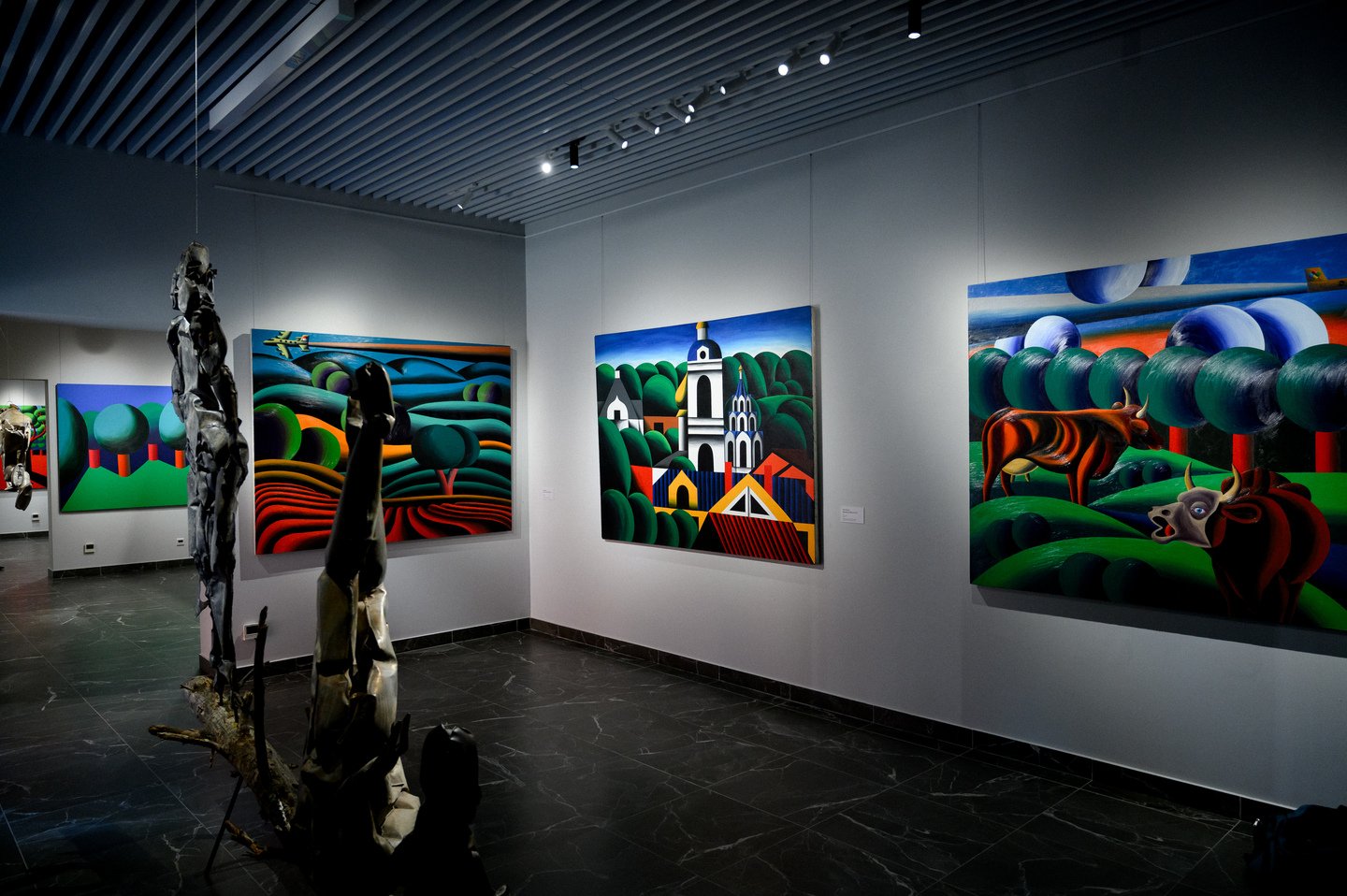
Currently, ARTBOX ETALON is hosting the exhibition «Baric Metamorphosis.» In one space, Oleg Khovostov and Vilgeniy Melnikov—two artists who are difficult to imagine side-by-side—have met. The idea for the exhibition was suggested by the location itself. The main word here used to be «pressure"—it was beneath this pressure that water entered the city system. Curator Capitolina Zamorokko translated this image into art. Melnikov’s metal objects look as if they are being crushed like fabric, yet they remain cold steel. Next to them, Khovostov’s landscapes appear almost weightless. Together, they transform the former pumping station into a space where pressure is felt not physically, but emotionally.
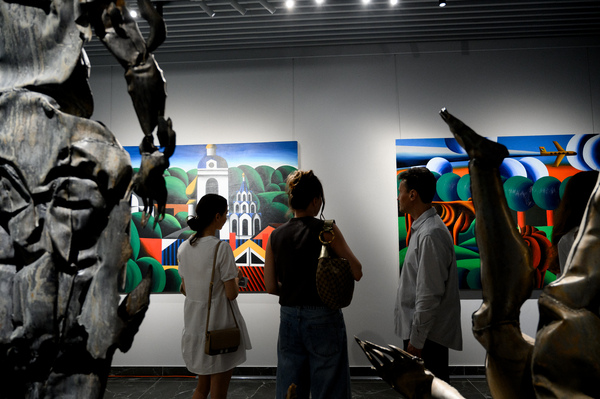
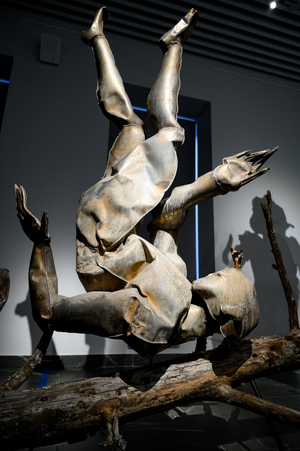
Works by Oleg Khvostov and Vilgen Melnikov from the «Baric Metamorphosis» exhibition
In the second building of ARTSPACE ETALON, a solo exhibition by Igor Kislyitsyn, «Magma’s Path,» is open. The artist entered contemporary art through icon painting and temple restoration. This experience is clearly visible in his painting. Some works resemble old frescoes, while others look like ancient artifacts discovered during archaeological excavations. Nevertheless, all the paintings are continually evolving. Kislyitsyn constantly returns to already finished canvases, adding to them and altering details.
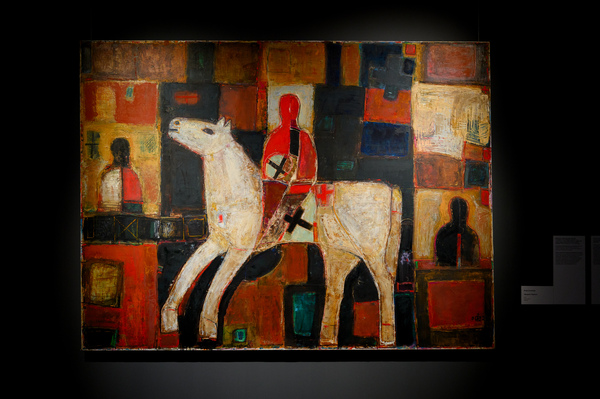
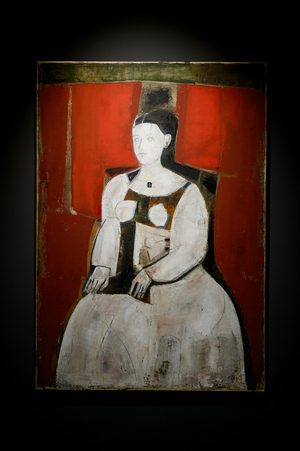
Works by Igor Kislytsin from the «Magma Path» exhibition