Neural networks are increasingly becoming part of a designer’s workflow, but the sheer volume of available tools complicates the choice—it’s often unclear which tool is appropriate for a specific task, how to achieve the desired result, or what manual refinements will be necessary. This project is a media guide for beginner designers, demonstrating, through concrete examples, how to use AI in academic coursework and initial professional projects.
Media Descriptions and Objectives
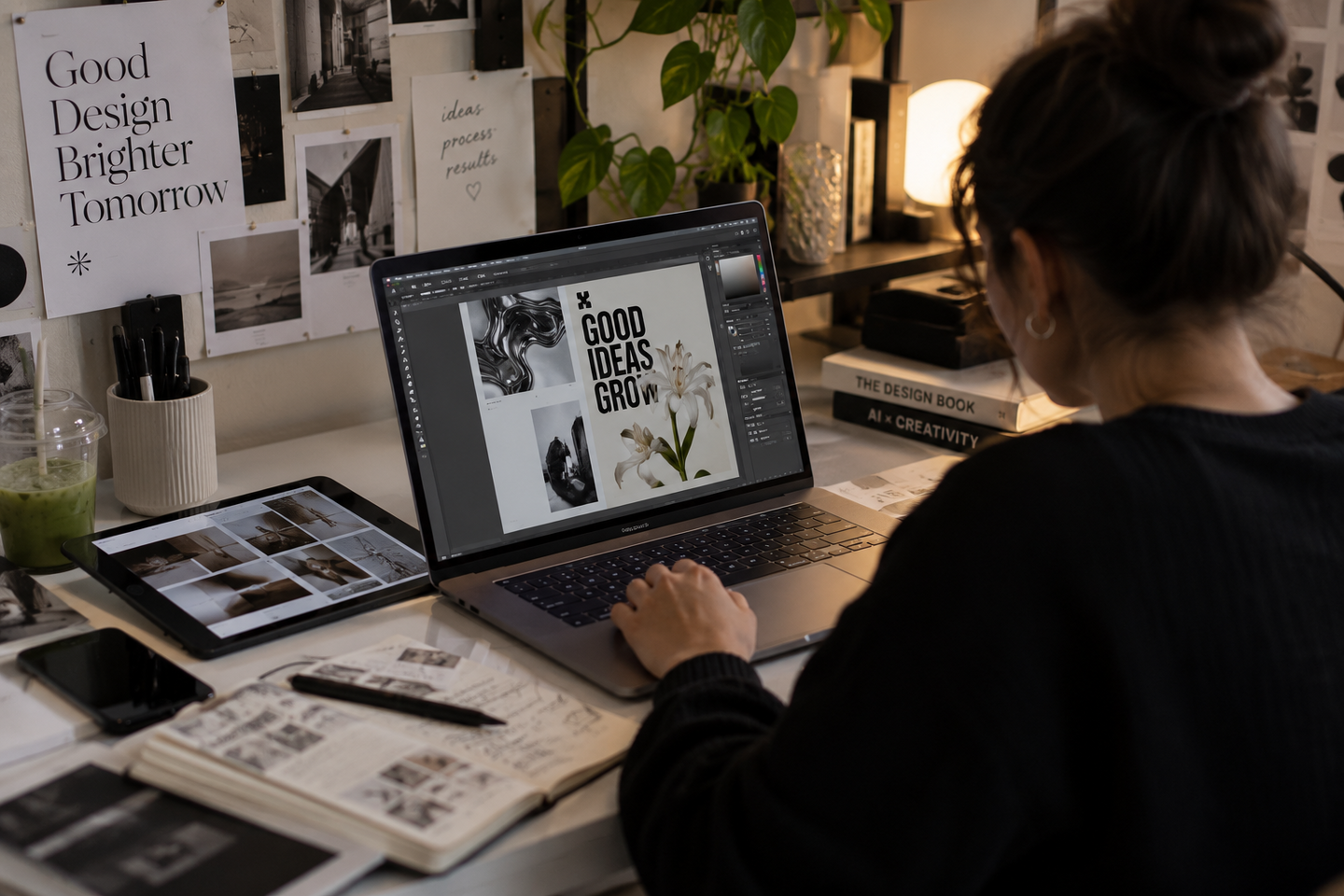
To help emerging designers apply neural networks in academic and professional projects: selecting the right tool for a specific task and achieving the desired outcome. In step-by-step breakdowns, we show you where to begin, how to replicate the technique with your own materials, how to spot generation errors, and how to refine the result independently.
Theme: Segment + Narrow Topic
Who is this for?For students and emerging graphic designers who are working on academic projects and their first professional commissions.What is it about?How to use neural networks to create mood boards, generate imagery for posters and covers, process photographs, and prepare various graphic concepts. Each resource focuses on a specific task: it demonstrates a step-by-step solution, analyzes the outcome, and explains what needs to be refined manually.
Competitors: Analysis Method
Where We Searched: search engine results, design media websites, and educational sections of creative work platforms and services.
Search Queries: «AI for designers, ” „AI for graphic design, ” „AI design tutorials.“
Comparison Criteria:
- Alignment of audience and design objectives.
- Publication platforms and formats.
- Availability of step-by-step instructions.
- Visual presentation and outcome demonstration.
- Tone of communication and clarity for beginners.
- Possibility of replicating the method, considering cost and accessibility.
- Error analysis and manual refinement.
Scope of Research: analysis of open materials. Audience engagement and preference statistics through LiveDune have not yet been verified.
Direct Competitors
They publish materials on the application of AI in design and solve a similar information challenge.
Indirect Competitors
They help the same audience find ideas, references, and design content, but they approach this task in different ways.
Potential Competitors
These are projects that could enhance competitiveness if they expand the short, free content addressing design challenges.
Conclusions from Competitive Analysis
We base the media on step-by-step instructions, concise delivery, and easily savable cards. The project’s unique feature is testing different AI tools on the same design task. In each breakdown, we show the source materials, the prompt, the settings, unsuccessful attempts, and the final result after manual refinement. We specify the date of the test and the access conditions. We hypothesize that this format will help a beginner designer select a tool and replicate the approach in their own project.
Distribution Channel
The main channel is Telegram.We hypothesize that readers prefer receiving short analyses in their feed, saving instructions, and asking questions in the comments. We will test this hypothesis with our first readers.Publication Formats: — step-by-step instruction cards; — short screen recordings; — source-to-result comparisons; — prompt with explanations; — polls about the next assignment; — analysis of a subscriber’s question.Navigation: a pinned catalog organized by tasks: «moodboard, ” „images, ” „editing, ” and „refinement.“Reader Acquisition: short demonstrations on VKontakte and placements within student design communities. For the external platform, we are preparing a dedicated video showcasing the final result; for Telegram, we will provide a complete breakdown.
Target Audience: four segments
The primary audience includes students and aspiring graphic designers who need AI to solve specific academic and early professional challenges.