Concept
At the end of the 19th century, a device appeared in the world that had never existed before: a mechanism capable of reproducing the voice of a deceased person. The gramophone and phonograph were not merely technical inventions. They radically transformed the very concepts of sound, memory, and presence. Visual culture responded immediately to this: the gramophone appeared in painting, advertising, posters, caricature, and photography. Each time, it carried with it not just the image of a technological apparatus, but an entire complex of cultural anxieties and hopes. This study is dedicated to exploring exactly how the gramophone entered the visual language of the era and what this era communicated about itself through it.
The material was selected based on the criterion of the image’s conceptual density: in every visual document examined, the gramophone or phonograph is not merely a domestic object in the background, but a semantic center or a fundamental element of the statement. The chronological scope of the study covers the period from the late 1880s through the 1930s—from the appearance of the first phonographs to the era when the gramophone became a familiar household item and its visual rhetoric was established as a convention.
The research is structured thematically and covers five substantive sections. The first introduces the cultural context surrounding the emergence of new media. Subsequent sections examine the phonograph sequentially in advertising language, ethnographic photography, painting and the avant-garde, and finally in Soviet propaganda. This division allows us to show how the same device became a fundamentally different sign depending on the context of its depiction.
The theoretical foundation of this research is built upon two key sources. Jonathan Sterne, in «The Audible Past,» analyzes the cultural conditions surrounding the emergence of sound reproduction technologies and demonstrates how these technologies transformed the very concept of listening. Erica Brady, in «A Spiral Way,» examines the history of phonograph use in ethnographic fieldwork, revealing an unexpected dimension of this medium. Additionally, sources pertaining to the history of Soviet posters and early 20th-century advertising visual culture are utilized.
Hypothesis
Key research question: What precisely did the gramophone signify for the visual culture of its time, and what cultural anxieties and hopes were expressed through its depiction?
The hypothesis is as follows: in the visual language of the 1890s–1930s, the gramophone was not merely an image of a piece of technology, but a persistent visual sign through which the cultures and ideologies of various nations spoke about progress, death, memory, colonialism, and political power. The same object became a fundamentally different symbol depending on who depicted it and for what purpose.
Rubrics
1. Introduction: The Machine That Conquered Death 2. His Master’s Voice: Advertising as Mythology 3. Phonograph in the Field: Ethnography and the Colonial Gaze 4. The Gramophone in Painting and Avant-Garde 5. The Soviet Phonograph: Sound in the Service of Revolution 6. Sound Becomes Routine: The Sunset of Visual Anxiety 7. Conclusion: What the Gramophone Said About Its Era
1. Introduction: The machine that conquered death
When Thomas Edison first heard his own voice reproduced by the phonograph in 1877, he was as stunned as anyone else. The device recorded and played back sound. A deceased person’s voice could now sound after their death. This was not merely a technical achievement—it was a transgression of one of the fundamental boundaries of human experience: the line between presence and absence, between the living and the dead.
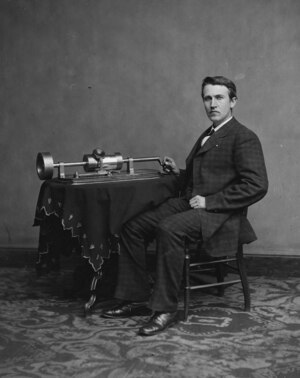
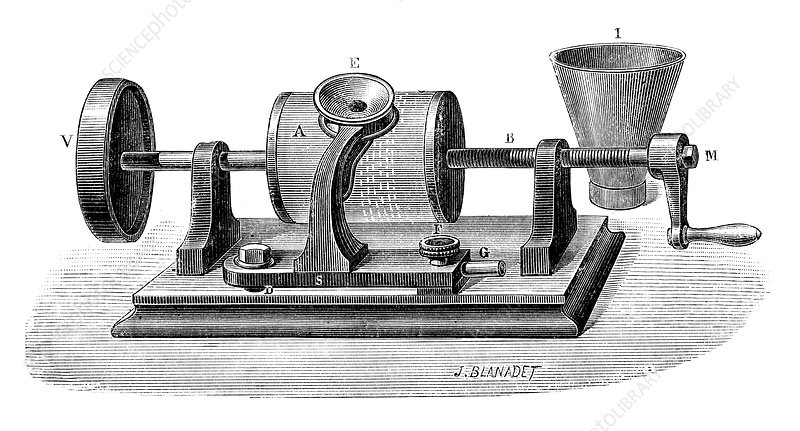
Thomas Edison with the first phonograph, 1877. The device that first allowed the recording and playback of the human voice. Contemporaries perceived it as both a marvel and a threat.
In «The Audible Past, ” Jonathan Sterne argues that the advent of audio playback technology was not merely a technical event. It necessitated an entire cultural reorganization—new concepts of listening, new relationships between the live and the recorded voice, and new ways of thinking about time and memory. And visual culture became one of the primary arenas where this reorganization took place.
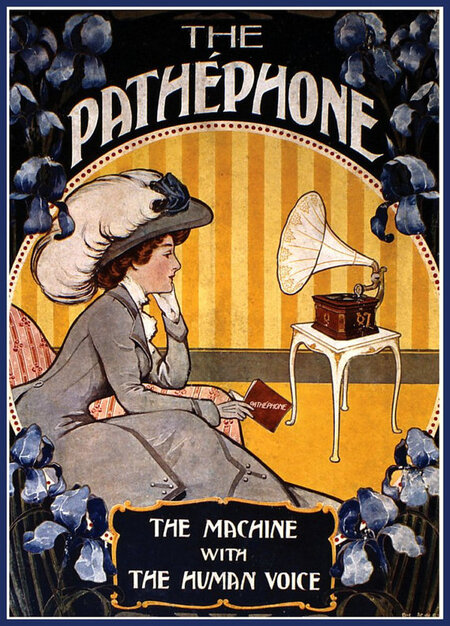
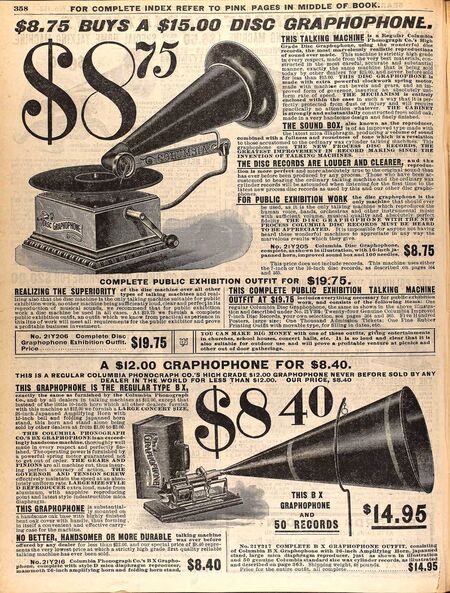
Early advertising illustrations of the gramophone, 1900s. The new device immediately became an object of visual language: it was depicted in newspapers, magazines, and advertising posters.
Visual culture responded to the phonograph along several simultaneous avenues. Advertising transformed it into a symbol of progress and domestic comfort. Ethnography utilized it as a tool for colonial documentation. Painters and the avant-garde viewed it as a metaphor for the new age. Propaganda molded it into an instrument of political influence. In each of these contexts, the very same object became a fundamentally different sign.
2. His Master’s Voice: Advertising as Mythology
In 1898, artist Francis Barraud painted a picture: a white fox terrier named Nipper sitting in front of a gramophone horn and listening. This painting became one of the most reproduced images in the history of advertising. Nipper and the gramophone turned into the logo for His Master’s Voice and into a universal visual symbol of sound reproduction for several decades.
Francis Barraud. «His Master’s Voice, ” 1898. Original oil painting that became the basis for one of the most famous advertising images in history.
The choice of a dog as the main character was not accidental. Nipper was listening to a gramophone, recognizing the voice of his deceased owner—this was how Barro explained the concept behind the painting. The advertisement, therefore, was not built on demonstrating the technical advantages of the product, but on the emotional image of overcoming death. The gramophone preserves the voice of someone who is no longer here. This is not an advertisement for a device; it is an advertisement for immortality.
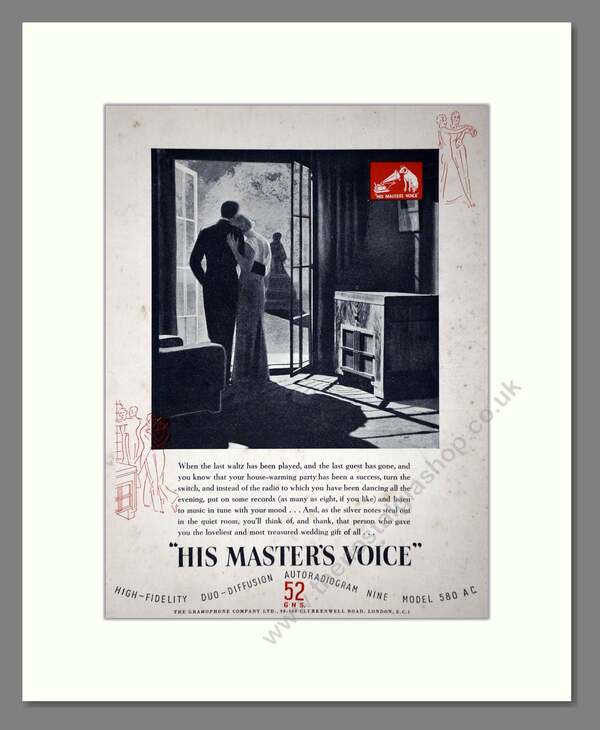
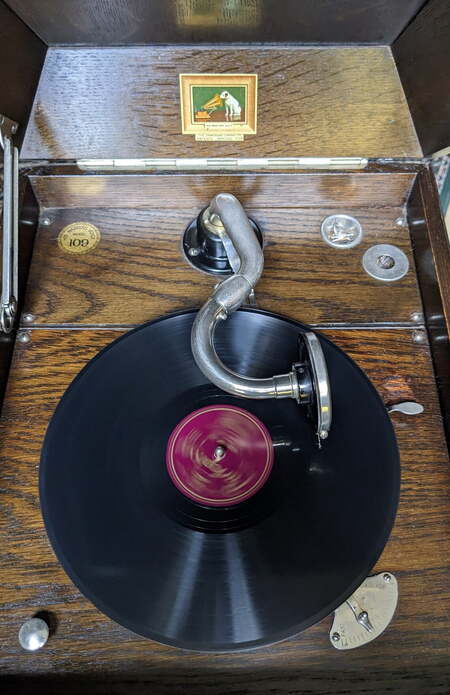
His Master’s Voice promotional posters, 1910s–1920s. The image of Nipper was reproduced in advertisements, on record labels, and in store windows.
But HMV wasn’t the only company that used the gramophone as a marketing symbol. Competing companies were building their own visual mythologies around this new medium. One thing was common to all early gramophone advertising: the device was always placed within the context of domestic comfort, family happiness, or cultural prestige. The gramophone was marketed not as a technology, but as a lifestyle.
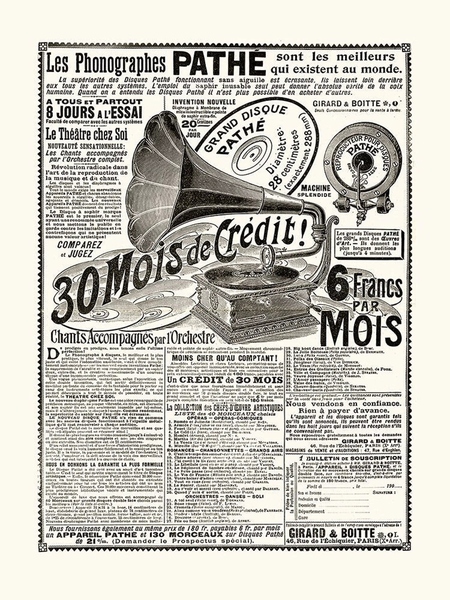
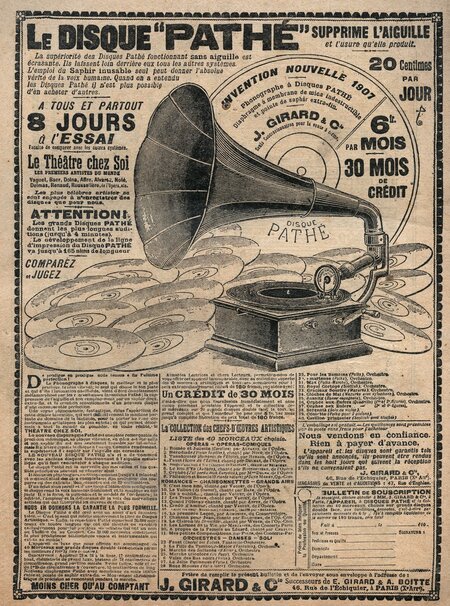
Pathé advertisement, France, 1900s. French manufacturers cultivated the image of the phonograph as a symbol of bourgeois domestic bliss: a family listening to music together.
3. Phonograph in the Field: Ethnography and the Colonial Gaze
Almost simultaneously with the commercial release of the gramophone, scholars recognized its potential for preserving fading cultures. Ethnographers, folklorists, and anthropologists began taking the phonograph on expeditions—recording the singing, music, and speech of peoples they believed were destined to disappear under the pressure of Western civilization. These expeditions left behind a rich photographic archive: images of scholars with phonographs surrounded by local residents.
Francis Densmore with the leader of the Blackfeet tribe, 1916. The ethnographer is recording the chief’s songs on a phonograph for the Smithsonian Institution. The photograph captures more than just a technical process.
Erica Brady, in «A Spiral Way, ” demonstrates that the phonograph in ethnography was not a neutral tool of documentation. It was part of a colonial project: Western scholars traveled to „primitive“ peoples, recorded their culture, and took the recordings back to archives in Europe and America. The cultures’ own speakers often did not have access to recordings of their voices.
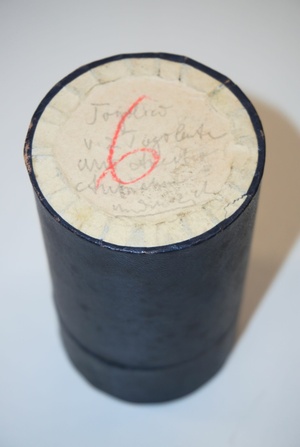
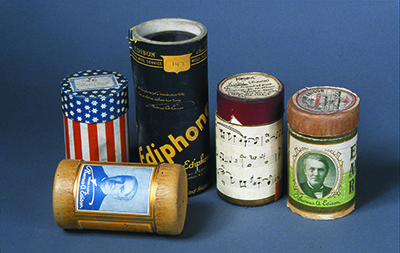
The Berlin Phonogram Archive, established in 1900. It is the world’s first archive of ethnographic sound recordings.
4. The Phonograph in Painting and Avant-Garde
Artists of the early 20th century could not remain indifferent to new media. The gramophone entered painting and graphic arts almost simultaneously with its integration into daily life. However, it carried fundamentally different meanings within various artistic contexts. For realists, it was a detail of modern interior design. For avant-gardists, it became a metaphor for the new era, mechanical civilization, and a fundamentally new relationship with sound.
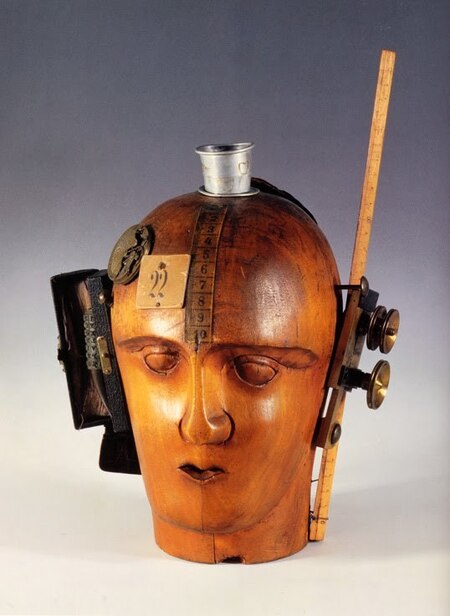
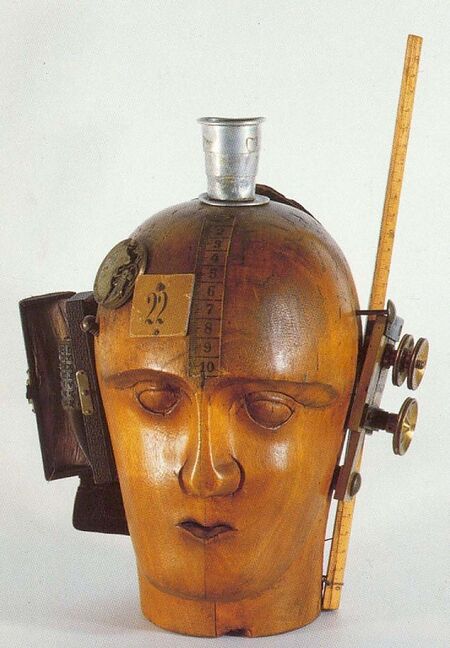
Raoul Hausmann. «Mechanical Head» and a series of Dadaist collages, 1919–1920. The gramophone horn as part of the mechanical man.