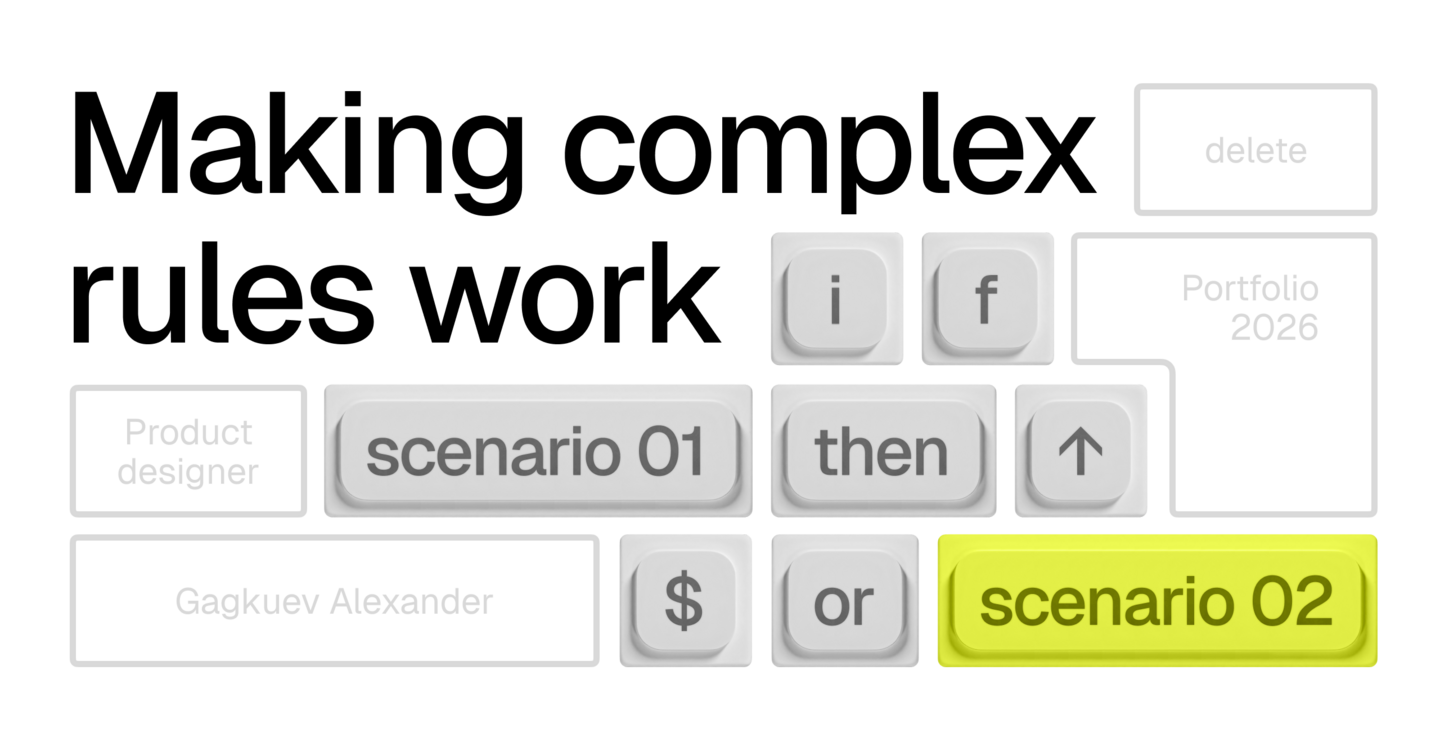
I design the part
of a product where
the rules get complicated.

Gagkuev Alexander
I work across UX/UI, web and communication design. I’m a designer at Blask, a B2B market analytics platform, and a student at the HSE Art and Design School, studying digital product design and promotion.I am looking for a product team where design takes part in shaping the decisions. Blask · February 2025–present Middle Communication Designer, including three months as a Middle UX/UI Designer. My work spans product interfaces, websites, design systems and communications.LIT · 2024 UX/UI design for an event-discovery startup, working with an art director.HSE Art and Design School Digital product design and promotion.Understand the rules before drawing the screens I work through unfamiliar contexts, connect business requirements with user needs and question the assumptions behind a task.Build beyond the immediate task I look for shared rules and reusable patterns, whether I’m designing an interface, a system, a website or a new interaction.Carry the idea into implementation I work through technical constraints with the team and take on unfamiliar tools when the task needs them.
01: Making a modular subscription understandable
Blask is a B2B market analytics platform. Its sales team originally handled plan selection and account setup manually. With modular subscriptions, clients needed a clear way to see and manage what they had purchased.
Role: UX/UI designer.Contribution: Profile flows, subscription management and Enterprise.Status: In production.We worked as a pair: the other designer focused on the configurator, and I designed the profile and subscription management flows. My scope covered plan details, team access, payment history, cancellation and restoration, and additional Enterprise capabilities.
Show what the client
has paid for
The profile brings the purchased modules, countries, billing information and team into one place. Compact and expanded views let clients check the essentials and inspect the details.Before: Basic account information.After: A visible plan, its contents, payment details and the people using it.
One place
to change the plan
We considered separate upgrade actions for individual modules and countries. They would either duplicate the purchase interface or send clients to the same configurator from many different places.We chose one entry point: Manage plan. Clients review and change their configuration in one place.
Explain what is charged now —
and what changes later
Adding an option halfway through a billing period creates two different amounts to explain:Today: Pay for the added option for the remaining days.Next period: Pay for the updated configuration for the full period.If the billing cycle also changes: Start the new cycle after the current paid period ends.I worked out how to show the current adjustment, the next payment and the change of cycle together.
Put responsibility
next to the action
The administrator manages the payment method and purchasing decisions. Other team members need to understand their access and who is responsible for the plan.Cancellation also has a timeline: access continues until the paid period ends, and the subscription can be restored before then. The interface makes the current state and the next available action visible.
Make additional Enterprise
capabilities visible
Enterprise adds capabilities such as data integration, custom reporting and research support. Their scope depends on the client’s needs and is arranged with the team.I designed the offer and its presentation in the profile alongside the standard plan.Outcome: The profile and Enterprise flows are in production. They need a longer period of use before we can assess adoption and their effect on conversion and revenue.
02: Shared foundations
for different kinds of work.
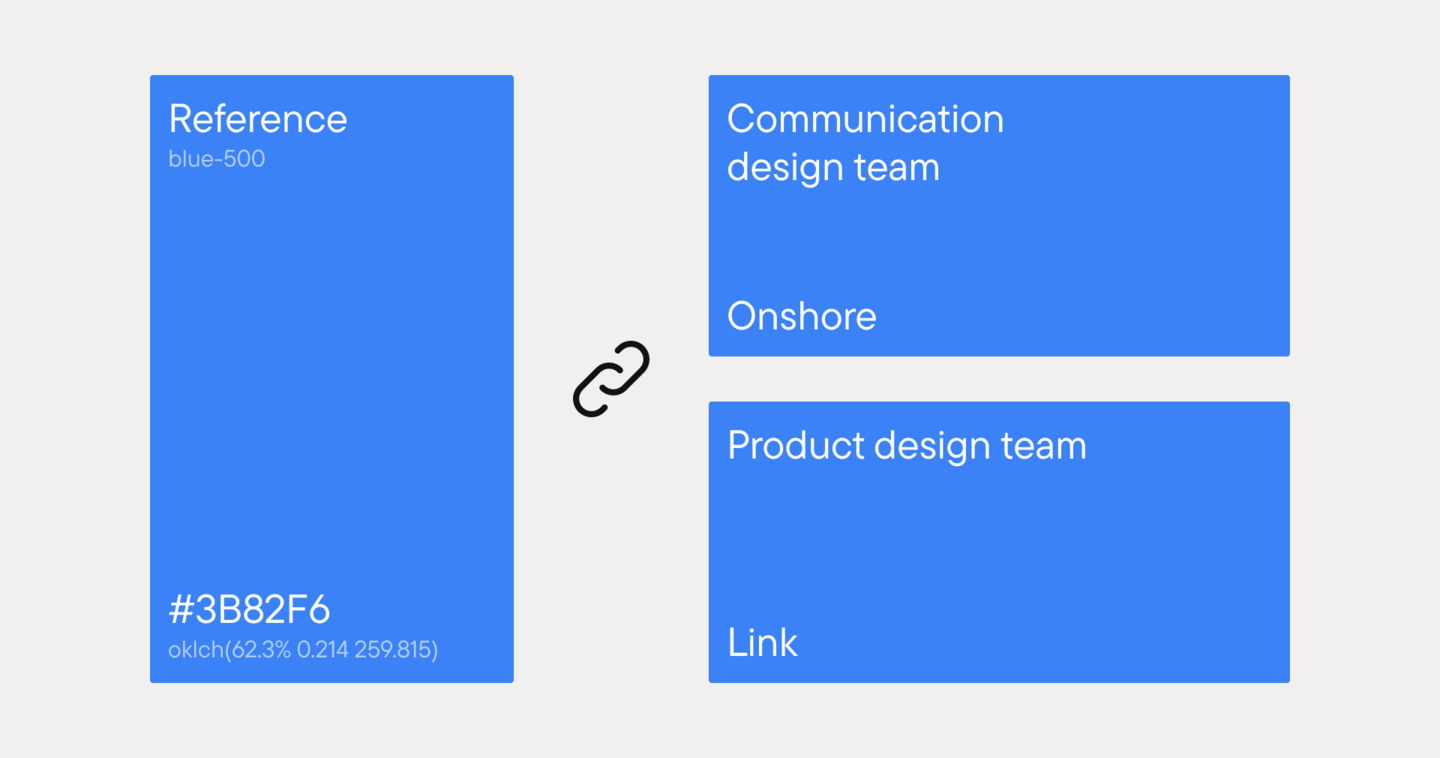
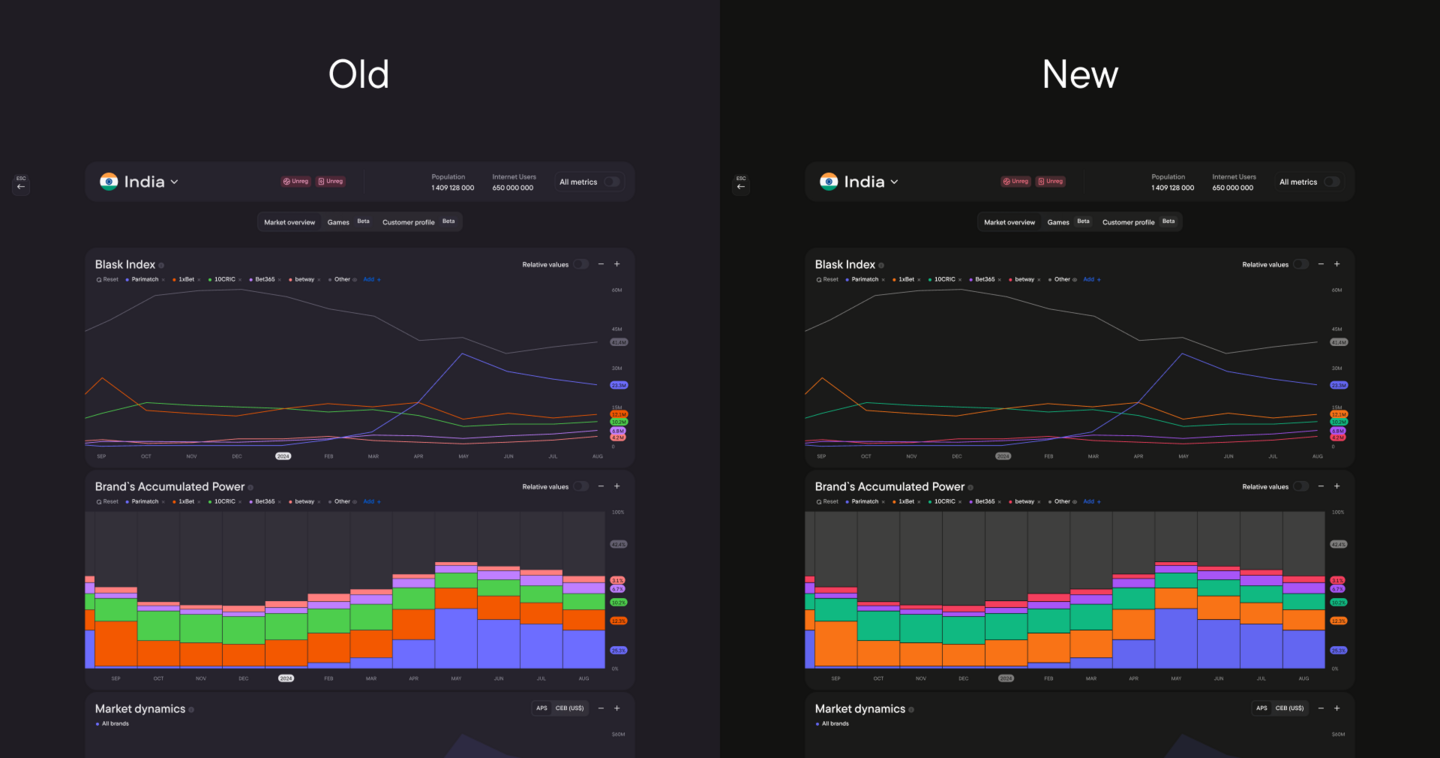
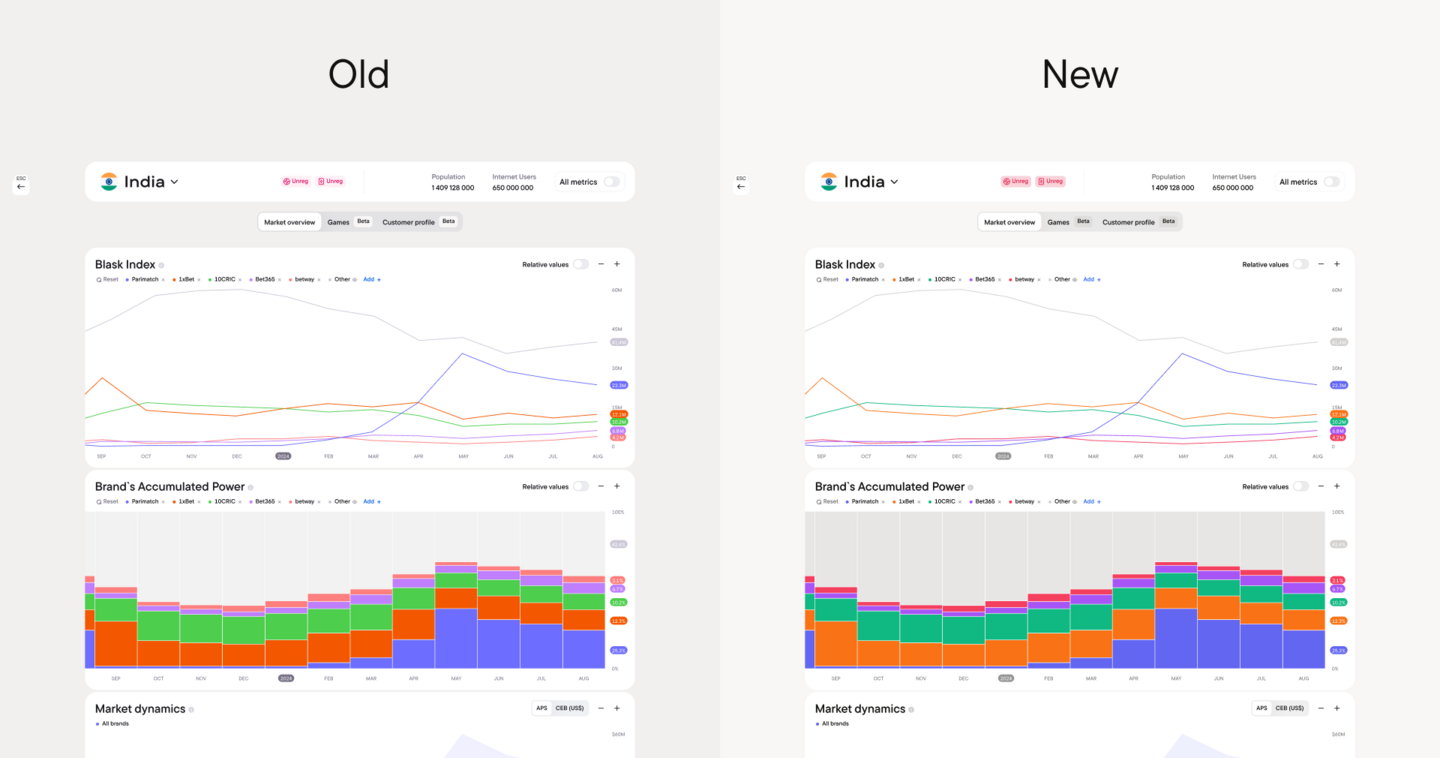
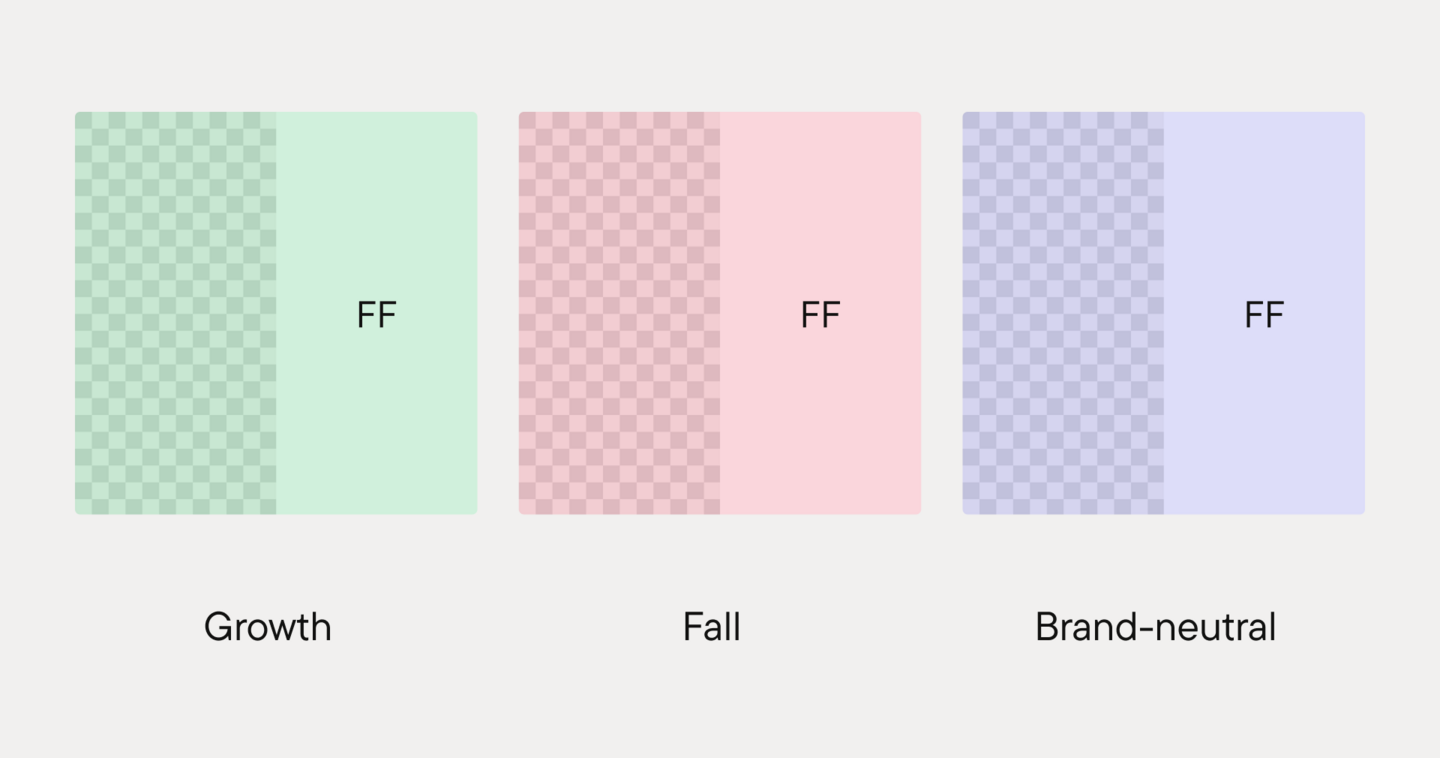
Role: UX/UI and communication designer.Contribution: Web design system, themes, Reference layer and communication design rules.Status: In use by the teams; some rules are still being documented.Blask’s design teams had different needs and their own ways of working with color and type. Without a shared foundation, each team made recurring decisions manually, and updates led to repeated corrections. I built the web design system and reworked the product’s dark theme. With another designer on the team, I developed the shared Reference approach, then defined colors, type sizes and layout rules for communication design.
03: From design
to a working launch.
Role: Website design and Framer implementation.Contribution: Design, CMS, navigation, filtering, responsive layouts and certificate downloads.Status: Both stages launched on schedule; the site is live.Brand identity: Created by an external designer; I contributed direction and adapted it across the website, email and social materials.I worked on both stages of Blask Awards: the nominations website and the announcement of winners. The project had roughly a month for design, approvals and the first launch.When planned development support became unavailable close to launch, I took on the Framer build. I had roughly 7–10 days to assemble the site, CMS, filters, responsive layouts and certificate downloads.We reduced the scope to the essential blocks and delivered both releases on schedule.