ORGANIC FUTURISM — Flora in Tomorrow
Концептуальная выставка растений будущего.
THE CONCEPT
ORGANIC FUTURISM — Flora of Tomorrow
Nature and technology do not stand in opposition. Instead, they become part of a unified system, shaping new forms of life and extraordinary expressions of natural beauty.
The project explores the possible future of the plant world, where organic structures connect with technological materials, light, and artificial environments.
VISUAL DNA Organic Futurism
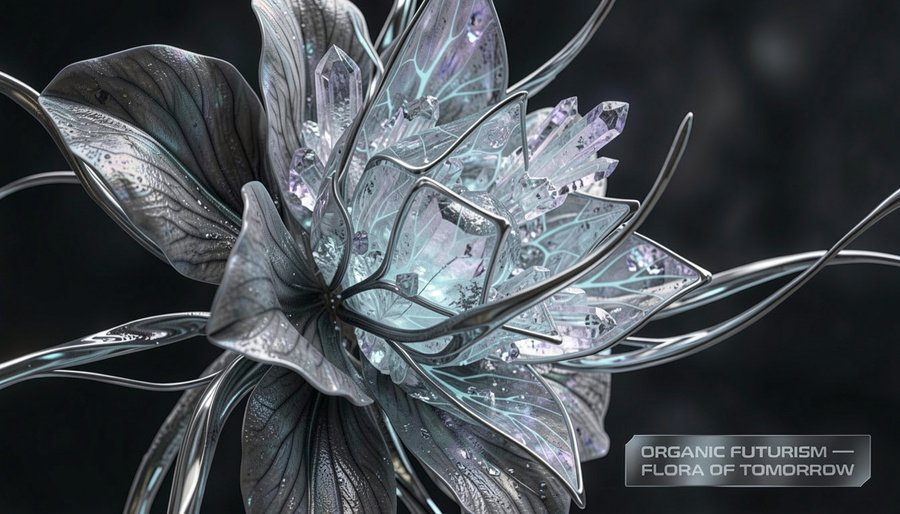
The visual language of FUTURE BOTANICA is built on the contrast between living organic matter and technological aesthetics.
Natural forms take on unusual contours, intertwining with artificial materials: transparent glass, chromed metal, minerals, and holographic surfaces.
Light becomes part of the plant architecture—from soft internal luminescence to rich neon accents.
This is a world where nature does not disappear under the influence of technology, but rather evolves, acquiring new forms.
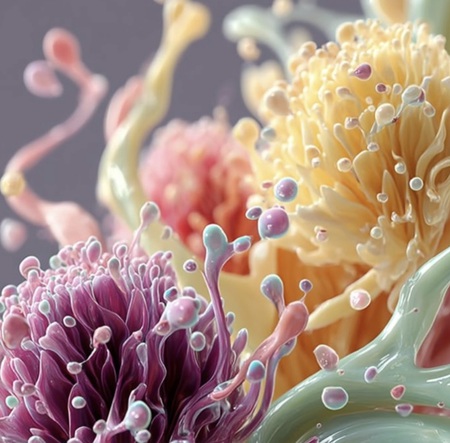
- Organic Futuristic Form
What we are looking for: unusual plant forms that resemble living organisms, yet possess a fantastic plasticity.
Technique: biomorphic forms, asymmetry, complex structure.
For the project: the foundation for the design of our fictional plants.
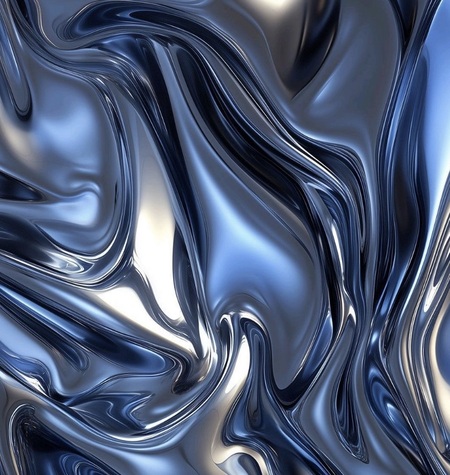
- Chrome and Liquid Metal
What we are looking for: mirrored, metallic, fluid surfaces.
Approach: reflections, metallic textures, contrast of light and shadow.
For the project: technologicality and the sensation of artificially created nature.
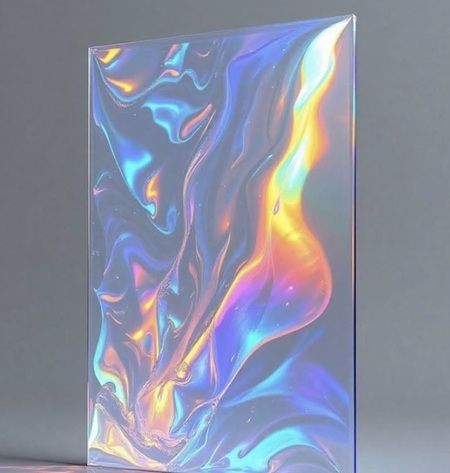
- Holography and TransparencyWhat we are looking for: glass forms, iridescent sheen, light refraction.Techniques: transparency, iridescence, layering.For the project: visual distinctiveness and the sensation of another world.
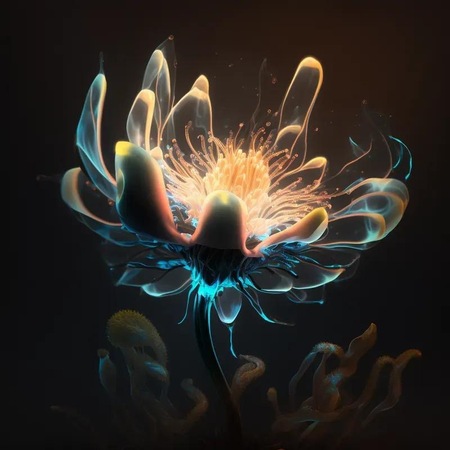
- BioluminescenceWhat we are looking for: glowing plants, internal luminescence, unusual color accents.Approach: localized glow, neon outline, contrast between a dark background and light.For the project: a sense of life, energy, and mystery.
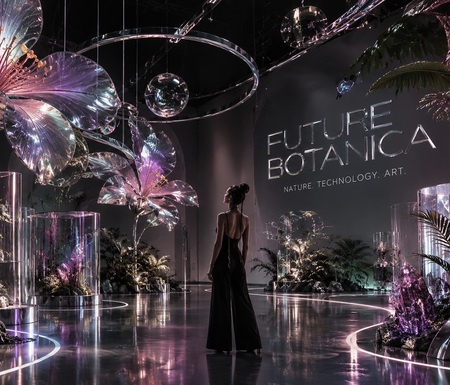
- Futuristic Space
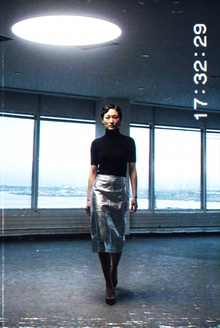
What we are looking for: unusual greenhouses, exhibition spaces, architecture made of glass and light.
Approach: minimalist architecture, geometry, atmospheric lighting.
For the project: the design and visual environment of a future exhibition.
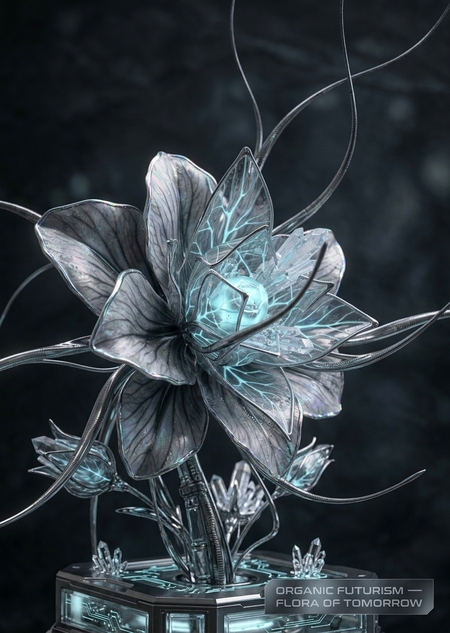
At this stage, the FUTURE BOTANICA concept moves from visual references to the creation of its own digital botanical species. As the first experimental subject, a fantasy flower has been chosen—a fusion of the organic plasticity of natural forms and technological materials, such as transparent glass, liquid chrome, and iridescent surfaces. Using a neural network, we explore how text descriptions, lighting, and perspective influence the visual identity of the future plant.
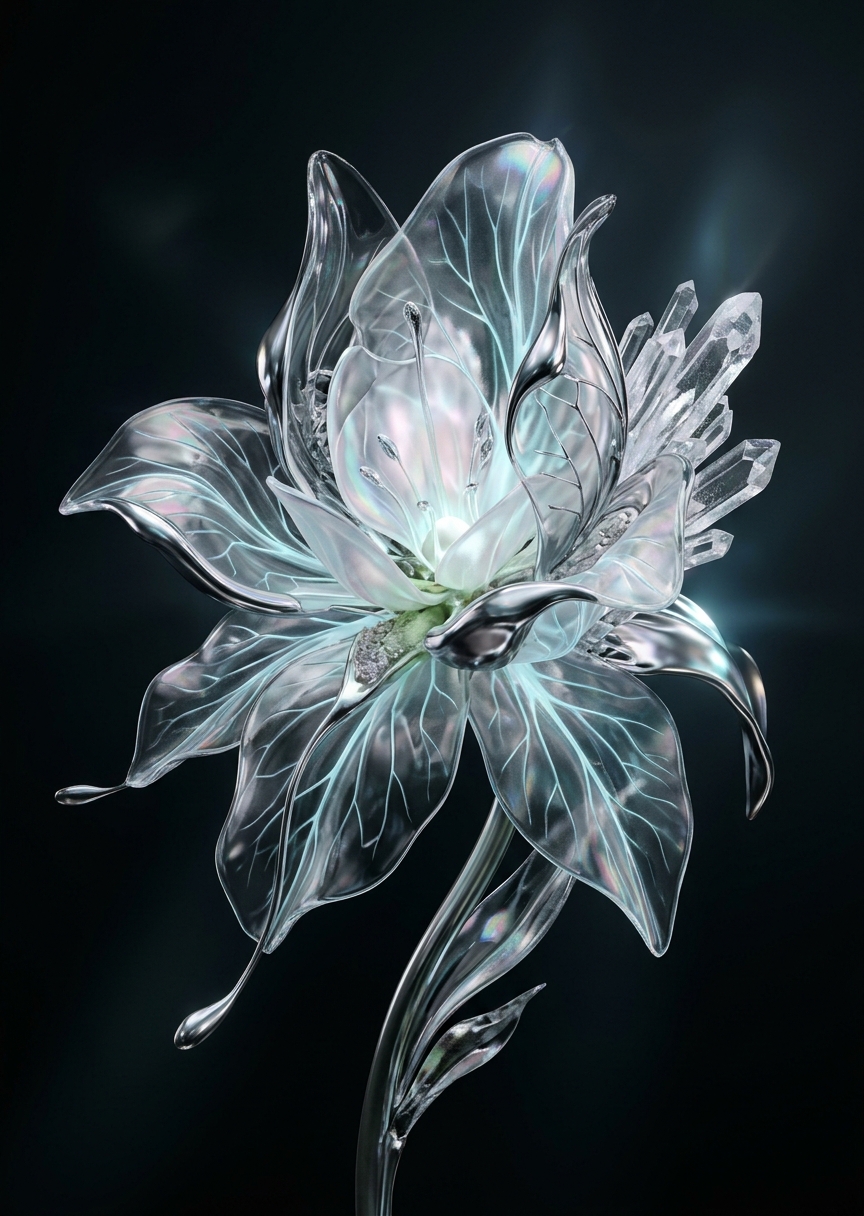
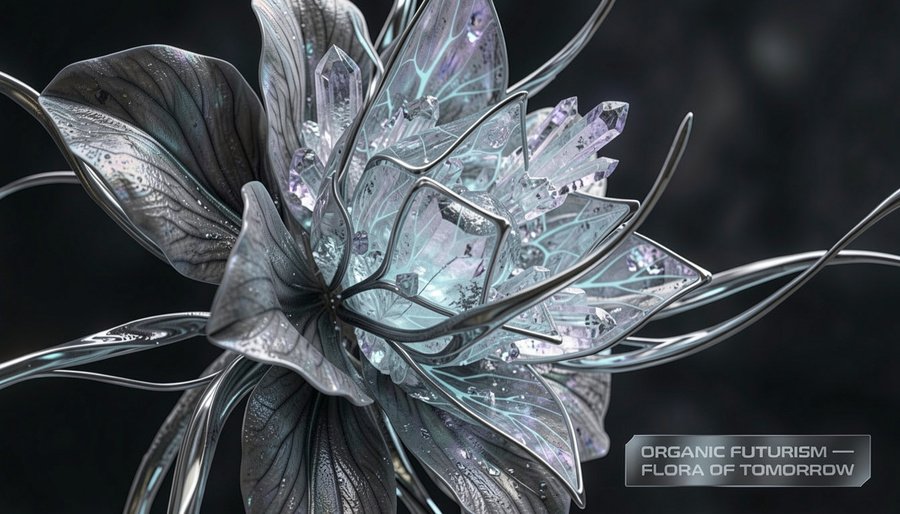
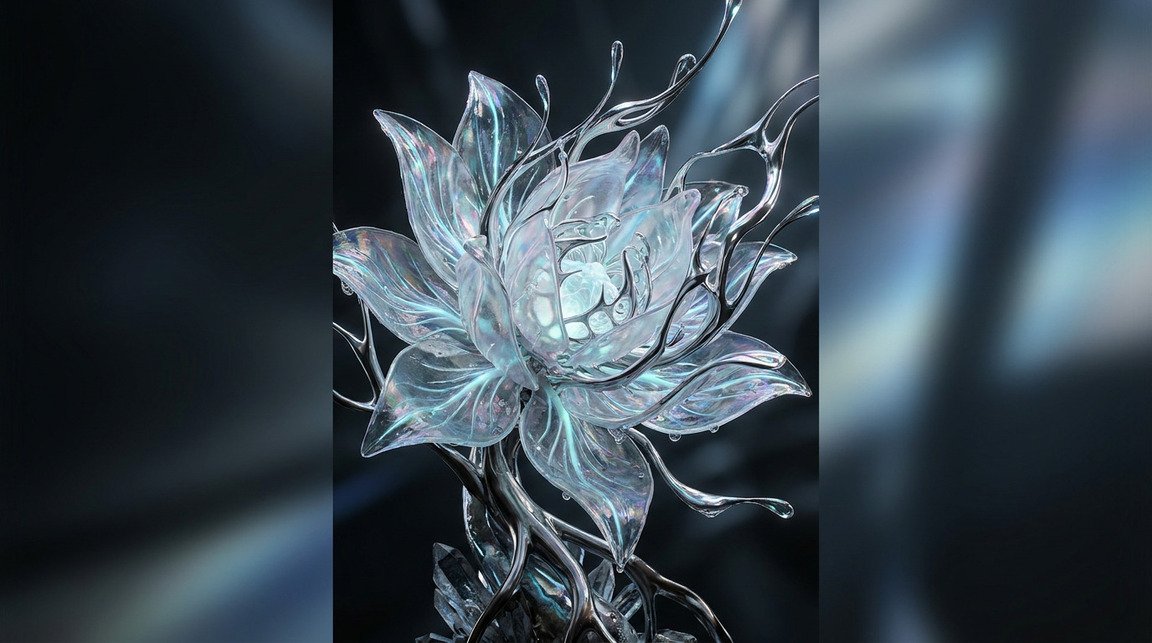
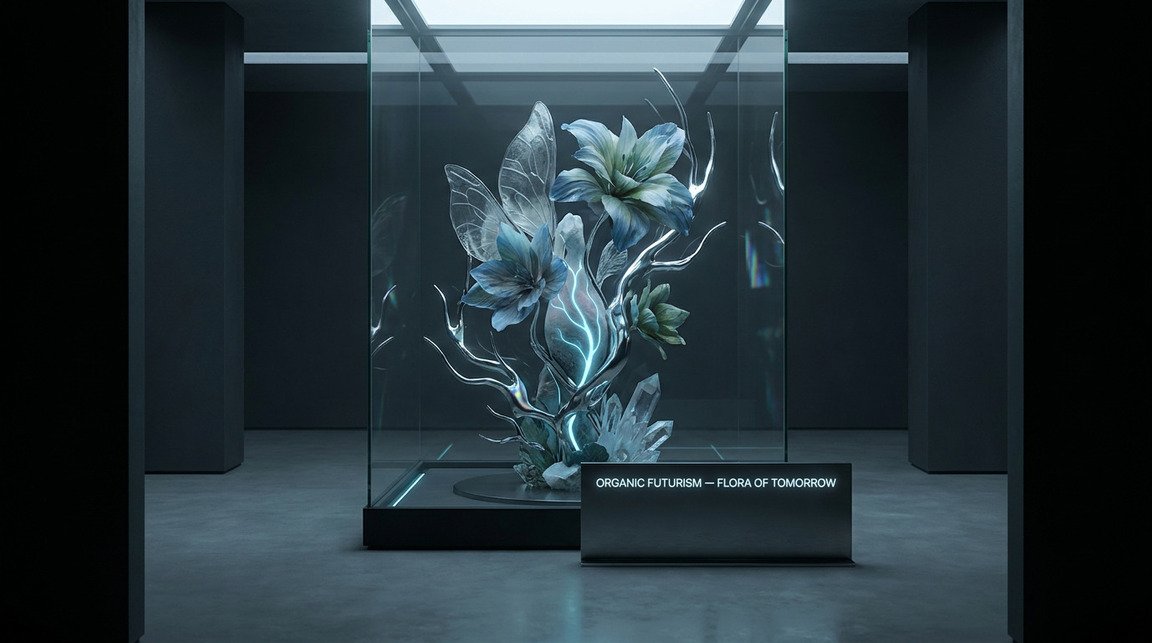
Prompt: Create an extraordinary, previously undiscovered botanical species for an exclusive futuristic exhibition called FUTURE BOTANICA.
The subject is a single exotic alien flower, presented as a real living organism from the distant future. Its morphology is inspired by organic evolution, deep-sea life, rare tropical flowers, and microscopic natural structures, but it must be entirely original.