01 // CONCEPT
FOCUS — a media navigation tool for interior and design exhibitions that helps professionals quickly navigate through numerous brands, booths, and new solutions.The project gathers and structures exhibition information, organizing it by key professional disciplines—furniture, lighting, plumbing fixtures, materials, technology, and décor—and helps the user find the most relevant points for a specific professional task.
02 // DATA SOURCES
FOCUS utilizes official data from exhibitions and brands, professional media, and its own editorial content. The project details ARTDOM and MosBuild as examples, but FOCUS collects information from other major Russian interior and design exhibitions held throughout the year. Each source is evaluated for reliability and used for a specific purpose within the media.
We capture: dates and venue, list of participants, exhibition hall/section, product type, and brand categories.How we use it in FOCUS: to create brand profiles, thematic collections, exhibition guides, and the foundation for visitor routes.
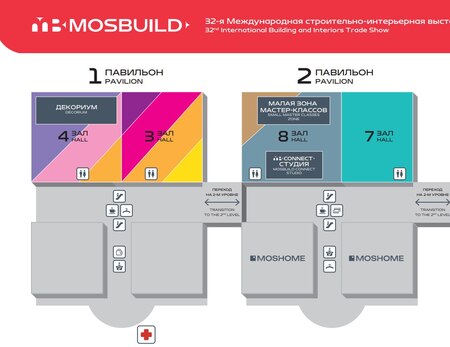
What we take: dates and venue, thematic sections, participant list, product categories, and booth information.
How we use it in FOCUS: Official MosBuild data forms the basis for thematic collections, booth profiles, and category routes—plumbing, materials, lighting, and other areas.
3. Professional media—for example, INTERIOR+DESIGN
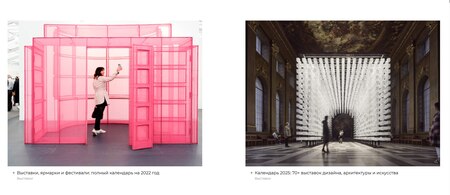
What we cover: industry news, interviews with designers and architects, content on new brands, trends, materials, and exhibitions.How we use it in FOCUS: as supplementary professional context when preparing editorial materials. Information from the media is not used directly to build routes—FOCUS routes and recommendations are formed based on official exhibition data and the publication’s own editorial selection.
4. FOCUS Personal Data
What we gather: original photographs and notes from exhibitions, editorial commentary, tags, observations, and an assessment of how relevant the booths are for different professional needs.
How we use this in FOCUS: This data supplements official information, helping the editorial team shape recommendations, thematic selections, and routes tailored to the specific user task.
03 // DATA MODEL
The FOCUS data undergoes several stages: automated analysis, editorial selection, and final review before publication.
Automation in FOCUS helps manage large volumes of information, but it does not replace editorial judgment. The software collects, sorts, and structures data, while the human reviewer verifies it, determines its significance, and makes the final publishing decision.
04 // GUIDELINES FOR AUTOMATED SERVICES
The guidelines specify what the automated FOCUS services can handle independently, what data they must retain, and in which scenarios the decision is escalated to an editor.
This approach allows for the use of automation without sacrificing editorial control, source transparency, or the quality of FOCUS materials.
FOCUS utilizes automation as an editorial tool: services help gather, structure, and prepare data, while key decisions—from selection to publication—remain with the human editor.