Introduction
Founded in Denmark in 1932, the LEGO Group has grown from a modest toy manufacturer into one of the most influential consumer brands in the world. What started with simple wooden toys eventually became a global phenomenon built around the iconic interlocking brick. Today, the brand extends far beyond physical toys, with a presence across film, video games, television, digital apps, and theme parks.

LEGO® Voyagers, 2025
LEGO’s brand identity revolves around three pillars: creativity, quality, and imagination. At the heart of its positioning is the concept of «learning through play» — the idea that building with LEGO bricks develops problem-solving skills, spatial thinking, and creative expression. The brand consistently champions non-digital, hands-on play as a counterweight to screen-heavy entertainment.
This positioning is reinforced by a strong premium image. LEGO’s reputation for precision manufacturing, product durability, and child safety has earned it near-universal trust among parents over the past decade. On the sustainability front, the brand has committed to sourcing all materials sustainably by 2032, with over a third of current sets already incorporating bio-based or recycled components — a move that resonates with increasingly eco-conscious consumers.
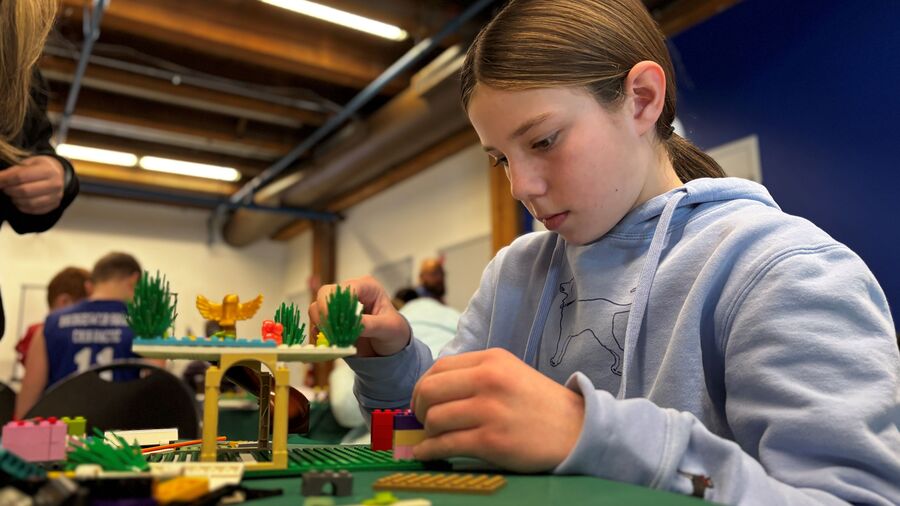
LEGO®, 2025
LEGO’s audience is unusually broad for a toy brand, spanning multiple generations and income levels:
Young children (primary): The core range begins with DUPLO for toddlers as young as 18 months, scaling up through themed sets designed for children up to around 12 years old.
Teenagers & young adults: More advanced product lines such as LEGO Technic, Mindstorms, and STEM-focused educational sets cater to older audiences seeking greater complexity and challenge.
Adult Fans of LEGO (AFOLs): This segment has become increasingly strategic for the brand. Adults now represent roughly 20–25% of total revenue, driven by nostalgia and dedicated product lines like LEGO Icons. AFOLs tend to have higher disposable incomes and deeper brand loyalty than younger consumers, making them the most commercially valuable segment.
Parents: LEGO also speaks directly to parents, positioning its products as tools for meaningful family time and educational development.
Income profile: Across all segments, LEGO targets middle-to-high-income households, with pricing and product design reflecting its premium market positioning.
Communication Channels
LEGO maintains an active and carefully differentiated presence across major platforms, adapting its content format and tone to suit each audience:
TikTok & YouTube Shorts carry fast-paced, high-energy content aimed at younger audiences — build challenges, time-lapses, and viral moments. Instagram & Pinterest take a more polished, aspirational approach, using lifestyle photography to appeal to adult collectors and design-minded consumers.
LEGO Play (the brand’s own child-safe social platform) and the LEGO Insiders loyalty programme foster community engagement and user-generated content, feeding organic traffic back to LEGO’s e-commerce channels.
The results are significant: LEGO’s YouTube presence alone draws over 12 billion views annually, and short-form video campaigns on TikTok and YouTube Shorts recorded engagement growth of more than 25% year-over-year in 2024–2025.
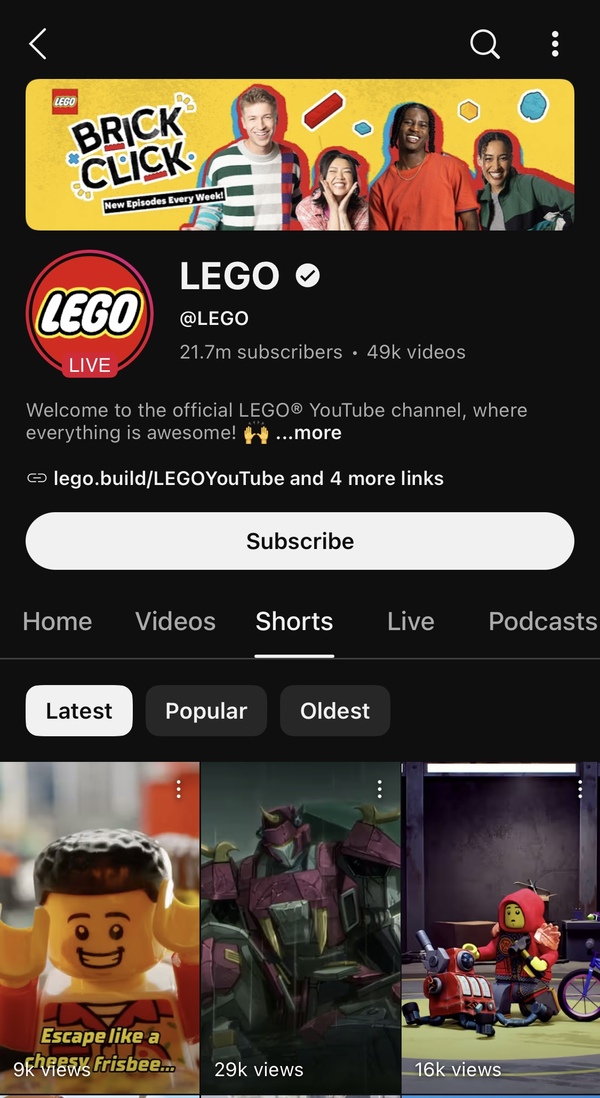
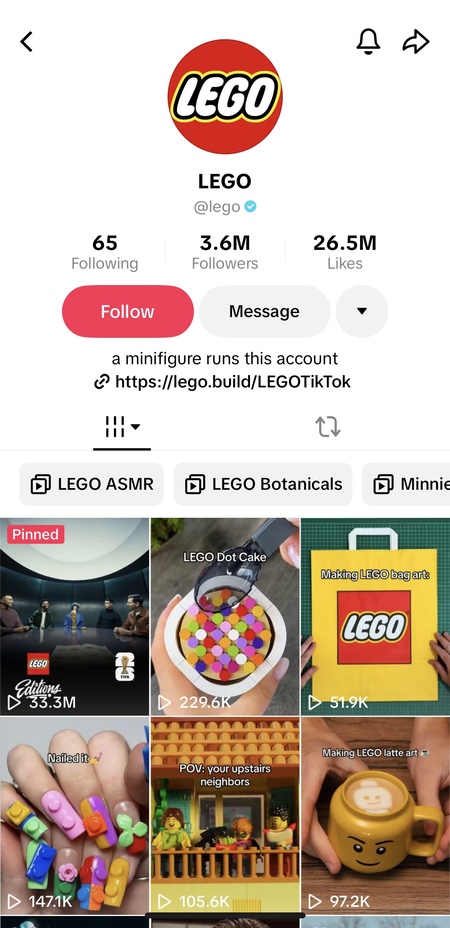
LEGO® official YouTube and TikTok accounts
LEGO®, Lego Play app advertisement, 2024
LEGO has cultivated a wide influencer ecosystem that spans toy reviewers, gaming streamers, STEM educators, and lifestyle creators. The brand works with both macro-influencers for broad reach and niche creators — architects, engineers, and artists who lend credibility with the adult collector community and generate content that goes well beyond simple unboxing videos.
The broader fan content economy also plays a major role. A vast network of independent LEGO creators on YouTube, TikTok, and blogs contributes significantly to the brand’s cultural visibility, often without any formal brand involvement.
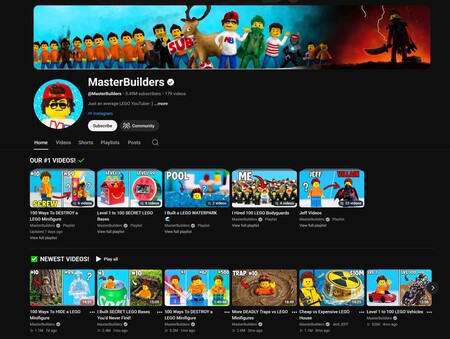
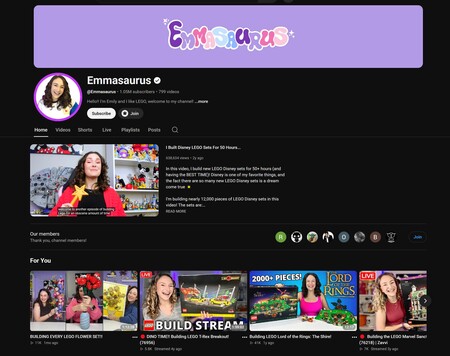
LEGO influencers MasterBuilders and Emmasaurus official YouTube channels
«Rebuild the World» is one of LEGO’s most successful global campaigns. This initiative used cinematic storytelling to position creativity and problem-solving as universal values. It generated over 100 million views and drove a 5% uplift in consumer sales in its first year, with the #RebuildTheWorld hashtag sparking millions of social posts worldwide.
The more recent «Play Unstoppable» campaign (2024) delivered a 5% sales increase at a time when the broader toy industry contracted by 7%, making it a strong demonstration of the brand’s resilience and communication effectiveness.
LEGO®, Rebuild the World, 2021
LEGO has mastered the art of turning product releases into cultural events. The 2025 SpaceX Starship set, for instance, sold out its entire 100,000-unit production run in under 48 hours, generating enormous earned media coverage.
Initiatives like Braille Bricks (sets designed for visually impaired children) and online safety campaigns reflect LEGO’s broader social mission. Rather than treating these as one-off PR stunts, the brand weaves inclusion and responsibility into its long-term narrative — building institutional trust rather than short-term buzz.
LEGO®, Safer Internet Day, 2023
The LEGO Ideas platform invites fans to submit designs for potential new sets. For a concept to be considered for production, it must first gather 10,000 votes from the community. This turns the most passionate fans into active brand advocates, generating organic marketing energy while also providing the brand with direct insight into what its audience wants.
LEGO®, Ideas 21338 A-Frame Cabin, 2023
Overall, LEGO’s annual marketing budget exceeded $1.4 billion in 2024, with more than 65% directed toward digital channels. Nevertheless, traditional media still plays a supporting role, particularly through the globally franchised LEGO Masters TV format, which runs localized versions in over 20 countries and keeps the brand present in mainstream culture.
Theoretical Framework
The brand communication strategy of LEGO can be analyzed through the lens of two complementary theories: the Elaboration Likelihood Model (ELM) and the Uses and Gratifications Theory (UGT). The combination of these approaches allows for the examination of LEGO’s communication on two levels: from the perspective of the persuasion mechanisms embedded in the brand’s content (ELM), and from the perspective of the psychological motives of the audience that consumes this content (UGT).
The Elaboration Likelihood Model is a socio-psychological theory of persuasion developed by researchers Richard Petty and John Cacioppo. The model explains how people process advertising or persuasive messages, and how the depth of this processing influences changes in their mood, opinions, and behavior.
The Uses and Gratifications Theory is a sociological concept in the field of media, created by Elihu Katz, Jay Blumler, and Mikhail Gurevitch. In contrast to older theories that viewed the audience as a passive victim of propaganda, UGT posits that people actively and consciously choose media to satisfy their specific psychological and social needs.
Analysis with Elaboration Likelihood Model
Lego has two fundamentally different audiences — children (who often have low motivation/ability to analyze product features) and adults/parents — and the brand segments its campaigns along the two ELM routes.
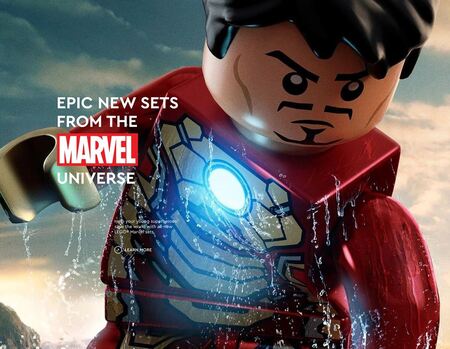

Lego New Website / 2020
- Peripheral route
The brand uses the peripheral route when the audience has low motivation or ability to process complex textual information (for example, tired parents or children). Here, Lego disables complex textual arguments and targets emotions, visuals, and associations — it uses pop culture references and bright visual triggers.
Franchises like Star Wars, Harry Potter, Marvel, and FORTNITE act as powerful incentives. The buyer wants to become a part of their favorite universe, which reduces critical thinking.
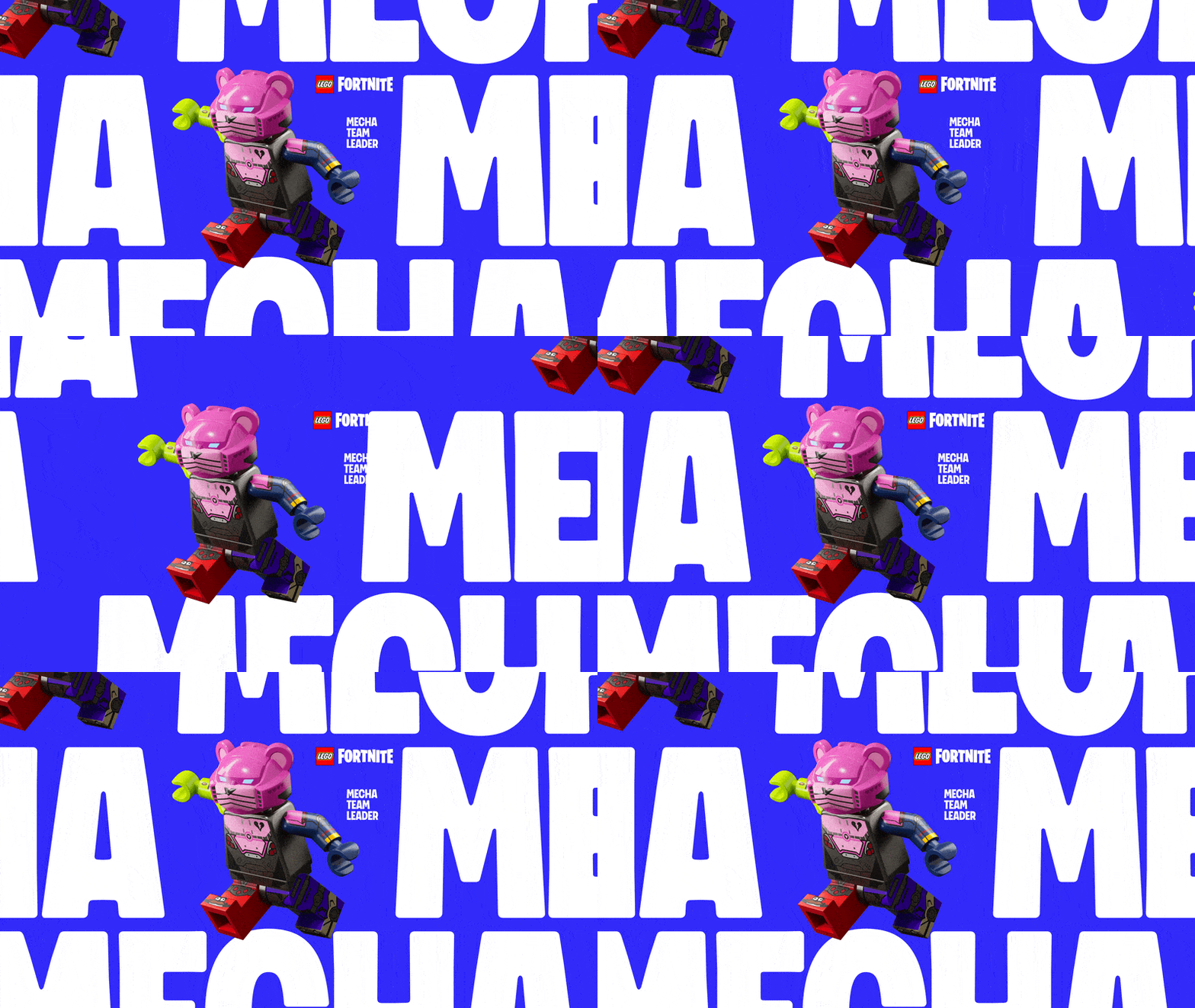

LEGO X FORTNITE / 2025
Mario Kart™ — Mario & Standard Kart / LEGO® Super Mario™

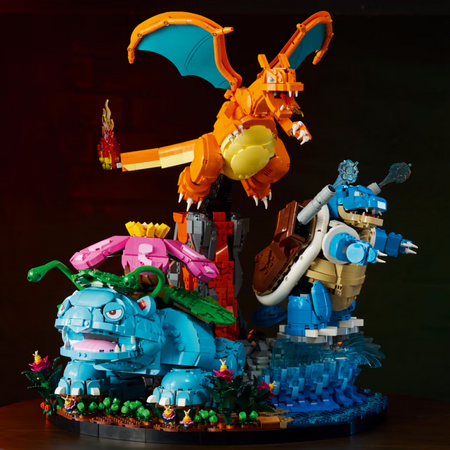
Eevee / Pokémon // Venusaur, Charizard and Blastoise / Pokémon
The poster completely ignores the central arguments (cost, number of pieces, plastic durability). Instead, it uses a peripheral stimulus that appeals to a sense of nostalgia and childlike imagination.


CREATIVE ADS Lego –The Shadow Knows / 2009 / Alice Yoo