Communication theory: jewelry brand GADINA
Communication theory in the field of design
From the perspective of communication theory, design functions as a specific form of mediated communication. Meaning is constructed through visual language, material qualities, symbolic references, and cultural context.
Objects of design operate as signs that invite interpretation, making the viewer an active participant in the communicative process. In this sense, jewelry can be understood as a system of signs through which personal identity, emotional states, and social positions are expressed.
This understanding reflects a broader insight developed throughout the communication theory course: communication is not limited to information exchange but is fundamentally relational, contextual, and interpretive. Design objects enter communicative relationships with users, similar to interpersonal communication, where meaning emerges through interaction rather than one-way transmission. The interpretation of design is also shaped by social and cultural groups that share common symbolic codes, emphasizing the role of audiences as interpretive communities.
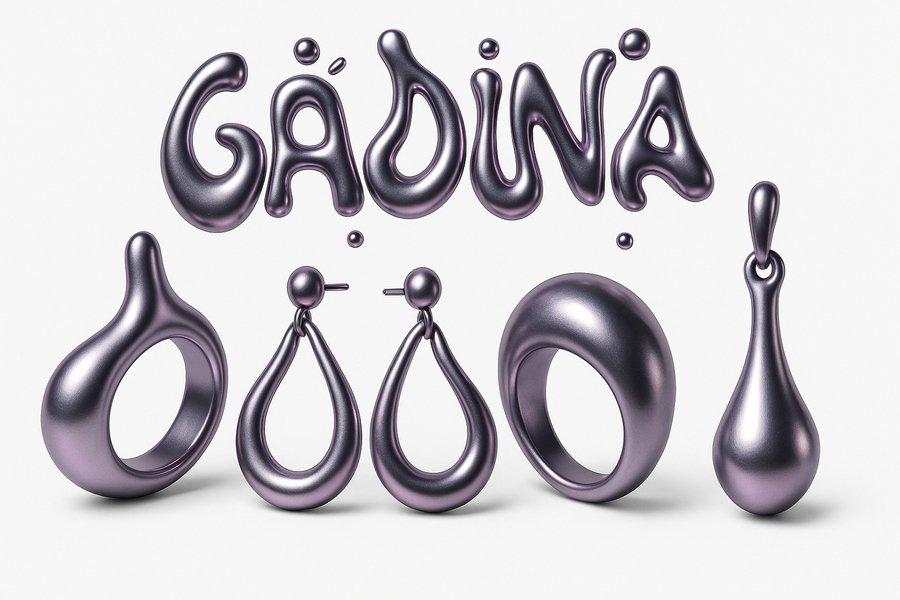
The «Gadina» brand is based on the reinterpretation of negatively charged images and concepts. Symbols associated with marginality or provocation are transformed into tools of self-expression and empowerment, reflecting a broader tendency among young audiences to challenge normative aesthetics and reclaim stigmatized meanings as markers of individuality.
A key element of the brand’s communication strategy is a mascot — a stylized female character that functions as a mediator between the brand and its audience. The mascot embodies the brand’s values while remaining an open sign, allowing viewers to project their own emotions and identities rather than receiving a fixed message.
Brand mascot
The project draws on Robert T. Craig’s model of communication traditions, with a focus on the semiotic tradition. From this perspective, communication is understood as meaning-making through signs and symbols. Accordingly, «Gadina» is analyzed as an integrated sign system in which jewelry, visual identity, verbal elements, and the mascot work together as communicative acts shaping interpretation and engagement.
Presentation for a General Audience
«Gadina» is a handmade jewelry brand for young people aged 16–25 who use visual and symbolic forms to express individuality. The brand addresses themes of identity, emotional intensity, and resistance to conventional beauty standards, treating jewelry not only as an accessory but as a personal statement reflecting the wearer’s inner world.
At the core of the brand is the transformation of negative or provocative meanings into sources of self-expression and empowerment. The name «Gadina» deliberately challenges normative associations, resonating with a young audience that reappropriates stigmatized symbols and embraces complexity and emotional honesty.
Visually, the brand is defined by a raw, expressive aesthetic. Handmade textures, irregular forms, and asymmetry emphasize uniqueness and authenticity while rejecting mass production. The material qualities of the jewelry play a key role in shaping emotional experience and personal attachment.
A central communicative element is the brand’s mascot — a stylized female character that appears across media and embodies the spirit of «Gadina». The character’s visual ambiguity allows multiple interpretations, enabling identification without imposing a fixed identity.
Communication is primarily visual and emotional, with social media as the main channel. Rather than using direct advertising, the brand relies on mood, symbolism, and visual storytelling. Through this open system of signs, «Gadina» invites audiences to construct meaning through personal interpretation and emotional engagement.
Presentation for a professional audience
«Gadina» is a conceptual handmade jewelry brand positioned at the intersection of design, visual culture, and youth subcultural aesthetics. The brand targets a young audience (16–25), while its professional relevance lies in its approach to meaning-making, symbolic communication, and identity construction through design objects.
From a professional perspective, brand can be understood as a communicative system rather than a product line. Jewelry functions as a medium that conveys values, emotions, and social attitudes.
The brand identity relies on semiotic coherence across multiple levels: materiality, form, naming, and narrative framing. Irregular shapes, handcrafted textures, and visible traces of manual labor communicate authenticity and resistance to mass-produced aesthetics. These visual and tactile elements are not merely stylistic choices but deliberate communicative acts that position the brand within a critical discourse of anti-standardization and emotional expressiveness.


A key communicative asset of the brand is its mascot — a stylized female character that serves as a mediating figure between the brand and its publics. For a professional audience, the mascot can be interpreted as a narrative device that enhances brand memorability and emotional engagement while remaining open to multiple readings. Rather than functioning as a fixed brand persona, the character operates as a flexible symbolic interface, allowing audiences to co-construct meaning.
How the theory of communication served as the main source for the project
The creation of the brand is grounded primarily in two interrelated theoretical frameworks from the communication course: Craig’s Semiotic Tradition and Social Identity Theory. These frameworks provided a structured lens for understanding how design functions as a communicative system and how audiences interpret and engage with symbolic content.
According to Robert T. Craig, communication within the semiotic tradition is the production and interpretation of meaning through signs and symbols. This perspective frames the brand as an integrated system of signs, where jewelry pieces, visual identity, verbal elements, and the mascot operate as deliberate communicative acts. Each element is designed to convey values, emotions, and attitudes while remaining open to audience interpretation. The semiotic approach was essential for designing the brand’s visual and narrative language, ensuring that objects, textures, shapes, and symbolic motifs function together to construct meaning.
Social Identity Theory explains how individuals define themselves in relation to social groups, symbolic categories, and cultural norms. Jewelry becomes a medium through which wearers negotiate self-expression, belonging, and personal values. Social Identity Theory also supports the use of the mascot as a relatable figure, which functions as a symbolic anchor for identification and emotional engagement.
By applying these theories from the online course, the «Gadina» project demonstrates how communication theory can directly inform design practice. The brand does not simply transmit a fixed message, it establishes a semiotic system where audiences actively co-construct meaning, express identity, and engage emotionally with visual and symbolic elements.
Communication Theory: Bridging Academia and Practice // edu.hse.ru URL: https://edu.hse.ru/course/view.php?id=133853 (дата обращения: 13.10.2025)
All images were created using Recraft AI https://www.recraft.ai/