Over three blocks, we learned to perceive objects, orient ourselves, and understand their motion, distance, and the age of light.
But the more we learn about the night sky, the more profound another question becomes:
How much of the Universe remains invisible to us and remains incomprehensible?
The final block expands our view beyond our own patch of sky—from the observable Universe to other planetary systems and one of modern science’s foremost open questions.
Are we alone?
LESSON 4.1
WHERE DOES THE UNIVERSE END?
A big question.
Does the universe have an edge?
In the previous section, we arrived at the scale of the observable universe. Its diameter is approximately 92–93 billion light-years. But the key word here is: observable. We can only see the portion of the universe whose light has reached us. This does not mean that there is nothing beyond this boundary. We simply cannot receive information from there. Therefore, the boundary of the observable universe is not necessarily a physical wall or the edge of space. It is primarily: the limit of the information available to us.
From the Milky Way to Billions of Galaxies
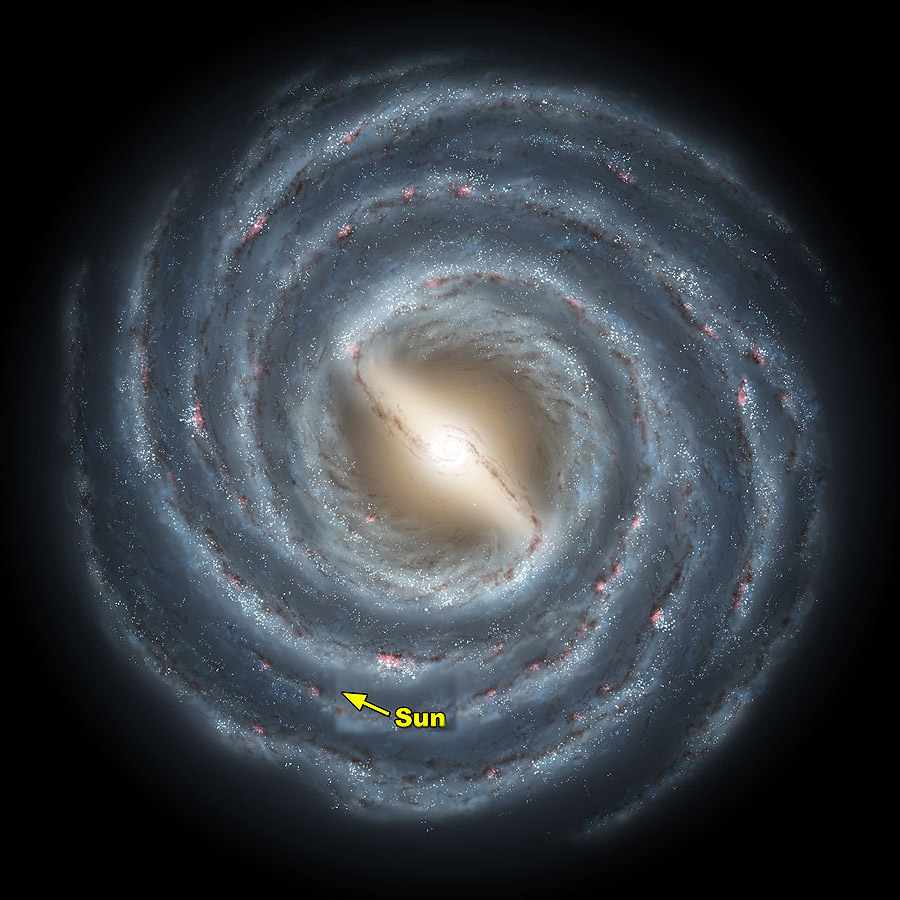
The Milky Way contains a vast number of stars.But our Galaxy is just one among a tremendous number of others.Modern estimates suggest that hundreds of billions of galaxies may exist in the observable Universe.And each galaxy, in turn, can contain billions of stars.Therefore, the number of stars in the Universe is compared to the number of grains of sand on Earth.What matters here is not the exact figure, but the scale: what we see in the night sky is an extremely small fraction of the existing Universe.
The boundary of what we see is not necessarily the boundary of what exists.
LESSON 4.2
WORLDS AROUND OTHER STARS
A big question. Our Sun is surrounded by planets. And the other stars?
Today, we know for certain that planets exist not only around the Sun. Planets that orbit other stars are called exoplanets. Thousands of such worlds have already been confirmed, and this is just a small fraction of the number of planets that may exist in our Galaxy.
Most exoplanets are either too far away or too close to their bright stars for direct observation.
Therefore, astronomers often search not for the planet itself, but for evidence of its presence.
One of the primary methods is the transit method.
When a planet passes in front of its star, it blocks a small portion of the light.
The star’s brightness dips slightly for a brief period.
If this dip in brightness repeats regularly, it suggests that a planet is orbiting the star.
Four exoplanets in the HR 8799 system orbit a star
We can learn of an object’s existence even if we are unable to see it directly.
LESSON 4.3
ARE WE ALONE?
A big question. If there are so many planets, why haven’t we found any other forms of life yet?
By this point, we already know:
— The universe is vast; — it contains billions of galaxies; — galaxies hold a huge number of stars; — planets exist around stars; — among them are rocky worlds; — some are located in regions potentially suitable for water.
But despite all this:
Earth remains the only place where the existence of life is reliably known.
The scientifically correct answer today is: We do not know. We have no proof that life exists elsewhere. But we also lack evidence that Earth is the sole location of life in the entire universe.
What exactly are researchers looking for?
The search for life does not necessarily mean the search for intelligent beings or radio signals.First, researchers look for more fundamental signs:— atmosphere; — water; — specific chemical compounds; — unusual gas combinations.These potential signs of life are called biosignatures.
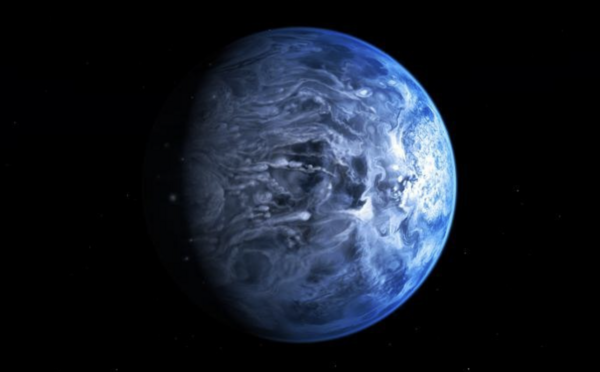
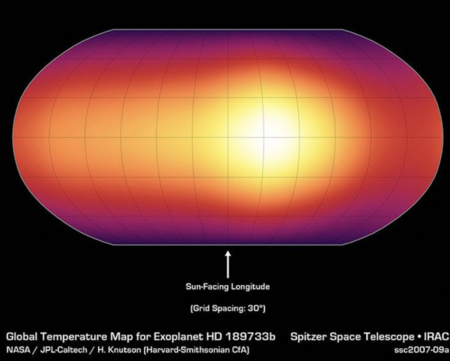
Exoplanet HD 189733. Scientists have detected water vapor on it.
But even the detection of an interesting substance does not automatically mean, «Life has been found.»
It is necessary to verify whether this result could be explained by ordinary chemical or geological processes.
Why might we not be finding anyone?
There are many possible explanations. Perhaps: — life arises very rarely; — simple life is widespread, but complex life is not; — intelligent civilizations exist for a short time; — the distances between them are too vast; — we haven’t figured out how to search effectively yet; — or we are truly alone.
But none of these scenarios have been proven yet.
And that is fundamentally important.