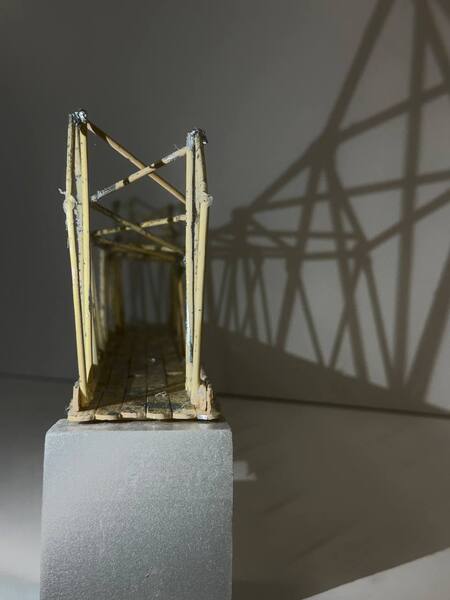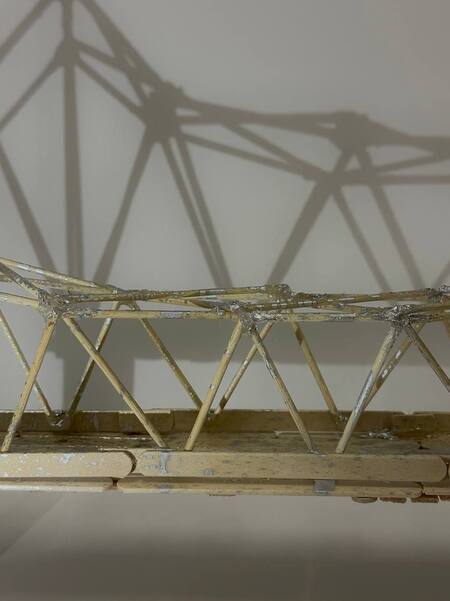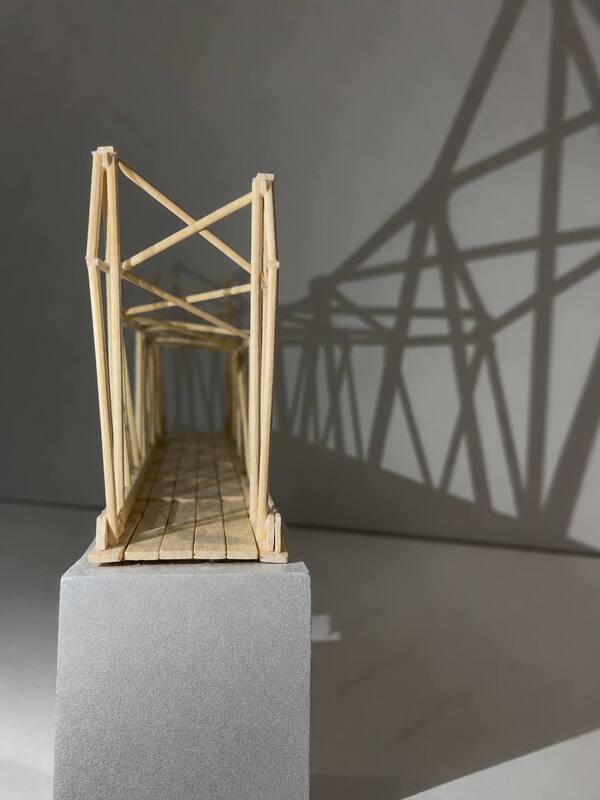
The Astoria–Megler Bridge, which spans the Columbia River and is part of US Highway 101, represents the final segment of a continuous highway running along the entire Pacific Coast of the United States—from Mexico to Canada. As of 2016, approximately 7,500 vehicles cross the bridge daily.
The main truss consists of 28 panels and has a central span length of approximately 376 meters.
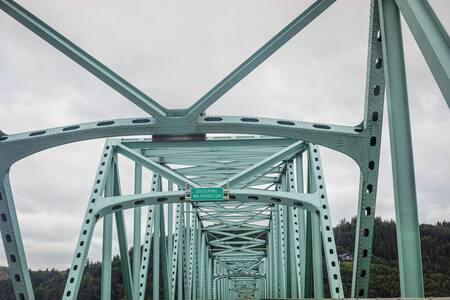
The upper chord forms a broken, polygonal line that changes height along the span. The lower chord is predominantly straight and is located at the level of the roadway. The diagonals are arranged alternately, creating a repetitive pattern of triangles. The vertical elements complement the truss and participate in load distribution. The connection nodes are steel elements primarily joined by rivets.
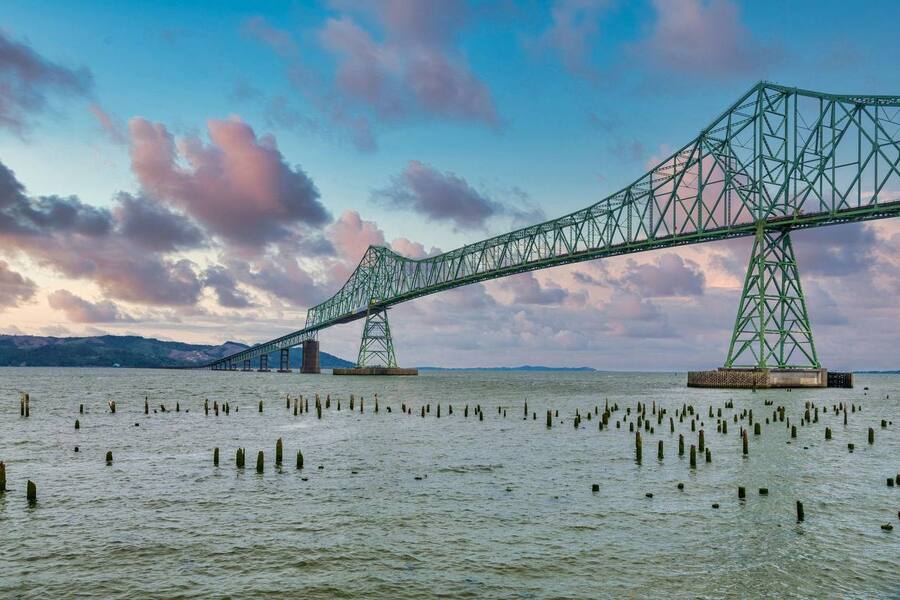
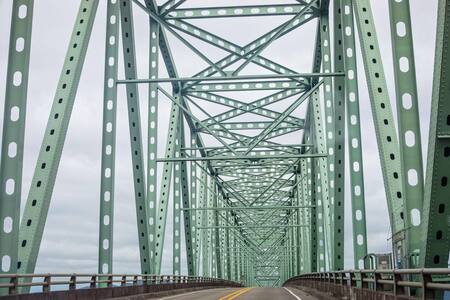
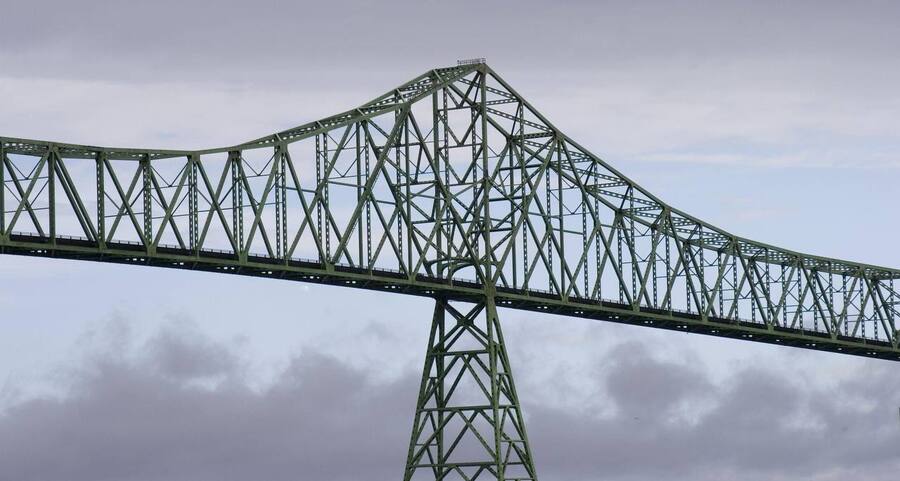
The bridge’s main load-bearing system is a continuous Warren truss, not merely a classic cantilever truss. While a cantilever method was used during construction, the suspended section was rigidly connected to the cantilevers using rivets after installation, resulting in a continuous final system.