Navigation Menu
- Concept
- «Herty the Dinosaur»
Concept
«Dinosaur Gertie»
Gertie the Dinosaur, created by Winsor McCay, is one of the first characters imbued with distinct personality traits, which sets her apart from previous animated heroes.
Hertie is also the first instance of using an animal motif in animation.
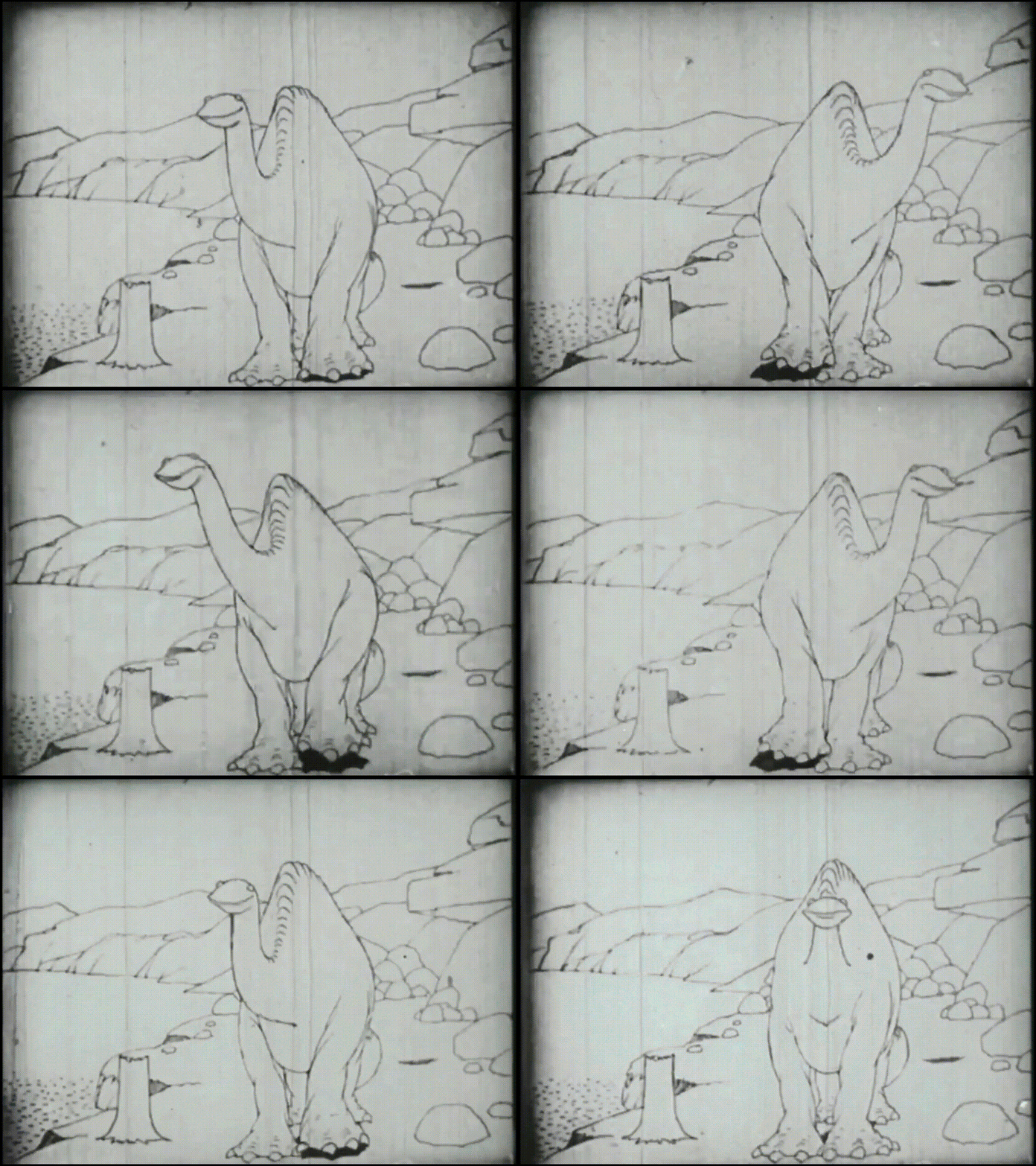
«Gertie the Dinosaur,» 1914, Winsor McCay
It is the character’s unique personality that makes Gertie endearing and memorable. She is not just some background creature; she is the main character. The heroine’s appearance—a dinosaur—sets her apart from earlier characters. The silhouette of the giant beast is easily captivating and stays in people’s minds.
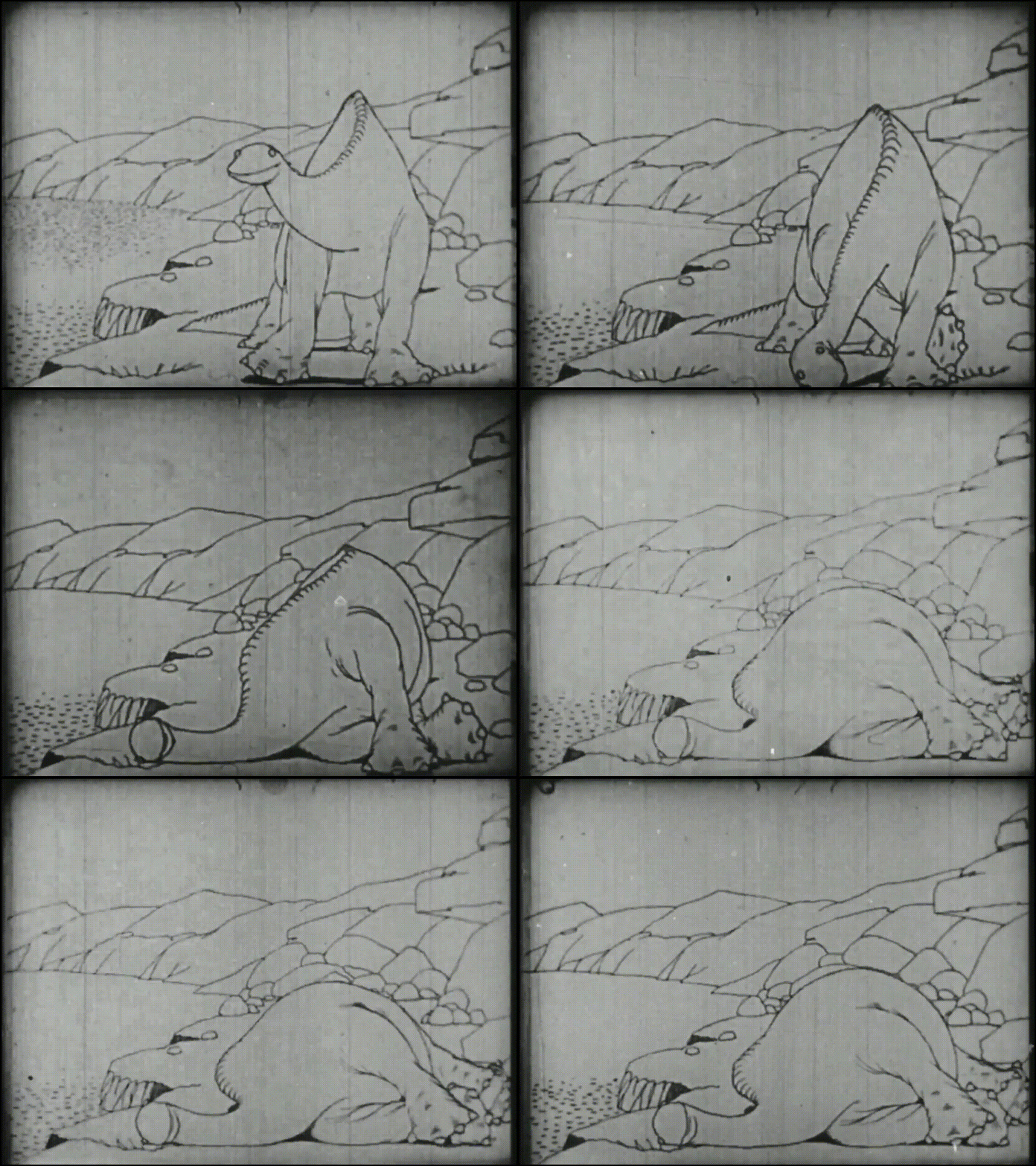
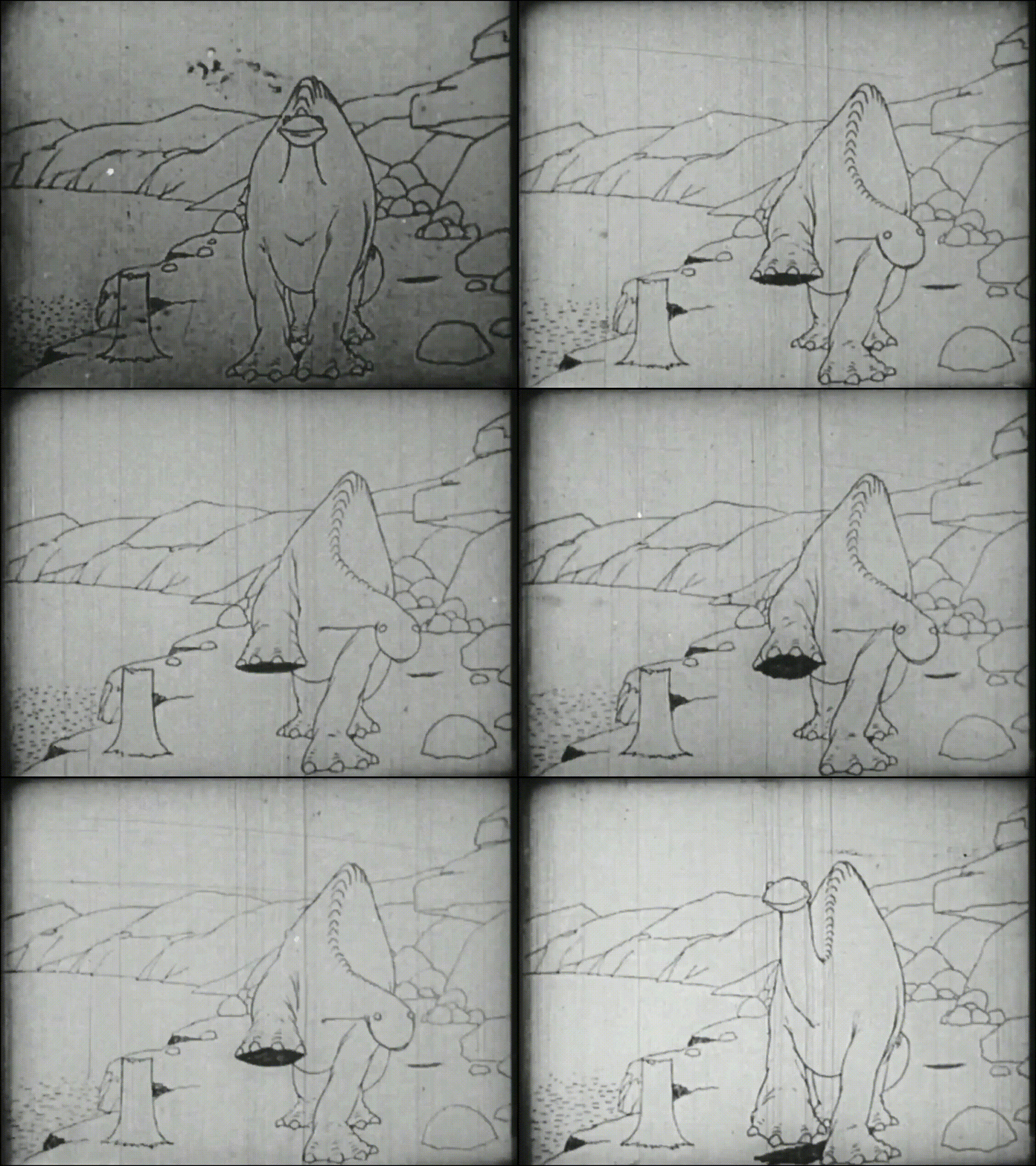
«Gertie the Dinosaur, ” 1914, Winsor McCay
It combines the habits of various animals—for instance, dog-like (it raises its paw on command) or cat-like. This is one of the factors that shapes the dinosaur’s character through its body plasticity.
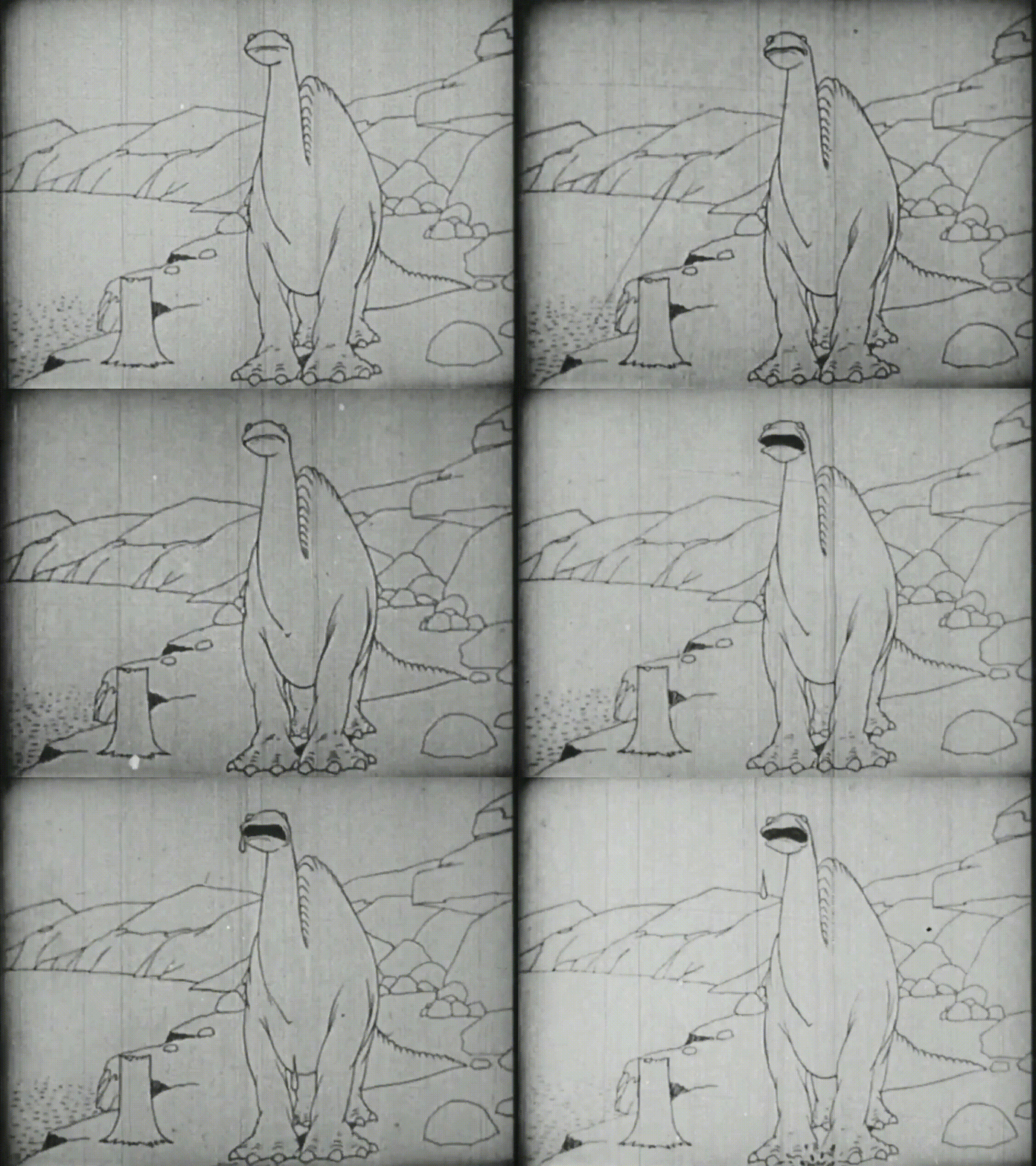
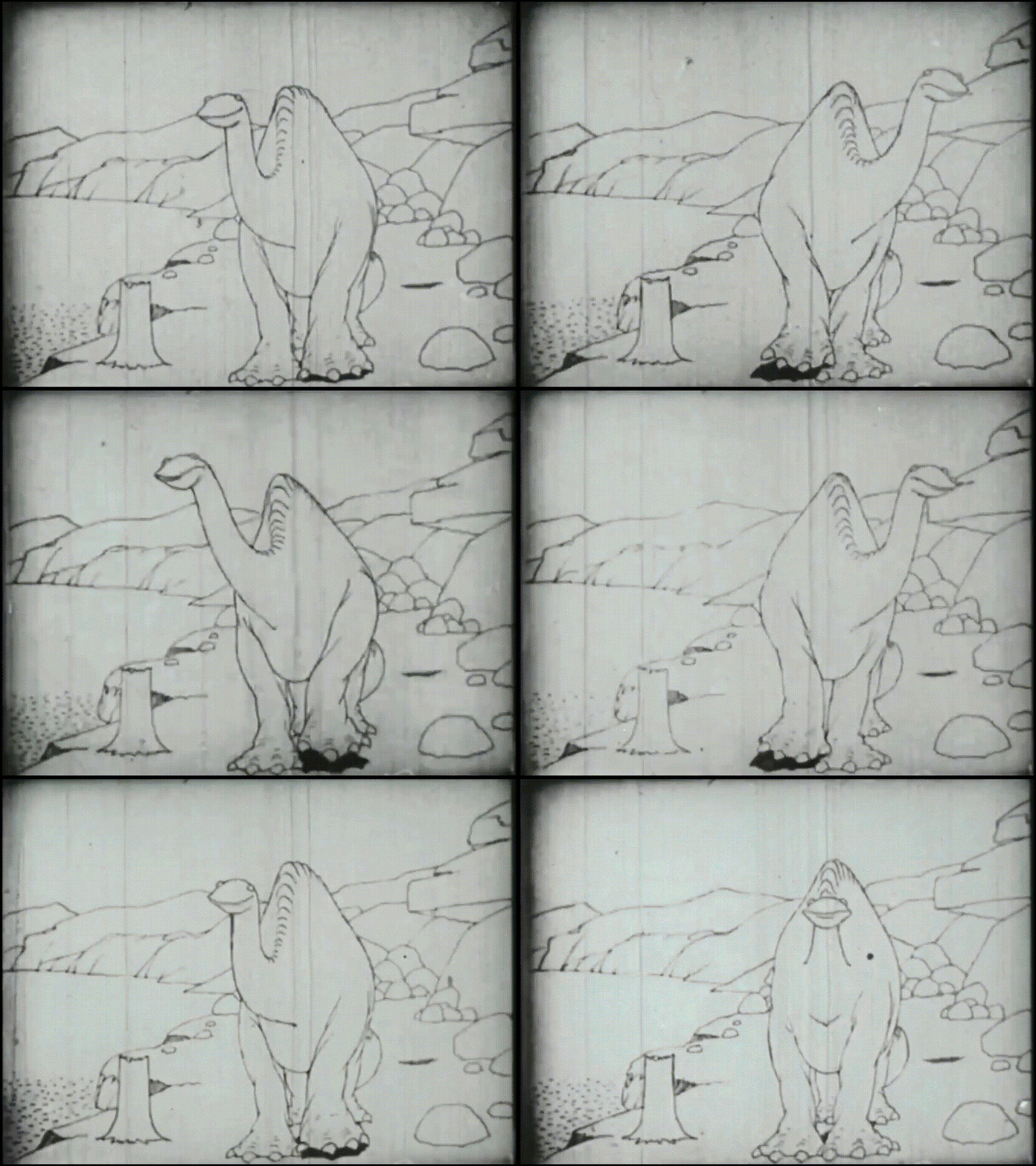
«Gertie the Dinosaur, ” 1914, Winsor McCay
Why can she be classified as a partially anthropomorphic character? The protagonist possesses traits from various animals while also exhibiting distinctly human characteristics. For instance, Gertie can express emotions almost like a human being. She can cry bitterly in response to criticism or rejoice while dancing.
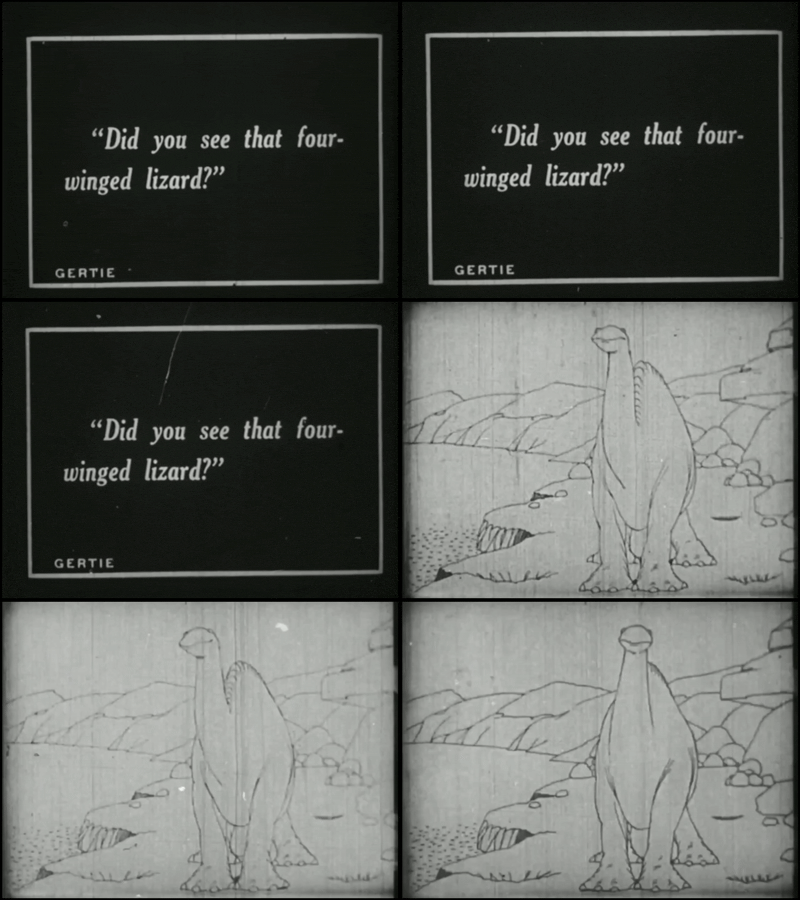
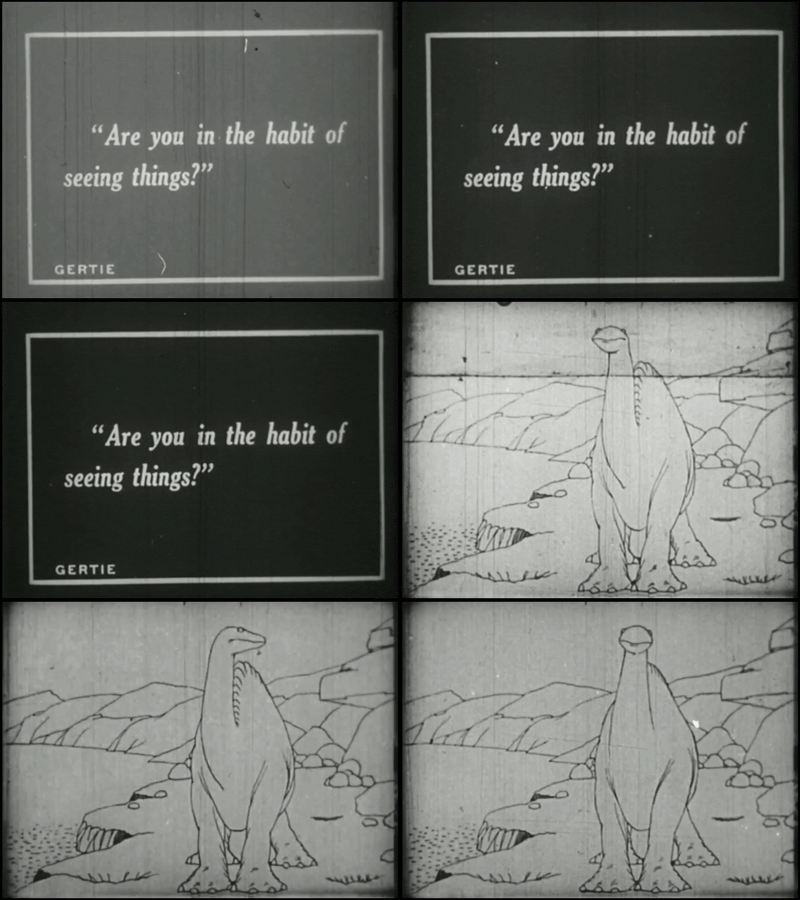
«Gertie the Dinosaur, ” 1914, Winsor McCay
Gertie also responds to questions by nodding or shaking her head, which further humanizes her.
However, Hertie remains closer to animals than to humans. Next, I will examine other examples where animals (and not only them) begin to resemble humans more closely.
Cat Felix
Cat Felix, first appearing under the name Sir Thomas, became the first upright anthropomorphic feline character. The premise of his first cartoon is based on a situation that could happen in real life with cats: a cat falls in love with a female cat and subsequently becomes a doting father. However, human emotions and mannerisms are added to this ordinary situation. In this case, anthropomorphism functions as a visual language, helping to vividly and metaphorically convey this scenario.
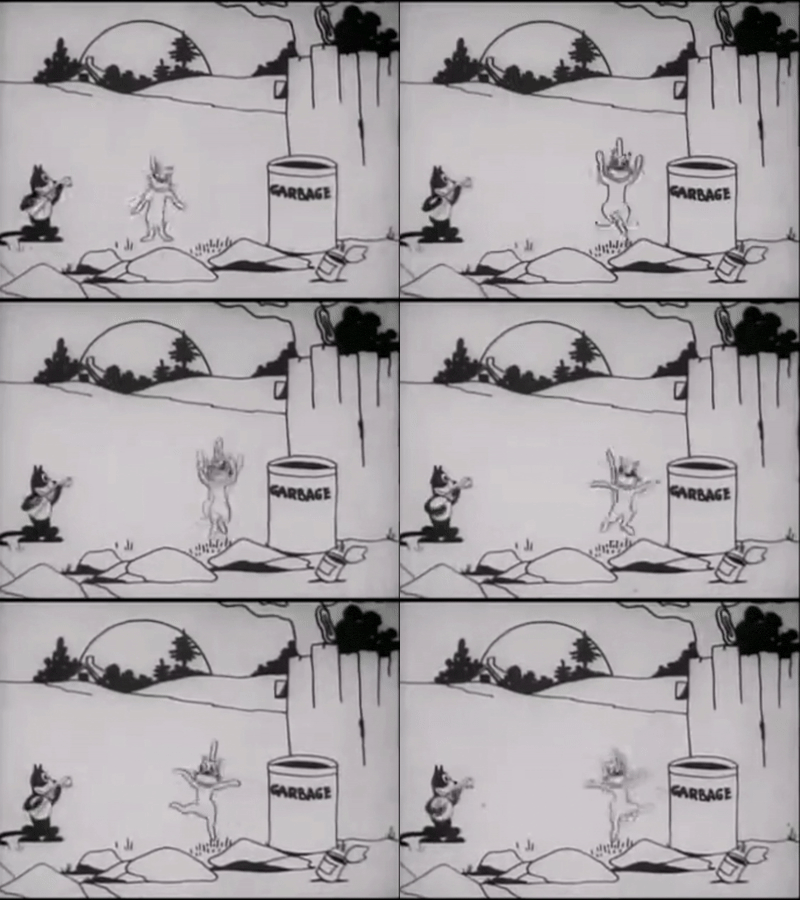
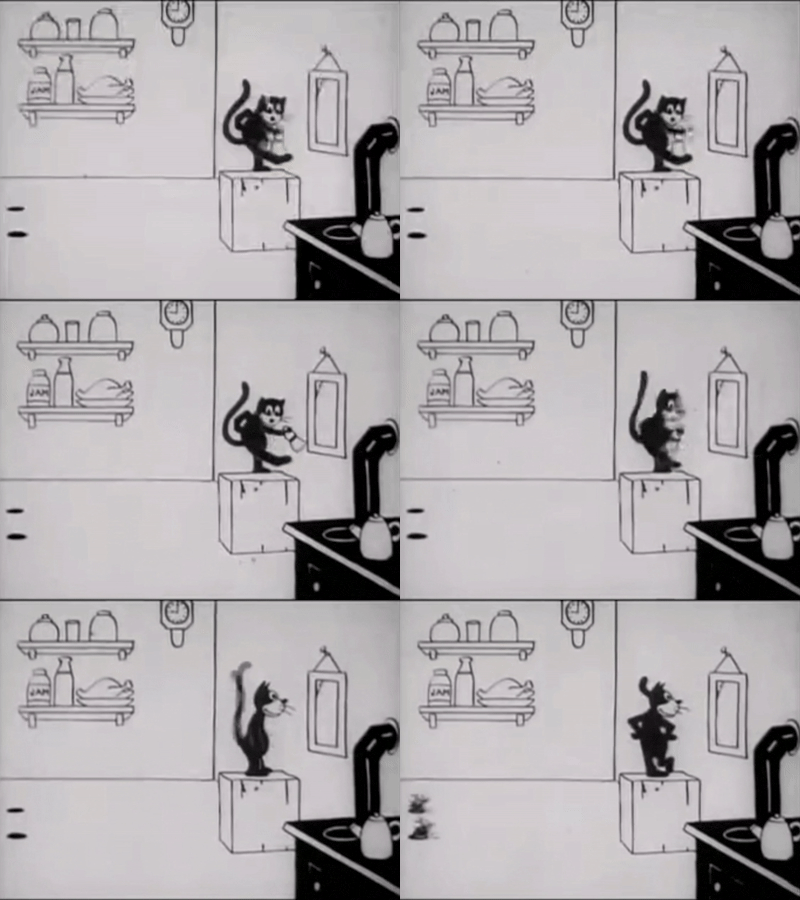
«Feline Follies,» 1919, Pat Sullivan
The cats here behave almost like humans: a cat plays an instrument, a cat dances, and Felix (then Tom) grooms his paws and strikes a pose in the mirror before meeting the lady in full splendor.
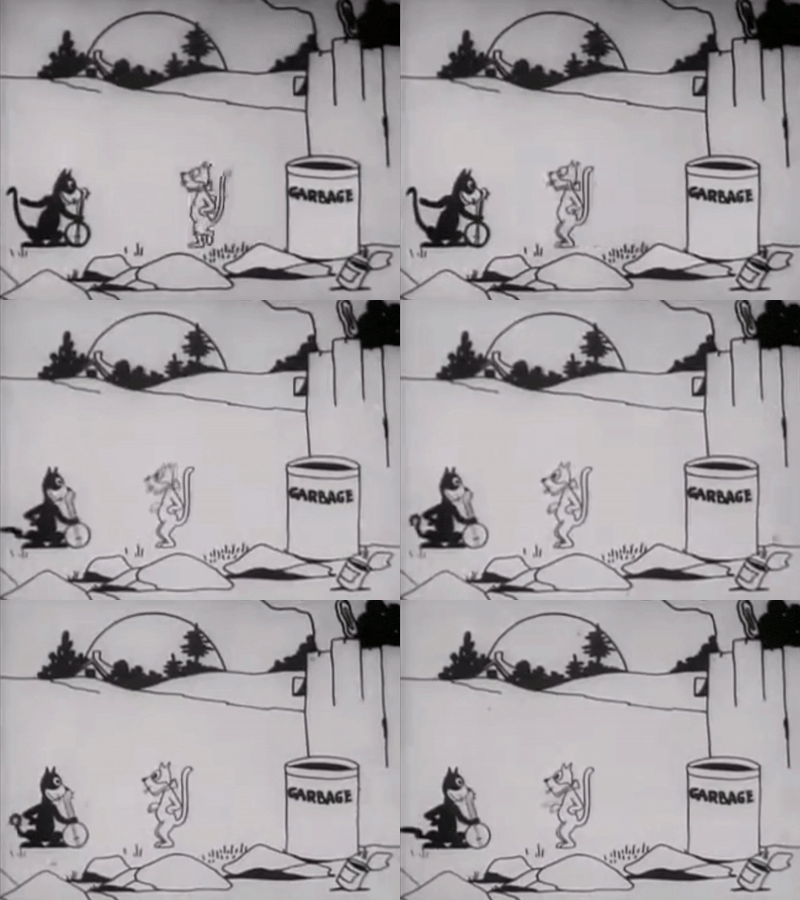
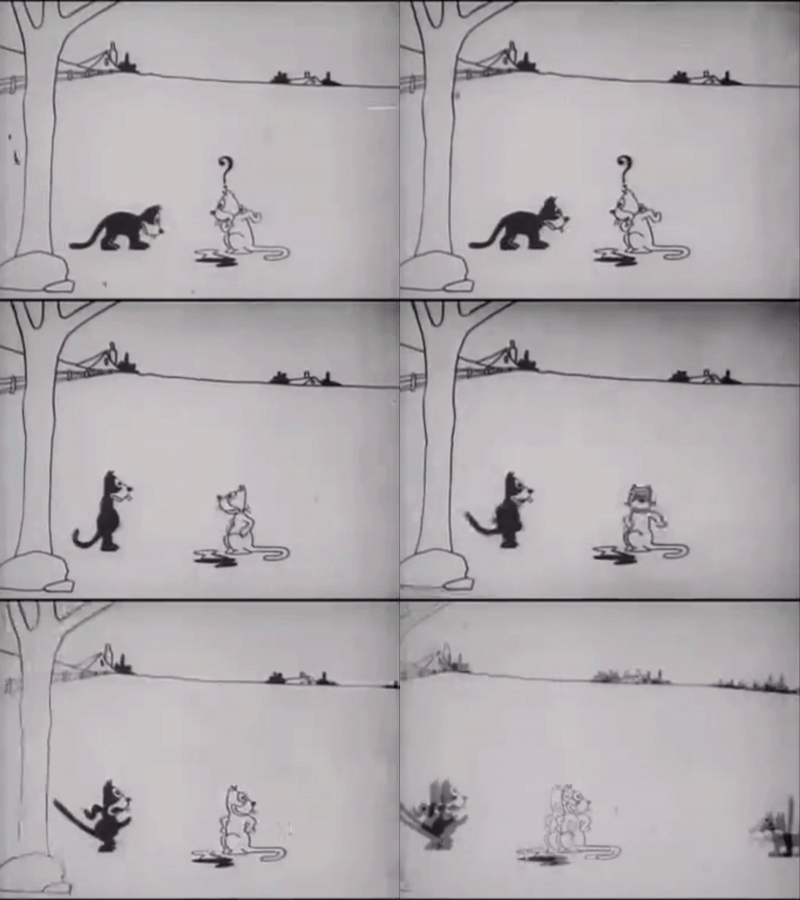
«Feline Follies, ” 1919, Pat Sullivan
Cats have a distinct difference from humans: they have tails. The tail on characters helps to vividly express their emotions and even serves as a means of character expression.
It can be observed that the tail allows us to convey Felix’s emotion even more vividly: he becomes agitated and joyful when the cat arrives, and although his face isn’t showing intense emotion at that moment, the subtle shift in the cat’s mood can be communicated through the tail. Furthermore, during a moment of shock, his tail straightens abruptly, altering the cat’s silhouette, which emphasizes his tension and shock.
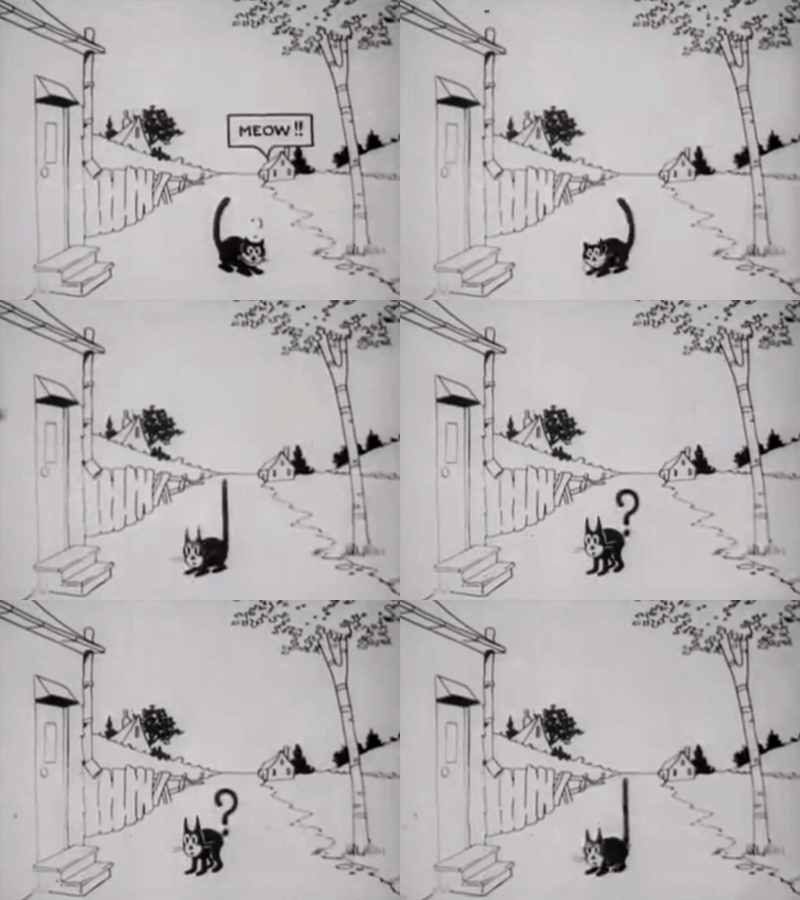
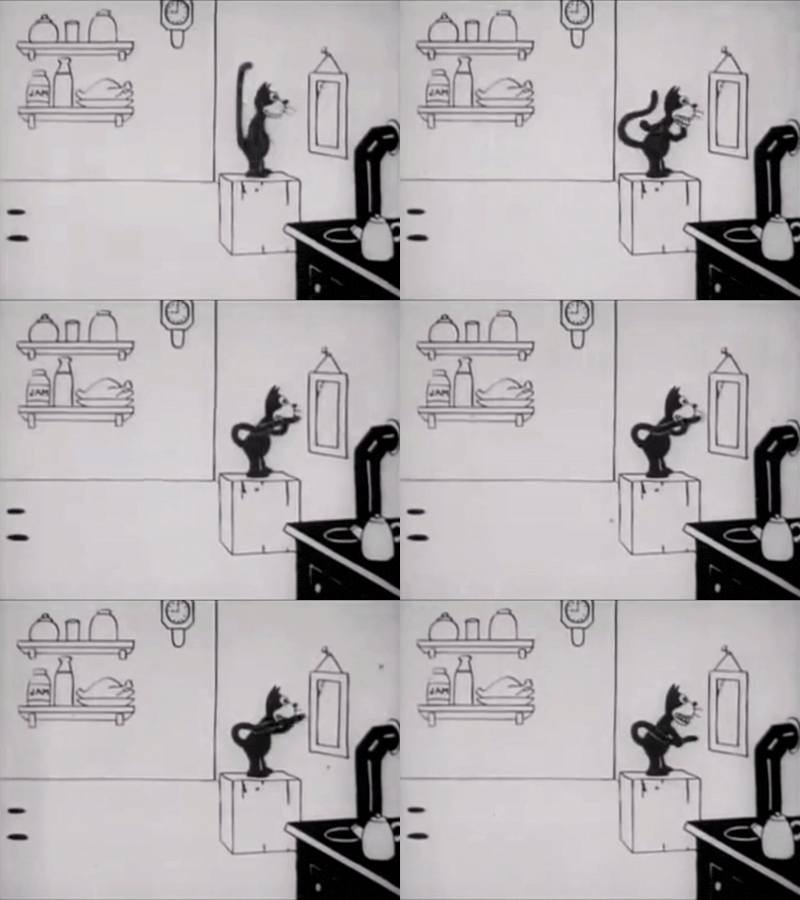
«Feline Follies, ” 1919, Pat Sullivan
Sometimes Felix’s tail literally expresses his emotions; for example, it might curl into a question mark. It also occasionally helps heighten the comedic effect. For instance, in one film scene, the cat brushes its teeth with it.
Aesop’s Fables
«Aesop’s Fables» by Paul Terry teaches viewers a lesson through humor. These cartoons constantly feature anthropomorphic animals living in a human world.
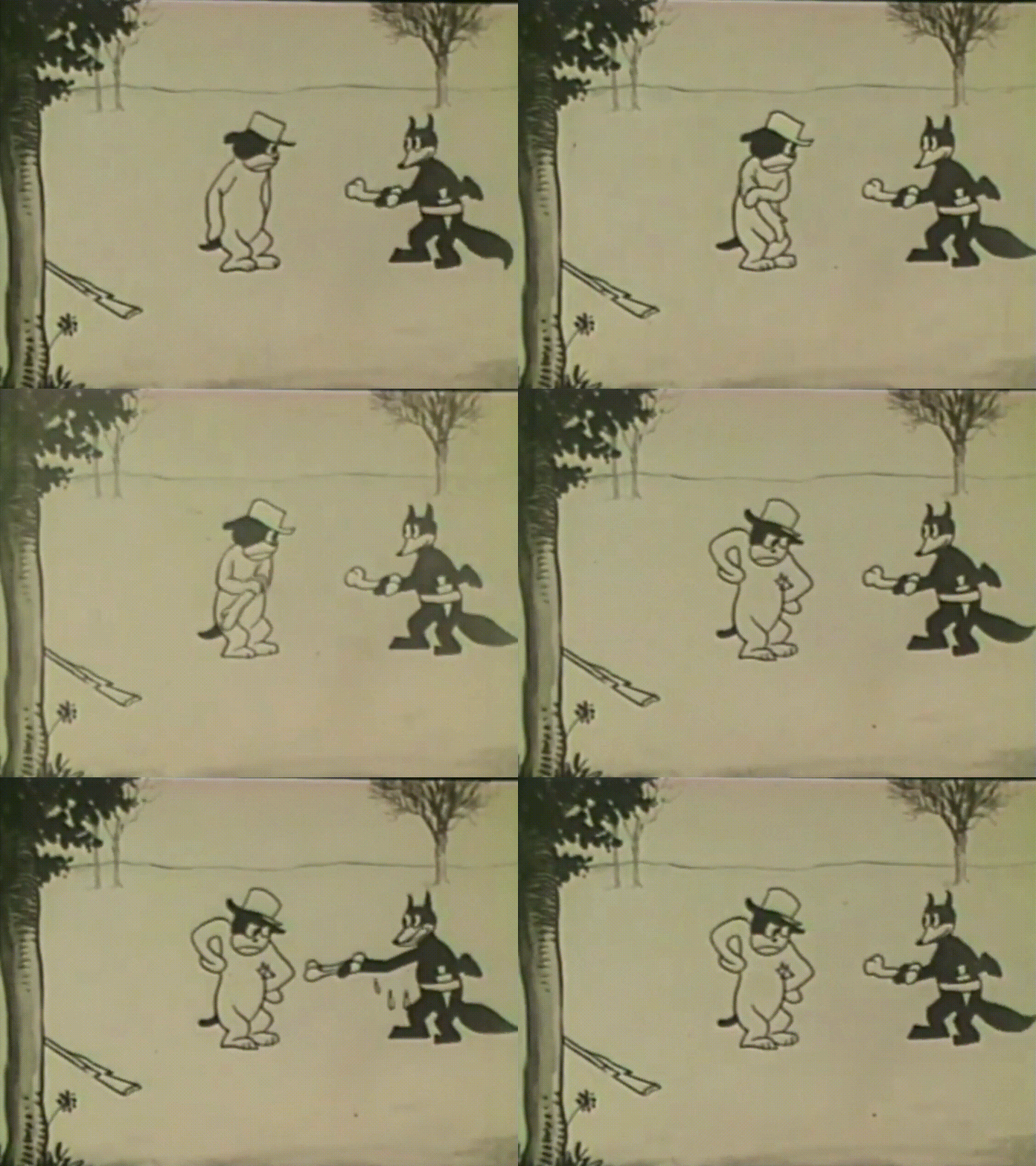
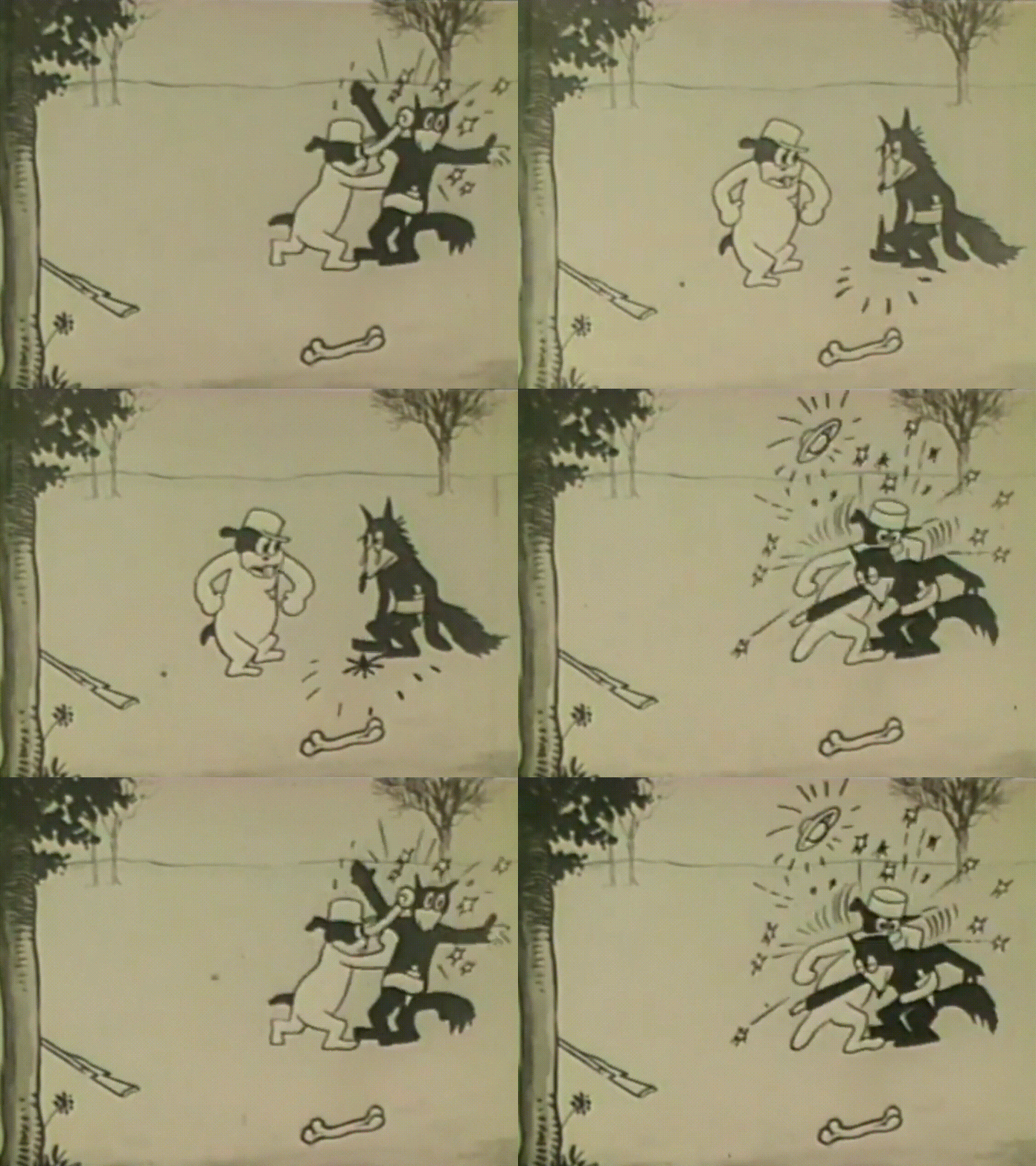
«The Dog and the Thief», 1922, Paul Terry
This film features archetypes familiar to us all: for example, in «The Dog and the Thief,» the antagonist is a cunning fox trying to steal the ducks right from the nose of the dog protecting them. The fox attempts to appease the dog by bringing it a bone, but the dog guard thwarts the trickster. The author skillfully uses the fox to vividly portray the character of the negative figure.
«Burglar Alarm,» 1923, Paul Terry
In the film «Alarm System,» the author also plays with established tropes: a cat and a mouse work together, trying to steal food. Here, they are partners, not adversaries, which creates a sense of surprise.