

Introduction
VIVA LA VIKA is a multi-brand and proprietary jewellery boutique founded in 2018. It operates at the intersection of affordable luxury, emotional well-being, and youth subculture. The brand does not merely sell jewellery — its self-proclaimed mission is to «glue hearts back together, tune people into movement, and share the energy of freshly made tsatski.» This mission statement, articulated in distinctly informal, affective language, is not accidental. It is a deliberate communicative choice that positions the brand as a generator of emotional resources and endorphins, rather than a retailer of physical goods.
The brand refers to its products as tsatski — a colloquial, affectionate Russian word for trinkets or baubles. By adopting «The Queen of Tsatski» as its unofficial epithet, VIVA LA VIKA immediately signals its commitment to a constitutive communication paradigm: meaning is not broadcast from brand to consumer, but co-constructed through shared vernacular, playful rituals, and a recognisable aesthetic universe. The brand is not transmitting a product message — it is inviting its audience into a meaning-making community.
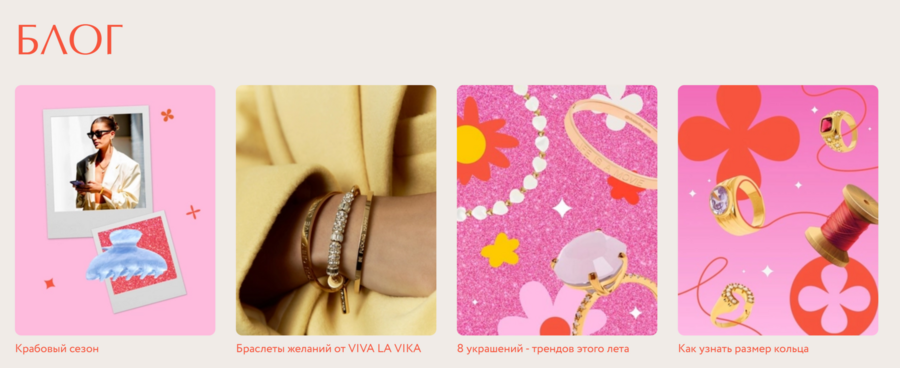
The primary audience comprises Gen Z and Millennial consumers — broadly, individuals aged 18 to 35 — who inhabit a post-material cultural landscape. For this demographic cohort, jewellery is not merely an accessory; it functions as a semiotic instrument of self-expression, identity performance, and community affiliation. Research in socio-psychological and socio-cultural communication traditions confirms that young consumers actively seek brands that validate their subjectivity and offer membership in a value-aligned tribe.
VIVA LA VIKA targets individuals who experience what sociologists call the «affective deficit» of late-digital modernity: social anxiety, an overwhelming media environment, and a craving for genuine emotional warmth. The brand addresses these needs by constructing a safe, joyful, and non-judgmental communicative space. Psychographically, the audience values authenticity over aspirational glamour, personalisation over mass production, and emotional resonance over rational product arguments.


audience
Communication channels
The brand’s primary digital touchpoint, vivalavika.com, functions not as a conventional e-commerce catalogue but as an interactive, immersive brand environment. The site’s hero banner — a saturated fuchsia field populated by floating, volumetric gold letters — is designed to produce an immediate, visceral aesthetic response. The central call to action, «ASSEMBLE YOUR VIVA LA VIKA NECKLACE,» transforms the consumer from a passive browser into an active co-creator.
The Kolye-Bar (Necklace-Bar) feature operationalises this participatory logic: users select a chain base and append individual letter pendants to spell out words, names, or affirmations of their choosing. This mechanic is not merely commercial upselling — it is a co-construction mechanism that embeds the consumer’s personal meaning into the physical product itself. From a communication theory perspective, the website enacts the constitutive paradigm: the artefact (the necklace) becomes meaningful only through the consumer’s active interpretive and creative participation.
The brand’s Telegram channel (t.me/vivalavikacom), with over 18,000 subscribers and the tagline «Tsatski for a good mood,» functions as the brand’s innermost communicative circle. Unlike algorithmically curated social media feeds, Telegram channels offer direct, unmediated access to a self-selected community. Subscribers to this channel are not passive consumers — they are what Putnam would call the bonding social capital of the brand: a tightly knit group sharing common values, aesthetic preferences, and emotional affinities.
The channel’s content strategy exemplifies phatic communication — a type of interaction whose primary function is not to transmit information but to maintain and deepen relational contact. Posts that share mood content, behind-the-scenes glimpses, and product «launches» with intimate, friend-to-friend language serve to reinforce the sense of a shared universe. This is fatická коммуникация (phatic communication) in action: every message says, implicitly, «we are still connected; you belong here.»

influencers
VIVA LA VIKA deploys a multi-layered PR strategy anchored in three pillars:
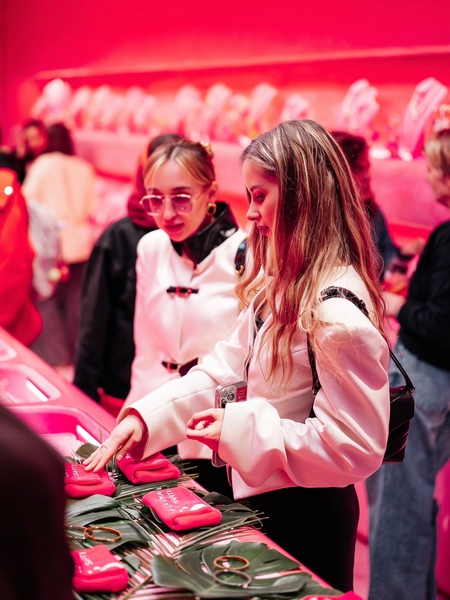
Influencer marketing: Strategic collaborations with culturally resonant figures, including content creator Alexei Zhidkovsky and the fashion brand RUSHEV, extend the brand’s reach while reinforcing its positioning at the intersection of entertainment, pop culture, and aspirational lifestyle.
Gamification via ritual: The brand’s signature «Wish Bracelets» (Braslety Zhelaniy) are sold with a proprietary guided meditation for making a wish at the moment of wearing. This ritual layer transforms a commercial transaction into a personalised, near-ceremonial experience. The consumer is not buying a bracelet — they are investing in a moment of intention-setting and self-care.
Cultural co-creation: The brand’s collaborations are not mere endorsements; they are acts of semiotic co-construction, merging VIVA LA VIKA’s visual universe with the symbolic capital of partner brands and personalities.

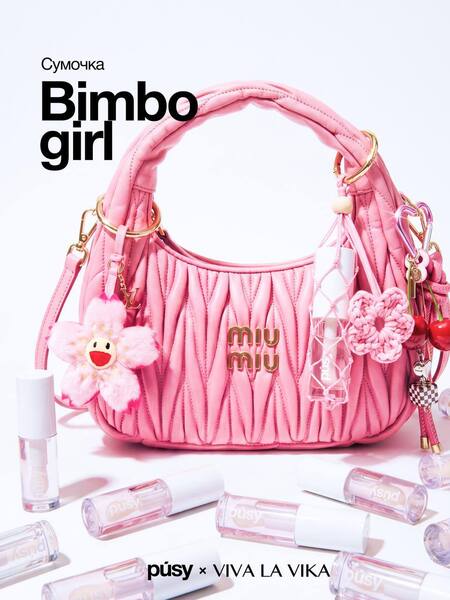
Crucially, all these strategies share a common grammar: they build a «shared language» between brand and audience. Recurring verbal markers (tsatski, mazh, serdechko), visual codes (hot pink, puffy gold letters, kidcore maximalism), and behavioural rituals (the meditation, the wish, the custom necklace) collectively constitute a proprietary semiotic system. To understand and use this language is to signal membership in the VIVA LA VIKA community.
Theoretical framework
Developed by Richard Petty and John Cacioppo (1986), the Elaboration Likelihood Model posits that persuasion occurs via two distinct cognitive pathways, depending on the consumer’s motivation and cognitive capacity at a given moment:
• The Peripheral Route operates when cognitive elaboration is low. Here, persuasion is driven not by logical argument but by heuristic triggers — aesthetic appeal, emotional associations, source attractiveness, and sensory pleasure. Visual cues, colour psychology, and affective resonance dominate. • The Central Route engages when the consumer is both motivated and capable of deep processing. Persuasion here is driven by the quality and strength of arguments, detailed information, and rational evaluation.
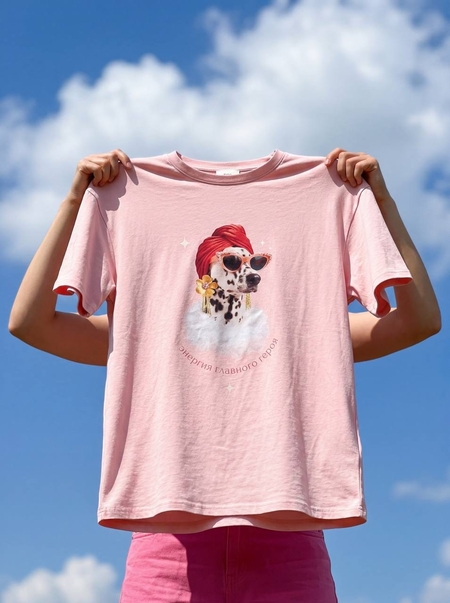
ELM is particularly powerful for analysing VIVA LA VIKA because the brand operates simultaneously on both routes — a sophisticated strategic choice that maximises persuasive reach. The saturated visual environment (hot pink, volumetric type, maximalist kidcore) captures attention and triggers hedonic responses through the peripheral route. Meanwhile, the customisation mechanics of the Kolye-Bar and the choice architecture of the Wish Bracelets engage the central route by involving the consumer in deliberate, meaningful decision-making.
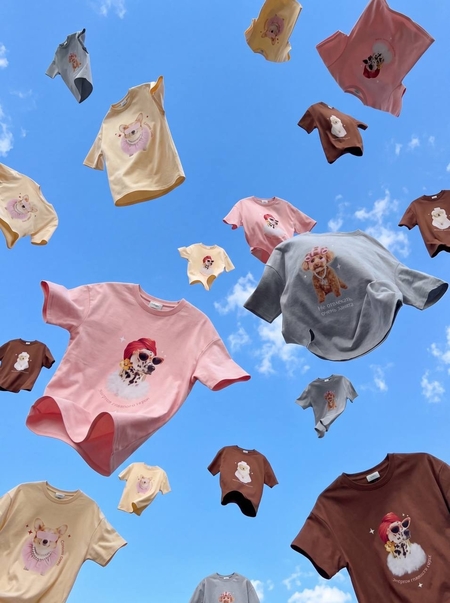
t-shirts with dogs
Originally grounded in Erving Goffman’s concept of «face» — the public self-image every individual seeks to maintain — Politeness Theory was developed into its canonical form by Penelope Brown and Stephen Levinson (1987). The theory distinguishes between two dimensions of face:
• Positive Face: the desire to be liked, approved of, and included. Communication strategies that affirm solidarity, express warmth, and signal shared membership satisfy positive face needs. • Negative Face: the desire for autonomy, freedom from imposition, and the right to act unimpeded. Communication strategies that respect personal space, avoid directives, and acknowledge the other’s independence preserve negative face.
For brand communication analysis, Politeness Theory offers a precise vocabulary for decoding Tone of Voice strategies. A brand that speaks to its audience as an equal — using informal register, shared slang, affectionate address, and emotionally resonant language — is actively engaged in positive face work. It is saying: «We are like you; we share your values; you belong with us.»
The theory also illuminates the role of phatic communication: ritualised, interpersonally warm exchanges (greetings, affirmations, shared jokes) that serve not to convey information but to perform solidarity. In a brand context, phatic communication reduces corporate distance and creates the subjective experience of a genuine, caring relationship.
Analysis
banner
The website’s hero section — a fuchsia banner with the inscription «ASSEMBLE YOUR VIVA LA VIKA NECKLACE» surrounded by flying, puffy gold letters — is a textbook deployment of peripheral route persuasion.
Hot pink (fuchsia) as a chromatic choice is not arbitrary. In colour psychology, saturated warm tones — particularly pink and magenta — are consistently associated with playfulness, femininity, emotional warmth, and uninhibited joy. Research in environmental psychology demonstrates that highly saturated, warm-spectrum environments trigger higher levels of hedonic arousal, lowered cognitive vigilance, and increased openness to social engagement. In ELM terms, these chromatic triggers function as peripheral cues: they generate a positive affective state before the consumer has consciously evaluated a single product claim.
The volumetric, «puffy» typography — letters rendered with three-dimensional depth, as if inflated or bubbling — introduces a tactile, playful dimension into a flat digital medium. This aesthetic choice belongs to the kidcore visual tradition: an adult reclamation of childhood visual pleasures (bubbly shapes, bright colours, maximalist clutter). For an audience of Zoomers and elder Millennials navigating the psychological stresses of post-pandemic adulthood, kidcore aesthetics function as a comfort heuristic — an immediate, pre-cognitive signal that this is a safe, fun, non-threatening space.
Taken together, the maximalist aesthetic ecosystem (hot pink, floating gold letters, volumetric forms, dense visual energy) produces what Petty and Cacioppo would describe as a strong peripheral cue cluster: a set of aesthetic triggers that generate instant positive affect, reduce cognitive resistance, and make the audience receptive to the brand’s core message before any rational persuasion has occurred. This is hedonistic priming — the creation of an emotionally elevated baseline state from which commercial communication becomes significantly more effective.


necklaces 30% sale
While the peripheral route dominates the brand’s initial visual impact, VIVA LA VIKA deploys the central route with equal sophistication through its customisation mechanics. The Kolye-Bar system — which allows consumers to select a chain base and compose pendants from individual letter charms — is not simply a product feature; it is a structured decision-making architecture that activates deliberate cognitive processing.
From an ELM perspective, the act of personalisation constitutes elaboration: the consumer must think, evaluate, choose, and commit. Each decision — which base? which letters? what word? — is a micro-argument that the consumer constructs for themselves. The persuasive logic here is that self-generated arguments are more durable and emotionally resonant than brand-transmitted claims. A necklace that spells out the consumer’s name, nickname, or chosen affirmation becomes a physical instantiation of their own meaning-making — an artefact of self-authorship rather than passive consumption.
This central route mechanic also satisfies what Uses and Gratifications theory calls the «affective need» for personalised experience and the «social integrative need» for identity expression within a community. The consumer who wears a custom Kolye-Bar necklace is not just wearing jewellery — they are broadcasting a signal within a shared semiotic system, visible and legible to other members of the VIVA LA VIKA tribe.


necklaces
The brand’s verbal language is a masterclass in positive face work. Consider the lexical register of the mission statement: «to glue hearts back together, tune people into movement, and share the energy of freshly made tsatski.» Every element of this formulation is calibrated to satisfy the positive face needs of its audience:
• «Tsatski» (цацки): A colloquial, affectionate term for trinkets. In standard Russian, jewellery is bizhuteria or ukrasheniya — neutral, commercial terms. Tsatski is what a grandmother calls beads she lets a child play with; it is what a close friend says when admiring a playful new purchase. By adopting this term as its primary product descriptor, VIVA LA VIKA performs a radical anti-corporate move: it refuses the prestige register of luxury retail and opts instead for the warmth of the familiar. This is maximally positive face-affirming: it says «we are peers; we use the same playful language; we do not hold ourselves above you.» • «Glue hearts back together»: This metaphor acknowledges emotional fragility — a face-threatening acknowledgement in most commercial contexts — but re-frames it as a shared, normalised experience. By naming heartbreak and emotional difficulty, the brand performs empathetic recognition: «we see you; your emotional state is valid.» This is therapeutic positive face work. • «Freshly made» (svezheispechenykh): The adjective, borrowed from bread-baking vocabulary, introduces a sensory, warm, home-kitchen register into jewellery discourse. It implies care, craft, immediacy, and nourishment — all positive face-affirming connotations.
The cumulative effect of this lexical strategy is the elimination of corporate distance. Brown and Levinson’s positive politeness strategy — expressing solidarity, claiming common ground, and attending to the listener’s wants and needs — is operationalised here not through explicit statements of friendship but through the very grammar and vocabulary of communication.


necklaces
The most structurally sophisticated element of VIVA LA VIKA’s communication strategy is the guided meditation provided with every Wish Bracelet (Braslet Zhelaniy). This practice warrants extended analysis through the lens of both Politeness Theory and the therapeutic design paradigm.
The meditation functions on multiple communicative levels simultaneously:
• Ritual framing: By contextualising a commercial transaction within a quasi-spiritual practice, the brand elevates the act of purchase into an act of self-care and intention-setting. This is not manipulation but a form of positive face amplification: the consumer is positioned not as a buyer but as an agent of their own emotional life, actively working toward their desires. • Intimate address: Guided meditations, by their nature, operate in the register of direct, personal, second-person address. The brand enters the consumer’s private psychological space — a profound act of communicative intimacy that would be entirely out of place in conventional retail communication. In Politeness Theory terms, this intimacy is warranted precisely because it is invited: the consumer has opted in by purchasing the bracelet. The brand has earned the right to this closeness through consistent positive face work across all channels. • Emotional scaffolding: The meditation provides a structured context for positive emotional experience (hope, intention, self-affirmation). By engineering this experience, VIVA LA VIKA positions itself as what the analysis of best projects identifies as «the intelligent/fun friend» — a communicative role defined by empathy, support, and genuine investment in the other’s well-being, rather than in extracting commercial value.
This therapeutic, empathetic communicative mode is not merely a marketing strategy — it reflects a constitutive understanding of the brand-consumer relationship: meaning, trust, and loyalty are not delivered to the consumer but co-constructed through repeated, care-ful interaction. The brand does not transmit happiness; it creates the conditions in which the consumer can experience and co-author it.
Conclusion & Recommendations
VIVA LA VIKA demonstrates an exceptionally high level of communicative coherence across all channels and touchpoints. The brand’s greatest strength lies in what Robert Putnam identifies as bonding social capital: the formation of a dense, emotionally tight community characterised by shared values, a proprietary vernacular, and a strong sense of collective identity. The brand does not merely have customers — it has a tribe.
The deployment of the peripheral persuasion route (through maximalist visual aesthetics) combined with the central route (through customisation mechanics) represents a sophisticated dual-process communication strategy that is rare in the accessible jewellery segment. Most competitors either opt for pure aspirational glamour (peripheral only) or pure rational product communication (central only). VIVA LA VIKA’s ability to operate fluently on both registers simultaneously accounts for much of its emotional and commercial effectiveness.
The brand’s Tone of Voice — characterised by colloquial warmth, empathetic acknowledgement of emotional fragility, and consistent positive face work — constructs a communicative relationship that feels genuinely peer-to-peer rather than brand-to-consumer. This relational quality is extraordinarily difficult to replicate and represents a significant competitive moat.
However, a rigorous academic assessment must also identify areas where the brand’s communication architecture could be deepened and extended.
Grounded in Dialogic Theory (Kent & Taylor, 1998) and James Grunig’s two-way symmetric communication model, this recommendation addresses a structural limitation in VIVA LA VIKA’s current architecture: the communication flow, while warm and phatic, remains predominantly one-directional (brand-to-audience).
Dialogic theory posits that genuinely relational communication requires not just outreach but structured reciprocity — mechanisms through which audiences can contribute to, and genuinely influence, the brand’s content, products, and direction. Currently, the brand’s primary interactive mechanic is the Kolye-Bar (consumer customises a product). This is meaningful but limited: it is personalisation, not co-creation.
Specific implementation would involve: creating a UGC (User-Generated Content) integration layer on the website where consumers share photographs of their custom necklaces and the stories behind their chosen words; launching a Telegram voting mechanism for upcoming collections or new tsatski designs; and establishing a transparent community feedback loop that demonstrates to subscribers that their input genuinely shapes the brand’s development. This would deepen the constitutive communication paradigm that already underpins the brand’s identity and extend bonding social capital into bridging social capital — opening the community to broader participatory co-creation.