
Agami ceramics is a Russian brand of handmade ceramics. It was created in 2016 by Olga Kukoba and Maria Gilmanova. In eight years, the brand has grown from a small studio into a large-scale production with its own store and two areas of activity: ceramics for the home and professional tableware for the restaurant business.
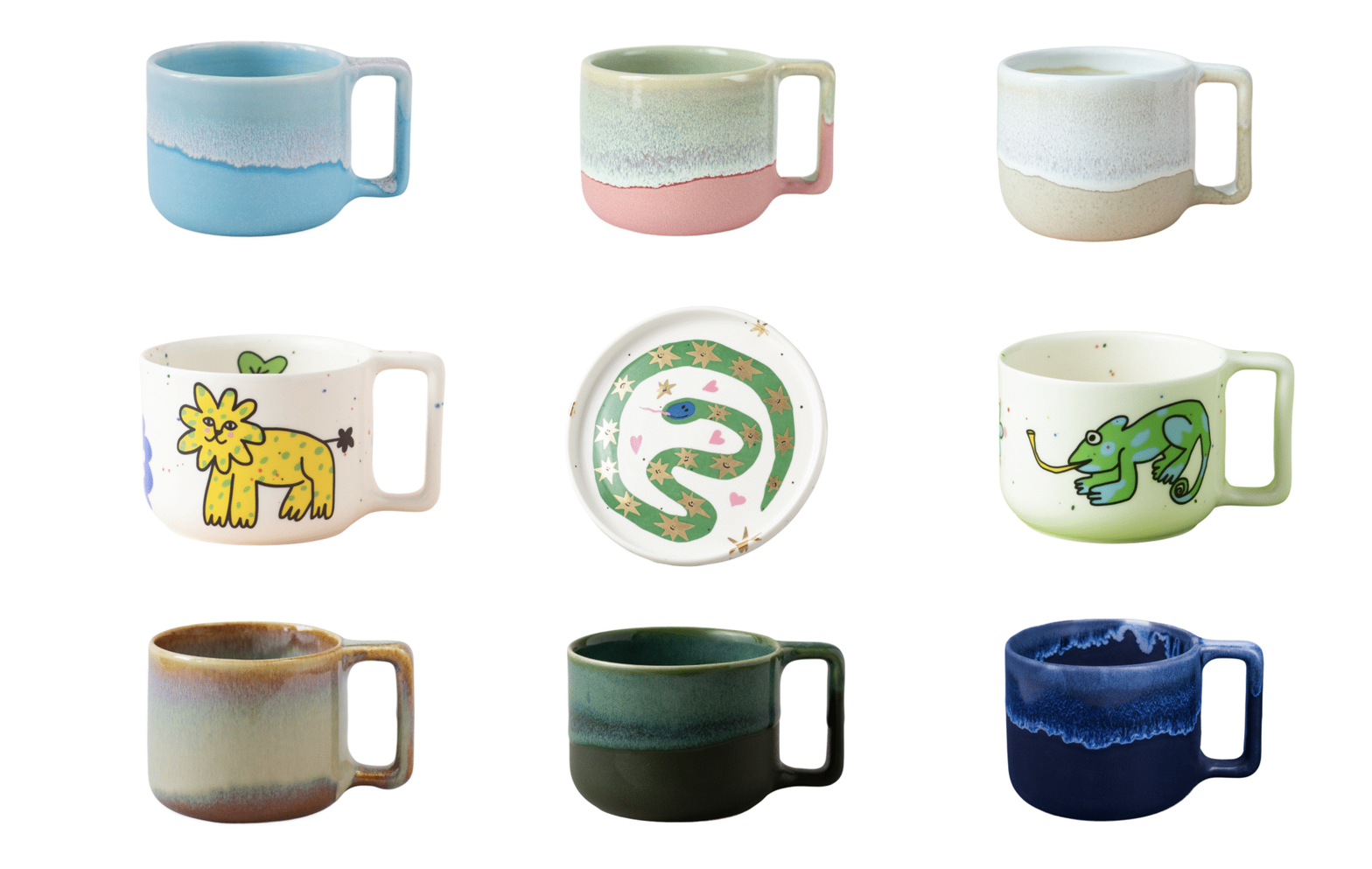
Agami ceramics products
Agami positions itself as a premium craft brand with an ethical component. They produce functional tableware for every day that combines convenience and aesthetics. They also differ by the fact that each product is made by hand. Because of this, the brand belongs to premium media in the price segment, and product prices are in the range of 1,500 — 3,000 rubles.
Now more and more people are paying great attention to finding unusual home decor. Agami ceramics products allow them to meet this need. They produce unique colorful tableware items.
The brand works for two audiences — Russian and foreign, individual and the restaurant business.
- B2C is a private buyer: people of any gender between the ages of 20 and 45. They value environmental friendliness and manual labor. The area of interest is the interior, great attention to aesthetics and unusual decorative elements.
- B2B restaurant segment: chefs and restaurateurs, for whom serving a dish begins with dishes. For them, durability and the fact that the dishes work as part of the visual image of the institution are important.

Communication channels
Communication channels focus on their own websites and media, collaborations and communication with the press. The brand doesn’t have outdoor advertising. A friendly tone in the media environment fosters a strong bond with the audience, drawing them in and building a thriving community around the brand.
Website: agami.moscow for Russian audience, agami.studio for foreign audience.
Screenshots of Russian and foreign brand websites
The website is one of the main channels of brand communication and performs the function of an online store, lookbook and corporate portfolio at the same time. There are several sections on the website. They contain information about the brand’s products, its description, contacts and location, as well as examples of the use of products by real people. The site has a pleasant visual component. The brand creatively approaches both the design of the platform and the product names, while maintaining an informal author’s style in visual and copywriting.
Social networks: vk.com/agami_ceramics and the @agamiceramics channels.
Brand social networks
It is the main channel of communication with the audience, while other channels are employed to access international markets. In the media, the brand retains its local style, conducts informal, lively communication. Unlike the website, social networks feature contests, partner reposts, and promotions. Media resources are actively used for close brand communication with customers in order to create trusting relationships.
Brand posts about new collections and the process of creating tableware.
The brand actively collaborates with the press, artists and other decor studios. They also conducts markets, discounts, and sweepstakes. All this actions allows to attract the attention of a new audience.
Posts with brand collaborations.
Communication theories
Uses and Gratifications Theory, Katz, Blumler & Gurevitch According to this theory, the audience is not a passive object, but a buyer. She actively interacts with the brand, independently selects content for her specific needs. The theory suggests that the audience actively chooses media and content based on their needs: informational, emotional, identification, social. As a result, the brand develops an identity that sets it apart from the rest. This theory is suitable for Agami ceramics because the brand reads the interests and needs of the audience. It works for her, from media behavior to the products themselves.
Relationship Management Theory, Ledingham & Bruning The theory focuses on creating a strong and trusting relationship between the brand and the customer. The organization strives for the sake of the audience in order to take care of it, without exclusive reference to commercial activities. There are several factors that make it possible to create such communication: trust, the mutual contribution of the two sides to the relationship between each other, and mutual benefit. This theory complements the first strategy described above.
Using communication theory
Thе first theory is especially accurate for Agami’s analysis, since the brand simultaneously works with several needs — aesthetic, personal, and value-based.
The brand’s photo style. It is characterized by expressiveness, high-quality processing, and a pleasant visual.
The brand’s aesthetic is slow and contemplative. It’s about exhaling and feeling the present moment. All brand communication accordingly builds its positioning and conveys a distinctive image to the audience. The brand’s visual language works for aesthetic pleasure: professional photographs, unique product names, and an open, friendly style. Having detailed information about the brand, its values, and its work, which is easily and easily provided to people, allows them to understand exactly what they are buying. The brand’s communication style allows you to relax the audience, create a pleasant impression of yourself, and build trust. So, by purchasing products, a person translates belonging to a community that belongs to this image, appreciating the local, handmade, eco-friendly. Audience finds something unified and resonating in the brand image. Just as it was indicated at the beginning of the study, people are now increasingly trying to buy non-standard decorative elements. Starting from furniture, ending with dishes and decorations. The brand’s products fit this trend, dilute the routine.
Photos of the brand’s products. Each photo maintains a pleasant, calm atmosphere. Minimalistic composition, background, colors — all this allows you to focus on the uniqueness of the product.
Let’s analyze the work of the brand in the context of the second theory on several points.
Trust. The brand openly talks about production, technology, composition of materials and compliance with standards. The tone of communication is honest and informal, without corporate cliches. All this builds trust: you’re seeing real people, not a marketing shell. Relationships. The media channels explain in detail how the production works, what the products are made of and why the dishes are safe. The brand openly says what it produces and does what it says. This is the basis of any trusting relationship.
Photos of the manufacturing process. Even the production shoot maintains the harmonious, calm, open atmosphere that the brand creates around itself.
Integration of photos from production into media posts.
Mutual control. The theory says that in a healthy relationship, both sides should feel like they have a voice and an opportunity to influence something. At the moment, the brand is open to conversation with the consumer. Customers can communicate via email, comments in the media, and the brand itself periodically addresses the audience. Commitment. The brand regularly updates its product catalog and tries to keep active on social media. This allows you to keep the attention and attract new people. Satisfaction. The brand produces unique products, is open to communication with its audience, and creates strong relationships with it. The audience, in turn, is positive, supports the brand by purchasing products, and increases its recognition.
Photos of the brand’s products from their website and social media. They produce both basic items (plates and mugs) and non-standard items (egg stands, etc.).
Conclusion and recommendations