Introduction
I cannot imagine my life without music, so I was interested in analyzing the Spotify song dataset to discover what makes music popular, what people listen to primarily, and why.
In this project, I researched:
- Which characteristics (danceability, energy, mood, loudness) most strongly influence a track’s popularity;
- Which genres are leading in popularity;
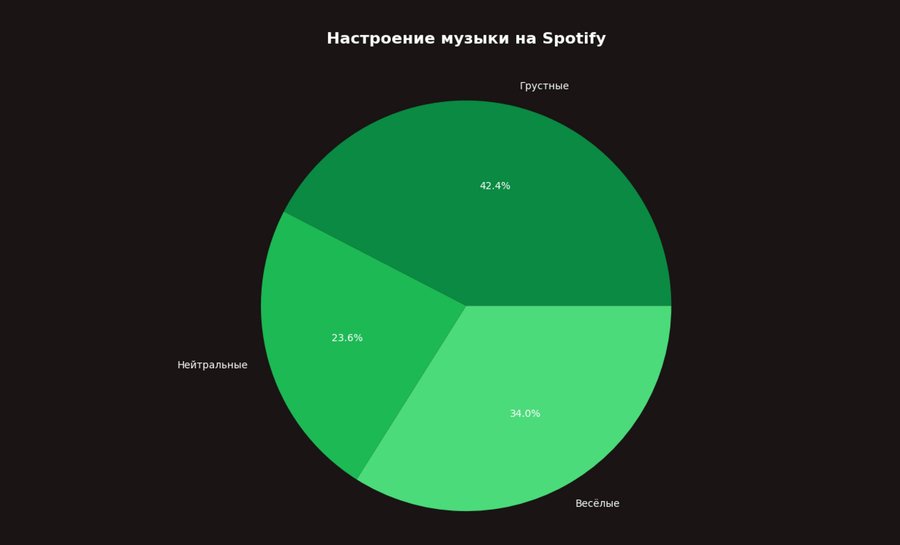
- How music mood is distributed across the Spotify catalog and what listeners prefer;
- Whether common traits can be found among popular songs through data analysis.
Project Description
For my analysis project, I utilized the Spotify Tracks Dataset from Kaggle. The dataset contains information on 114,000 songs, including track title, artist, popularity (ranging from 0 to 100), characteristics (danceability, energy, mood, loudness, tempo), genre, duration, and other parameters.
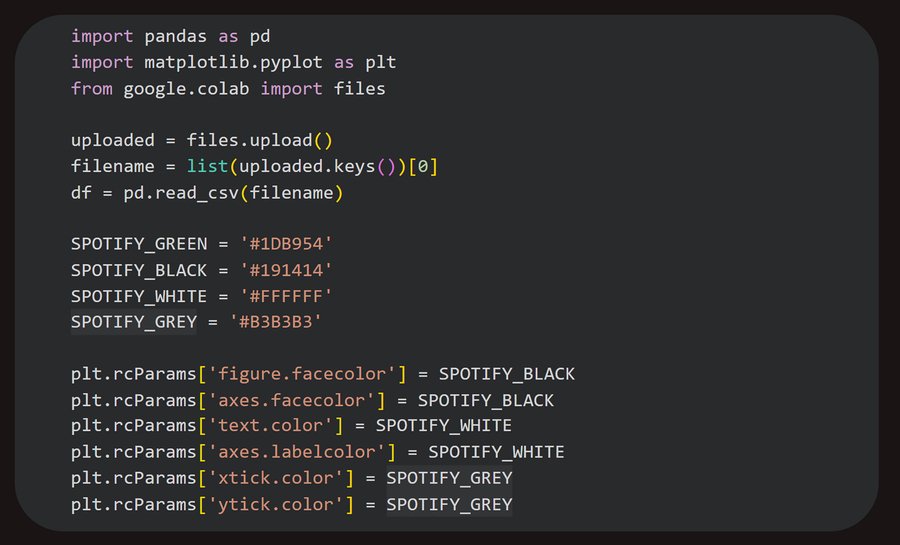
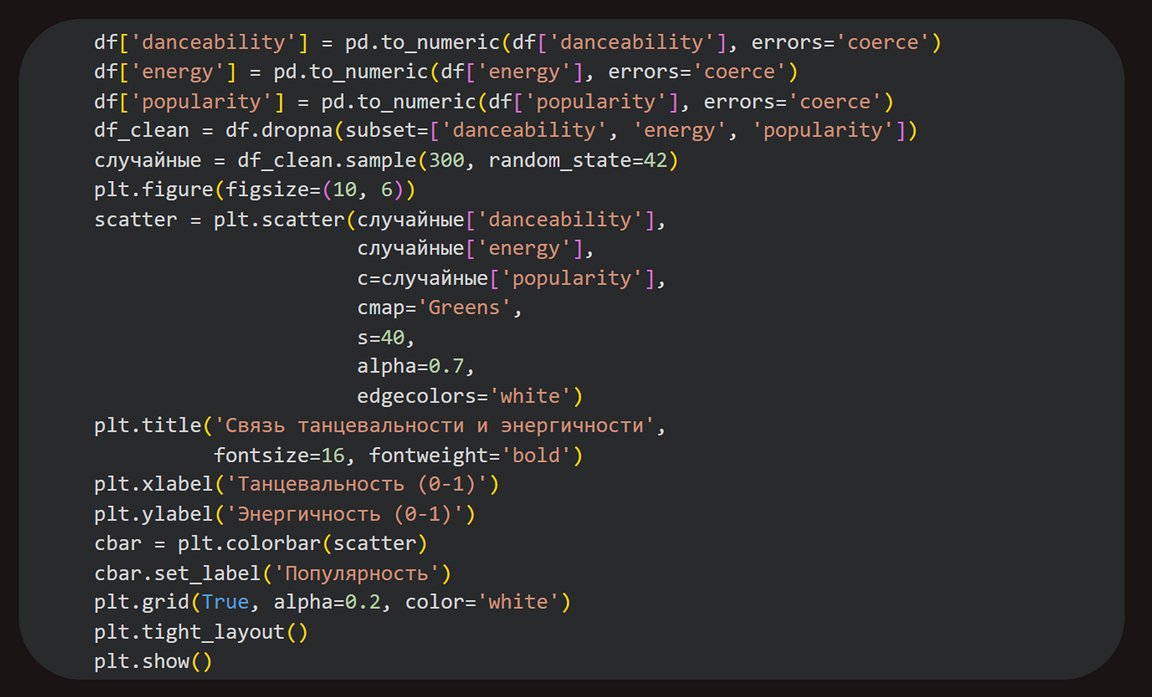
In the code, I used the Pandas library for data manipulation and Matplotlib to generate the charts. I styled the visualizations using Spotify’s signature color palette—a black background with green accents—to ensure a unified visual style across all graphs.
Dataset Analysis
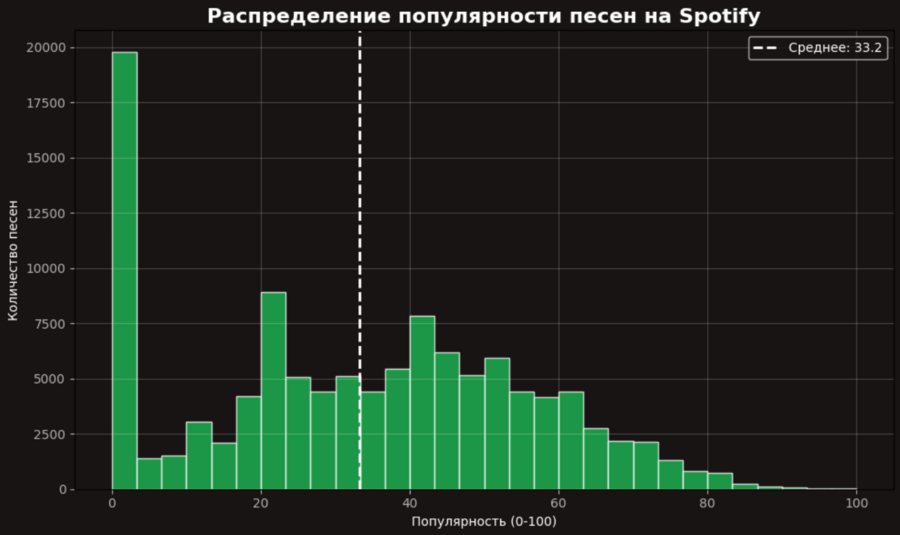
To begin, I examined the overall popularity of songs on Spotify, and the indicator was not very high—only 33 out of 100. There aren’t many true hits with high metrics. This suggests that Spotify’s catalog offers a lot of niche or simply less mainstream music, rather than just top charts.

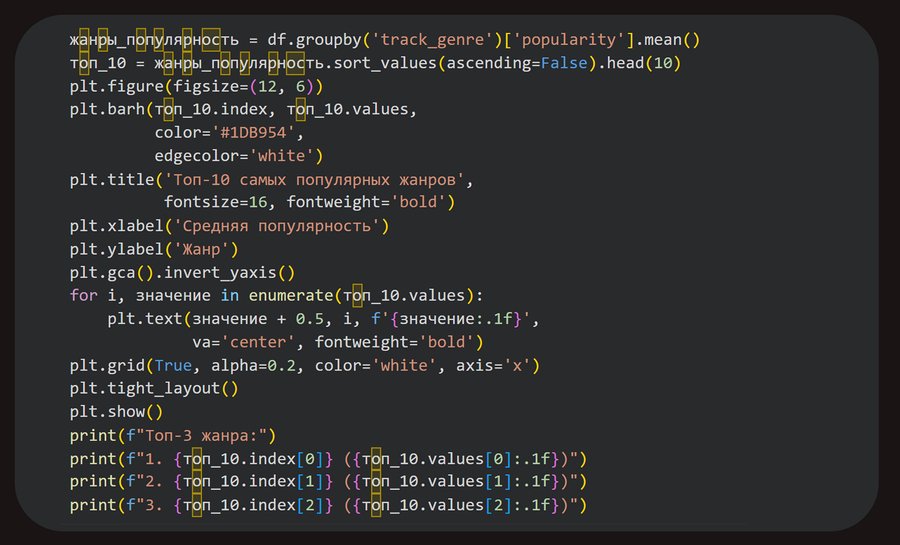
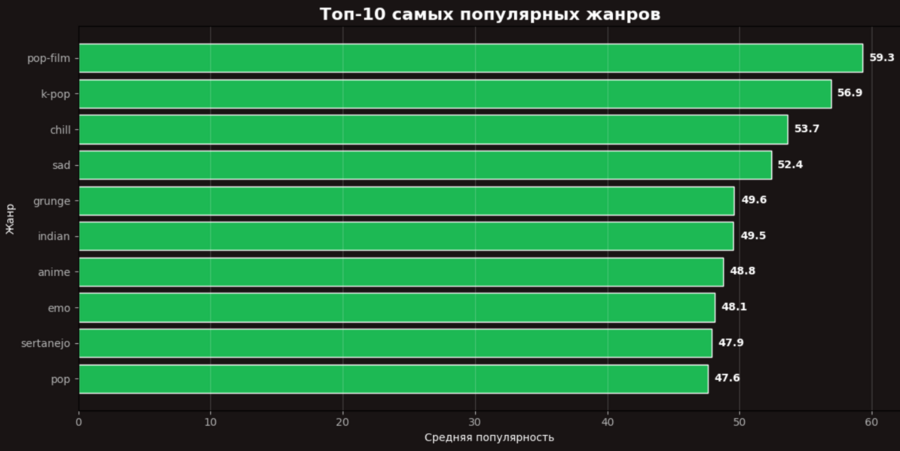
Next, I examined which genres are leading the application. Surprisingly, the most popular genre by rating is «pop film"—which includes soundtracks and music from movies. It seems people are actively listening to music from films and series that they enjoy. Following those are the «K-Pop» and «Chill» genres.
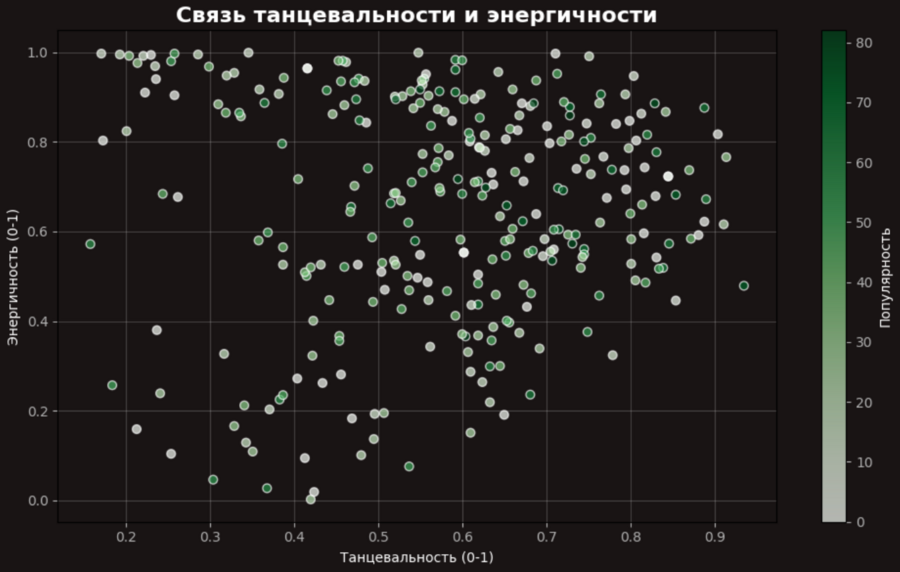
Then, I analyzed whether there was a correlation between track popularity and its energy level. The graph showed that the most popular songs (bright dots) often clustered in one corner—they were simultaneously both danceable and high-energy.
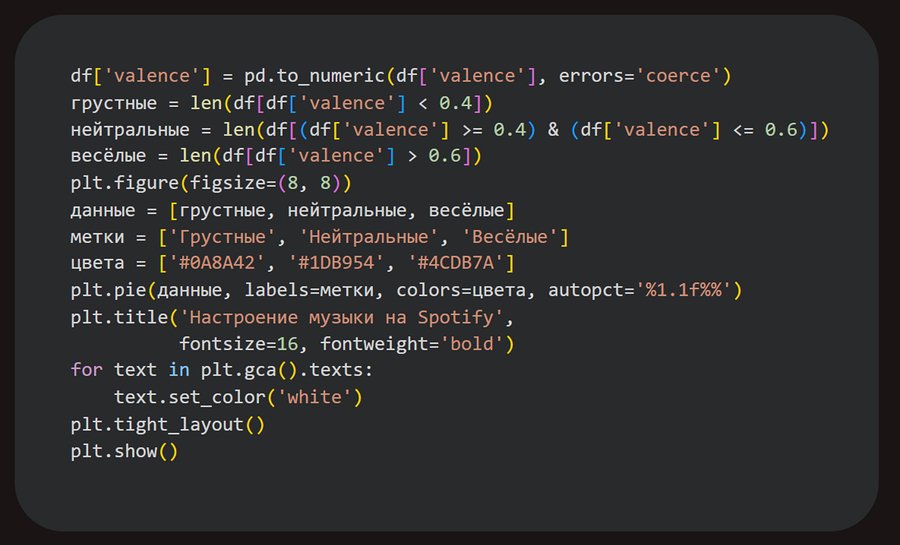
During my research, I uncovered another interesting fact. Despite the popular belief that only melancholic individuals or people in specific emotional states listen to this type of music, calm and somber songs predominate on Spotify. However, the graph proves that this opinion is mistaken.
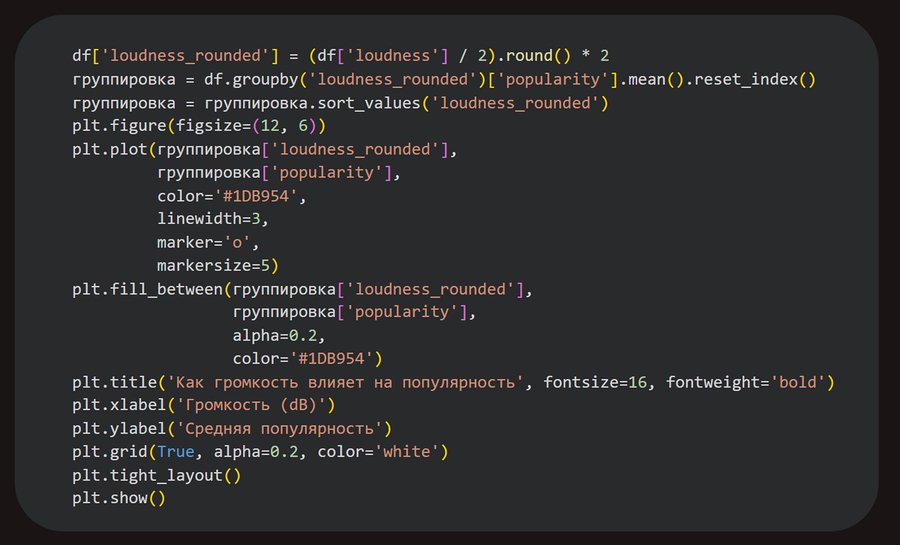
Finally, I checked whether just the track’s volume affects its popularity. The correlation turned out to be very weak. Loud songs do not guarantee success. Therefore, it is important not to «shout louder» than the competition, but rather that the composition itself is high-quality and «catchy.»

Conclusion
Thus, by analyzing Spotify data, several key conclusions can be drawn regarding track popularity.
First, it must be noted that there is no universal formula guaranteeing a song’s success; nevertheless, certain primary trends are evident. Energetic and danceable tracks are more characteristic of popular songs.
Second, when discussing genres, it is worth noting that «pop-film» holds the top spot. Indeed, films and series are central to the formation of distinct cultures and, consequently, powerful sources of soundtracks.
Third, technical parameters are important but do not guarantee success. Listeners ultimately value the overall feeling and atmosphere more. Interestingly, music with a more melancholic or neutral mood predominates on the platform, which contradicts the stereotype that people seek only entertainment.
Finally, Spotify itself offers a chance to diverse music. Most songs in the catalog have moderate popularity, indicating a wide variety of styles and audiences. Recommendation algorithms help listeners find their audience not only through chart-topping hits but also through lesser-known tracks.