The famous Italian architect Giacomo Quarenghi was summoned to St. Petersburg by Catherine II in 1780. His education was based on the heritage of classical antiquity and Renaissance.
While Quanrenghi himself ended up one of the leading architects of the Russian Neo-Classical style, and his works would define the iconic image of St. Petersburg.
Quarenghi’s main projects include: the Academy of Science (1783-1789), the Hermitage Theater (1783-1787), the Yusupov palace in Fontanka Embankment (1789-1792), the State Assignation Bank (1783-1790), Alexander Palace in Pushkin (1792-1796), Smolny Institute (1806-1808).
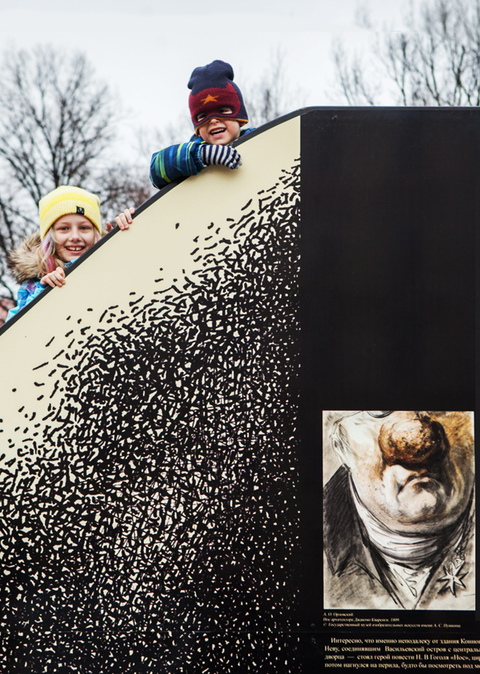
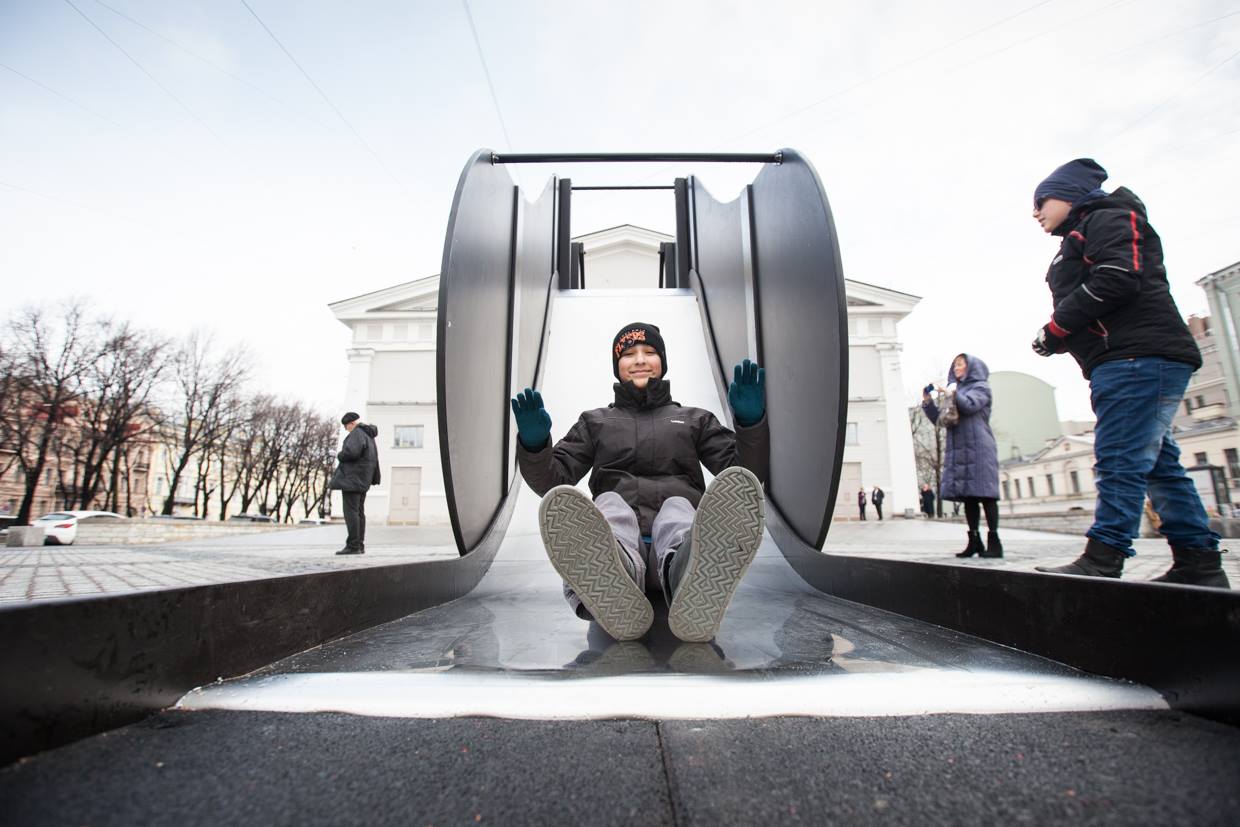
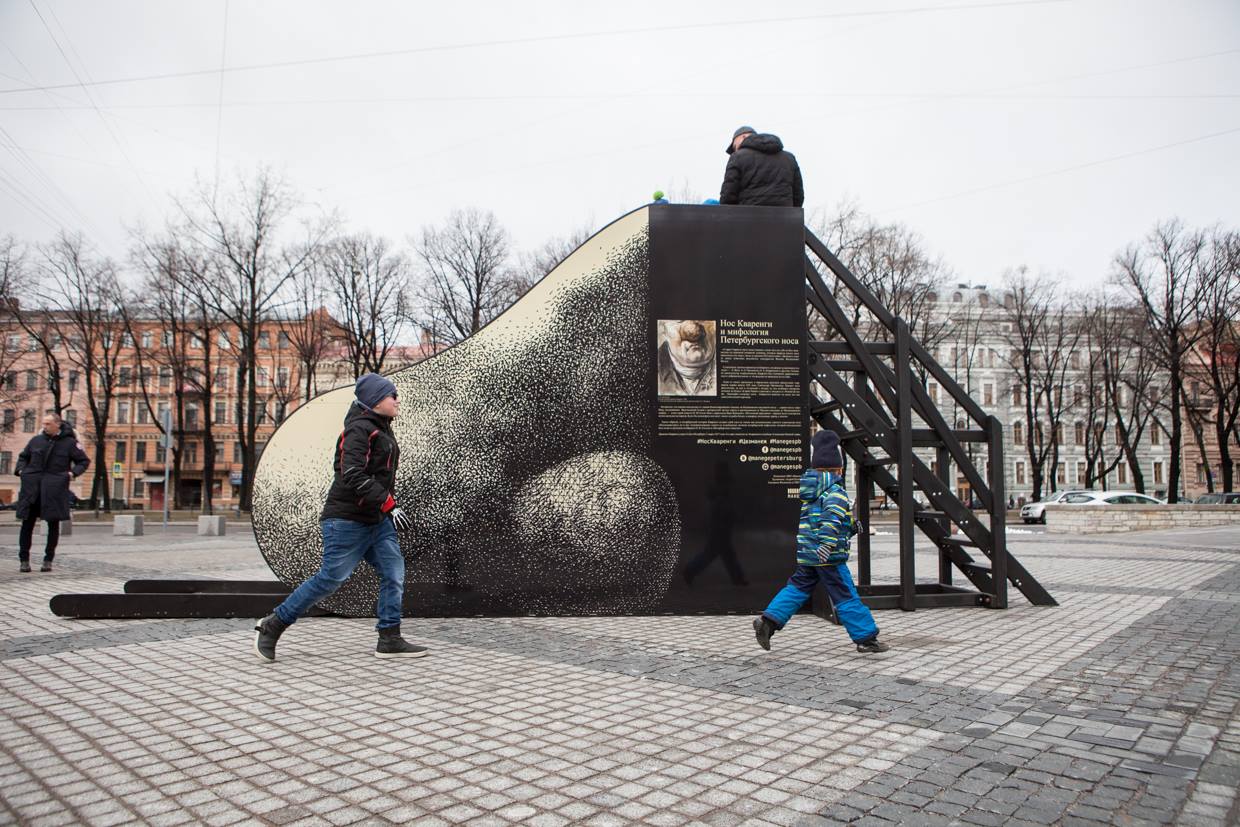
'Nose. Quarenghi' is a street object that attempts to add new meaings to urban space. And of course, it’s a tribute to the great architect. By the way, this year marks the 200-year anniversary of his passing.
«Old Quaneghi walked around a lot. And everyone knew him, as he was quite notable because of that large bluish onion the nature stuck in his face instead of a nose " — that’s how Quarenghi was described in the Notes by Filipp Vigel, one Russia’s most famous memoirists of the 19th century. Прикрепить карточку Quarenghi spurred dozens of caricatures by a number of artists of his time, like Antonio Vighi, Alexander Orlowski, Orest Kipresnky and many others. Most ironic and masterful drawings belong to Alexander Orlowski, the caricature king of the early 19th century. His portrait of the architect’s nose (it’s not a fragment, but a whole portrait of the nose) makes it a sufficient character long before this topic was introduced to St. Petersburg mythology by Nikolai Gogol in Petersburg Tales.
Nose. Quarenghi is a project that will tell our guests about Quarenghi as an outstanding architect, the creator of Manege Horse Riding School and the starting point of St. Petersburg favourite myth, which may be a new angle to look at Quarenghi.