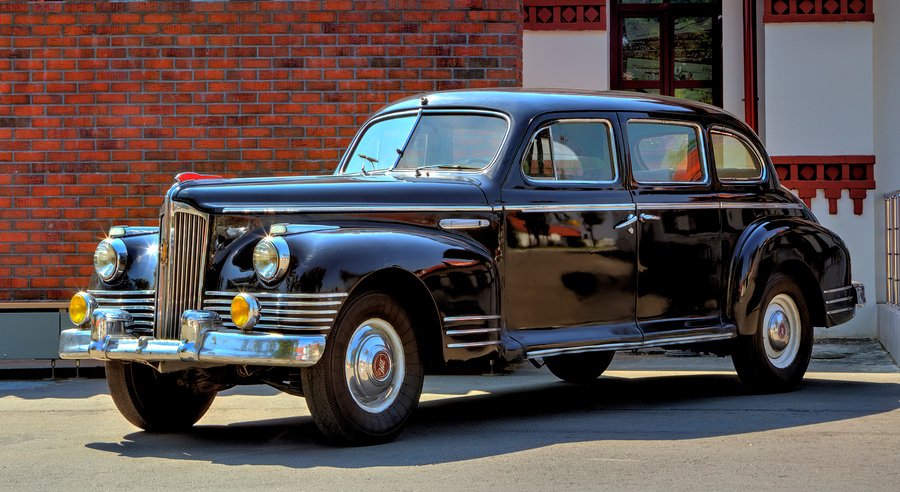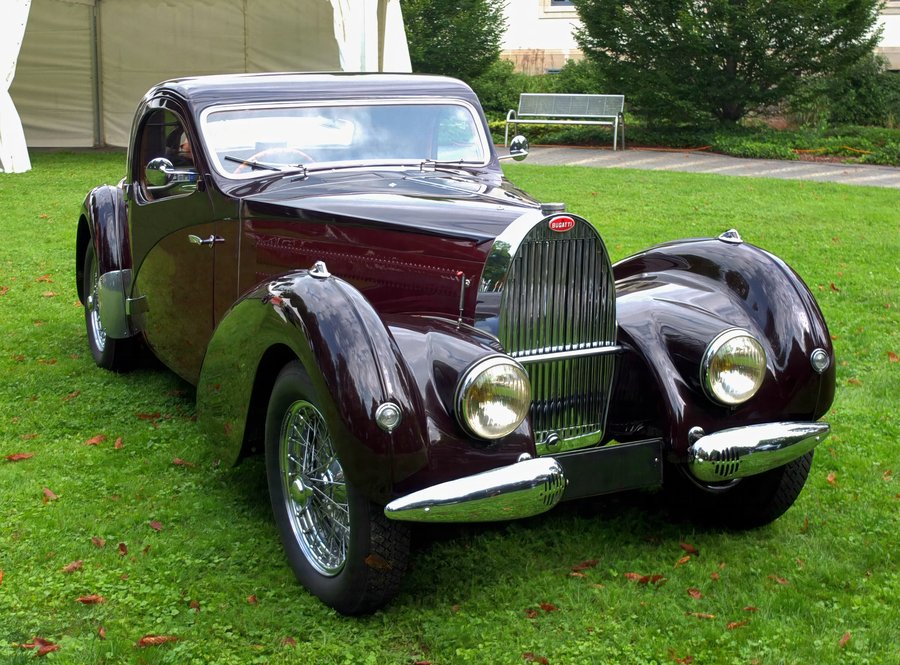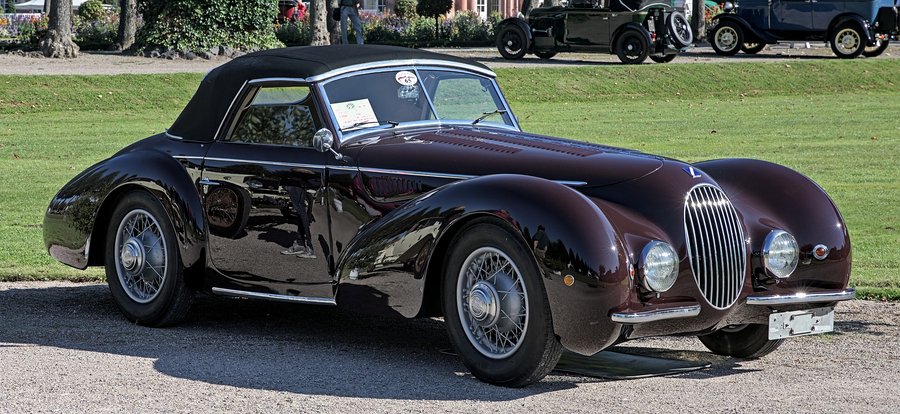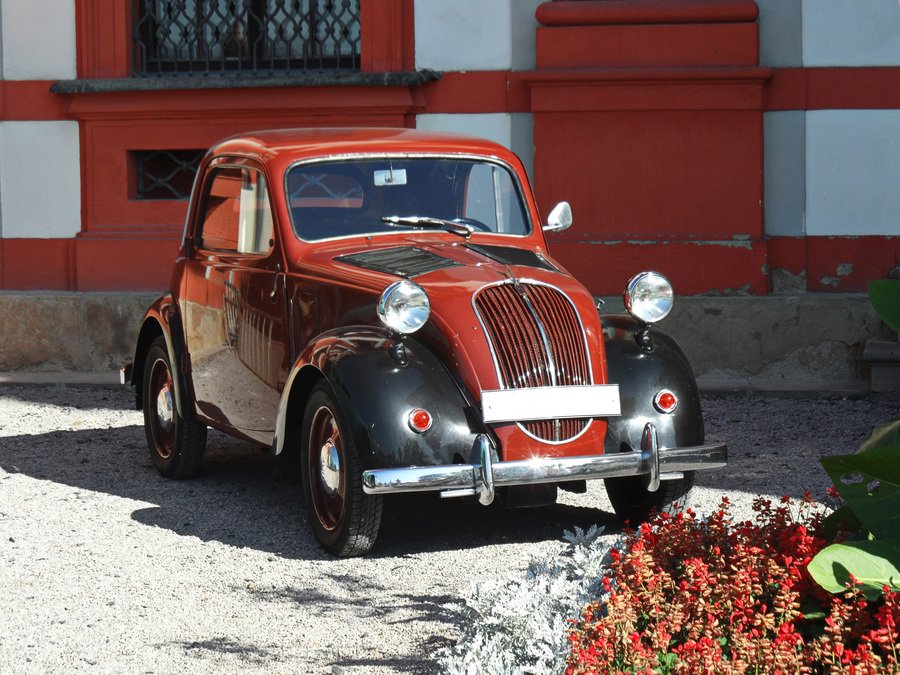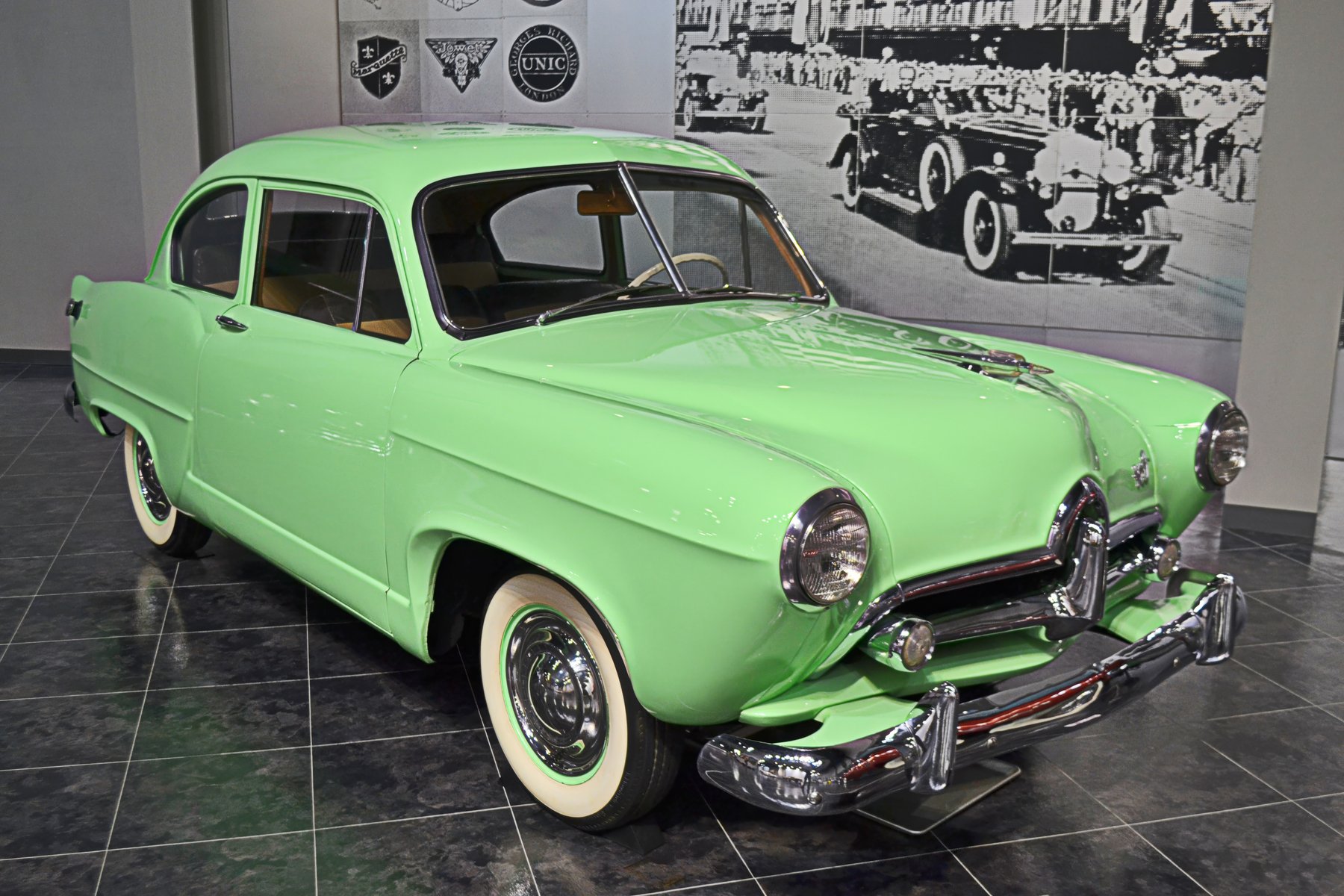
Image by Xian Jiangwei Shi, photo available on wikimedia.org under Creative Commons Zero license
The Henry J 1951—an American compact car produced by Kaiser-Frazer Corporation and named in honor of its chairman, Henry J. Kaiser. The model became one of the first American mass-produced compacts designed for families who could only afford used vehicles. Its development was partially funded by a government loan that obligated the company to create a car priced at no more than $1300.
The idea for the Henry J originated with Henry J. Kaiser, who sought to expand his automotive business share in the economy car market. Production was established at the Willow Run Plant in Michigan, USA, and the public debut took place on September 28, 1950. The initial design by American Metal Products was refined by stylist Howard «Dutch» Darrin, who added the distinctive curve to the beltline and subtle tail fins. The manufacturers pursued radical cost reduction; the first Henry Js did not feature a trunk lid (access was through the rear seatback), a glove compartment, armrests, or ventilation.
Key specifications of the Henry J 1951:
Inline 4-cylinder, overhead-valve engine with a 2.2 L displacement, or an optional inline 6-cylinder with a 2.6 L displacement. Power output was 68 hp for the 4-cylinder version and 80 hp for the 6-cylinder version.
3-speed manual transmission. Some versions were equipped with a BorgWarner overdrive transmission.
Rear-Wheel Drive (RWD). Drum brakes on all four wheels.
Despite initially decent sales, the model’s popularity quickly declined due to its sparse features and competition from better-equipped Chevrolet and Ford models. However, Henry J found its niche in drag racing, where its light weight made it a popular base for building «gasser» class race cars in the 1960s.